The darkening night was gradually seeping into her house. She rose to her feet, feeling a little dizzy—she must have dozed off on the couch. Even in her eighties, and more than a decade into retirement, she still hadn’t grown accustomed to days without projects or purpose. In the first several years, she kept busy by lecturing at institutions and reviewing student designs in architecture programs. At workshops, she was revered as the “teacher of teachers.” But in recent years, the invitations dwindled, and even her former students had reached their sixties and retired from academia.
She walked to the wall and switched on the living room light. It was a ceiling lamp she had designed after Frank Lloyd Wright’s “Prairie Style” era. She had drafted the design herself and consulted local craftsmen about its feasibility. After several adjustments, she finally had her own ceiling light—no longer Wright’s style, but hers, shaped by the craftsmen’s guidance on how it could be built with available local materials.
It was now more than thirty years old. The paint on the wooden frame had faded slightly, and the glass had yellowed, but it remained a fine piece of work. She felt proud of herself.
The phone rang. She hesitated for a moment, unsure whether it was the landline or her mobile. She lifted the landline receiver.
“Is this the residence of architect Wang Hsiu‑Jung?” a female voice asked politely, almost timidly.
“Yes, this is she speaking.”
“Oh, Sensei Wang, forgive my sudden call. I hope I haven’t disturbed you.”
“No, not at all.”
The caller, Hsu Ming‑Ru, explained that an old house near Wang’s residence was undergoing restoration. The team had encountered difficulties with certain details and hoped she could assist.
“But we don’t have much to pay for consultation…” The timidity returned after her eloquent introduction of the project.
“Don’t worry about that. I’m glad to help.”
“Thank you, Sensei! Thank you.”
When they arranged a time to meet at the house in need of repair, Hsu Ming‑Ru offered to stop by her place and walk her there.
“It’s not necessary. I can go on my own, if you give me the address.”
“Of course. It’s No. 115, You‑Ai Street.”
Wang Hsiu‑Jung’s heart skipped a beat. “The house of Tang Te‑Chang?”
On the other end of the line, Hsu Ming‑Ru was astonished that, as soon as she gave the address, architect Wang immediately recognized whose home it had been nearly eighty years ago.
*
On a spring afternoon, she was walking home from school. When she reached Kaishan Road, she noticed crowds rushing toward the park at the roundabout. At the same time, many others—especially women with small children—were fleeing from it.
Curious, Wang Hsiu‑Jung followed those heading toward the roundabout. When she was about a hundred meters from the intersection, deafening explosions rang out. She stopped in her tracks, then caught faint sounds—muffled screams, choked sobs. At that moment she realized the blasts were gunfire.
Slowly, she dragged her feet toward the park. Behind a cluster of bystanders, she saw a body lying twisted on the ground, hands bound behind his back. Beneath him spread a pool of crimson blood, seeping from his head or heart.
Wang Hsiu‑Jung turned and began to walk away from the scene. Her mind went blank; all she knew was that she wanted to get home as quickly as possible. As the muffled voices of the onlookers began to fade, she suddenly bumped into her classmate, Kuo Wan‑Lian.
“What’s going on? Why are there so many soldiers with guns?”
“Don’t—don’t go there.” Wang Hsiu‑Jung gripped Kuo Wan‑Lian’s shoulders, pushing her back from the direction she was heading.
Seeing the grave expression on her friend’s face, Kuo Wan‑Lian obediently turned away, though she kept asking, “What happened?”
“I don’t know. Just don’t go there. Go home.”
In the days that followed, no one spoke openly about what had happened in the park. The body was eventually removed, only after it had swollen grotesquely and begun to smell. Everyone pretended life went on as usual. They went to work, to school, as if nothing had happened—and Wang Hsiu‑Jung never told anyone what she had seen.
The man’s name was not spoken openly again. Martial Law, censorship, arrests, and executions of those accused of “subverting the government by illegal means” had successfully silenced dissenting voices. The man who had been killed in public slipped into oblivion, swallowed by the tides of history.
In the decades that followed, Wang Hsiu‑Jung graduated from the girls’ senior high school not far from the park where she had witnessed the execution. She went on to study architecture at a university close to home. Though she married and raised children, the pace of her career never slowed. She earned her license as an architect, established her own firm, and took on commission after commission.
Taiwan’s economy thrived. Highways, ports, schools, and hospitals were built to meet the needs of a growing population. People rarely complained—perhaps because there were only three state‑owned television news channels, three government‑affiliated newspapers, and every publication had to pass through censorship. Any public gathering required a permit in advance, and reporting suspected sabotage was considered every citizen’s duty.
The ruling party won every election without fail.
Meanwhile, Wang Hsiu‑Jung was busy running her expanding architectural practice, caring for her family, and raising her children. She received numerous architecture awards, each marking a milestone in her successful career. To stay current, she subscribed to architectural magazines from Japan and the United States, absorbing the latest developments in her field. Whenever new works by Minoru Yamasaki, Frank Lloyd Wright, Philip Johnson, or Oscar Niemeyer were published, she ordered them from overseas. These materials helped her cultivate a distinctive style that blended traditional elements with modern design. Her projects were often praised for the way they imprinted history into new works.
Although the image of a man lying dead in a pool of blood never left her mind, she had no time to dwell on it; life, after all, had to move on. From time to time she overheard stories of political dissidents being arrested and sentenced, or forced into exile and blacklisted from returning to Taiwan. But she dared not inquire further—everyone knew that knowing too much about the darker side of a society that appeared harmonious could bring trouble.
One year her firm had been commissioned to design a house for a successful entrepreneur on You‑Ai Street. When her colleagues were briefing the site conditions, one slide showed the neighborhood—and she immediately recognized it as the very house of the man who had been killed in the park.
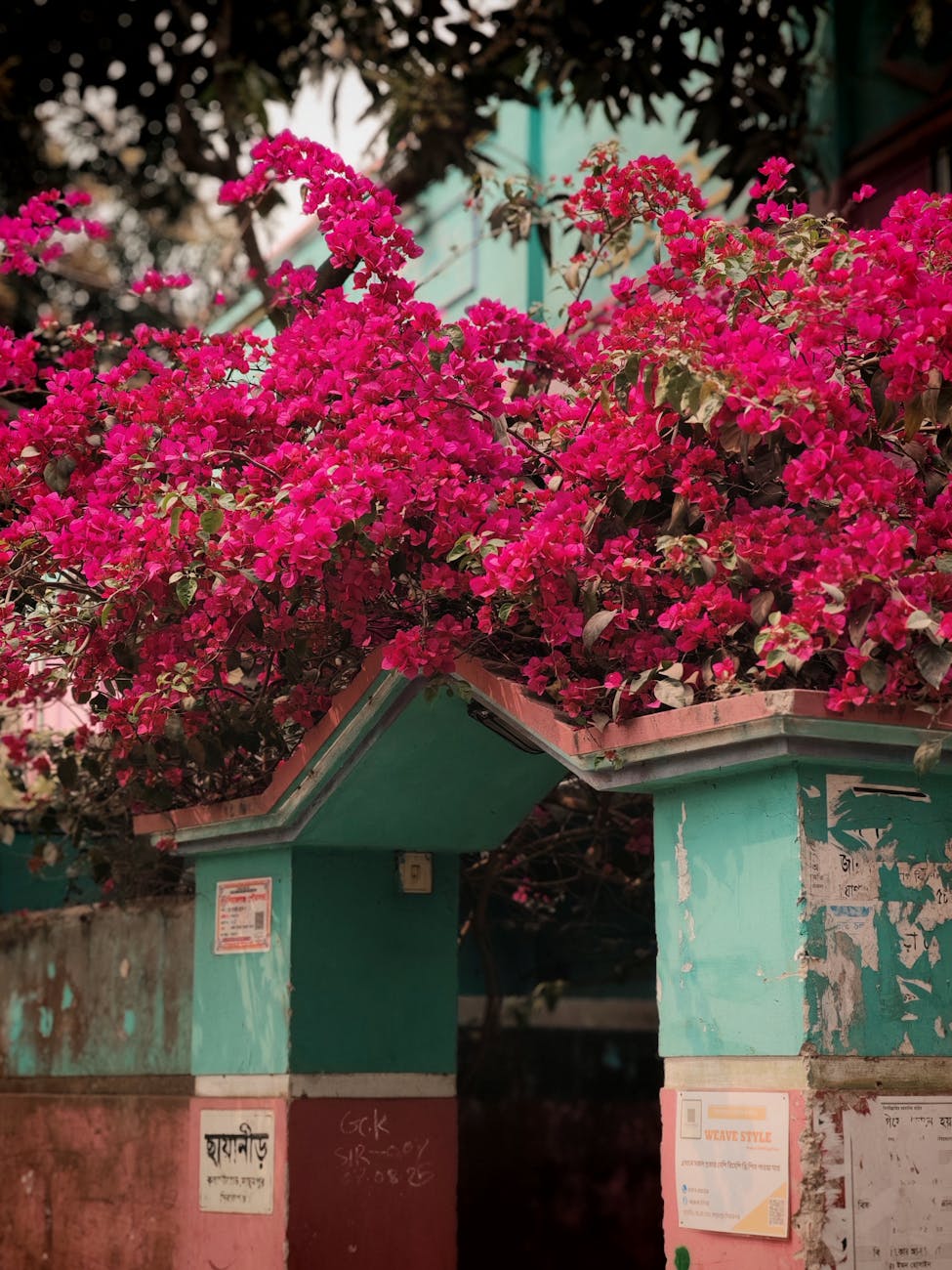
During the construction of the entrepreneur’s house, Wang Hsiu‑Jung walked past the property almost daily, hoping to see whether there was any activity inside. It was always quiet. She observed that if the house was occupied, the residents were not connected to the man. By autumn, bougainvillea had climbed over the wall, blooming with blood‑red blossoms.
Wang Hsiu‑Jung remembered the summer she was preparing for her college entrance examinations. Often, she would take the excuse of needing a walk after long hours of study and wander along You‑Ai Street to conduct her secret investigation. Ever since witnessing the execution, she had involuntarily begun collecting fragments of information she overheard from adults about the man: His name was Tang Te-Chang, he was a lawyer who had studied law in Japan. He represented enraged citizens who were on the verge of deciding to overthrow the new rulers retreating from China, persuading them to lay down their weapons so he could negotiate with officials on their behalf. Unexpectedly, the new regime spared no one in its brutal crackdown—not even the negotiator.
Almost every late afternoon, Wang Hsiu‑Jung wandered through the neighborhoods where she had overheard adults mention Tang Te‑Chang’s workplace or residence. In a lane opposite the courthouse, she noticed a two‑story building that combined reinforced concrete with wood. It matched the description she had secretly pieced together from her parents’ occasional conversations.
As she tried to peer into the courtyard through the gaps in the gate, a man in a black shirt fixed his gaze on her. The hostility in his eyes convinced Wang Hsiu‑Jung that she had found the right place. Later, she learned that political dissidents and their families were constantly under surveillance—not only to monitor and report their activities, but also to intimidate anyone connected to them. In no time, they could lose their jobs, their social circles, and every network that sustained their existence.
In the autumn, Wang Hsiu‑Jung enrolled in the university’s department of architecture, within biking distance from her home. The heavy demands of study gradually pushed aside her memories of the dead man and his abandoned house. In the decades that followed, marriage, qualifying as an architect, giving birth and raising children, and running her own firm with project after project kept her extremely busy. She never returned to the house again.
She did witness government corruption firsthand, whether in the approval of construction permits and licenses or in the staging of so-called cultural events that offered little culture and abundant propaganda. Yet what could an individual do to bring change under such a repressive political atmosphere? The economy was indeed growing, and people were accumulating wealth quickly, thanks to the omnipotent national leader. The last thing a prospering society wanted was to expose truths it preferred not to know.
When she heard Tang Te‑Chang’s name mentioned publicly again, it was forty years after his execution. A group of human rights activists had decided to hold a commemoration ceremony on the very day he was killed, at the site where Wang Hsiu‑Jung had seen his body. At that time, it was still a taboo. Simply speaking Tang Te‑Chang’s name had long been forbidden, and no one knew what consequences might follow such an openly summoned event.
Four months later, the national leader announced the abolition of Martial Law. The island slowly began to confront its past traumas, and the long journey of healing commenced.
Despite the regime’s efforts to preserve its authoritarian grip, more and more social movements emerged. Human rights activists, democracy campaigners, and free‑speech advocates took the risk of marching in the streets. Their protests grew too large to be silenced or dispersed, and eventually the government was forced to compromise. When the name of the man who had been executed in public was finally spoken aloud again, nearly half a century had passed since his death. Wang Hsiu‑Jung at last understood what people had truly felt back then: fear. It was the fear of authoritarian rule, the very outcome the regime had intended by openly killing a lawyer who represented the people in their struggle for rights.
At a conference on urban renewal focused on regenerating the old city center, a proposal was raised to rename the roundabout park after Tang Te‑Chang and to erect a bust in his memory, redressing his unjust death. Wang Hsiu‑Jung was taken aback, but she immediately voted in favor.
Is late justice still justice? Wang Hsiu‑Jung asked herself. Now, a group of preservationists sought to restore his house—and they came to find her.
*
The restoration team, consisting of an assistant professor of architecture and volunteer students, began by consulting historians. They learned that the building was most likely constructed in the 1930s, and that Tang Te‑Chang had purchased it in 1944. Once the restoration project was launched, many people came forward to help, bringing with them stories they had heard but never dared to share: Tang Te‑Chang had been cruelly tortured while detained, and after his execution his body was not allowed to be claimed. The regime wanted to “set an example” for potential rebels.
In a way, Wang Hsiu‑Jung felt fortunate that she had not uncovered such horrendous stories during her youthful investigations. No one should be trapped in such a nightmare.
*
On the morning of the scheduled onsite meeting, Wang Hsiu‑Jung rose at dawn. Even after breakfast and a walk, she arrived at the Tang House more than an hour before the meeting.
The low wall in the courtyard appeared to have been added later; it stood apart from the main structure, with a visible gap between them. The choice of dark terrazzo finishes, dating back to the Japanese colonial period, may have reflected wartime circumstances.
When the restoration team arrived—Professor Tsai and four students, two girls and two boys—they explained that there were more members in their group, though some were in class that morning. They brought foldable chairs and made sure Wang Hsiu‑Jung received one with a back and arms, so she could rest comfortably if she grew tired. Then they led her inside.
For the first few years after Tang Te‑Chang’s death, the house served as the only shelter for his wife and son. To make a living, they divided the property into two sections and rented out one part for income. Unfortunately, tenants soon discovered the isolation of a household under surveillance and ended their rental contracts as quickly as possible. Eventually, the wife and son were forced to move to a rural area, where the cost of living was lower and few people knew them. The ownership of the house changed hands several times, until the market lost all interest in it. The building deteriorated, but it remained standing.
Local businesses launched a crowdfunding campaign to establish a memorial foundation first, and then to buy back the house. More donations were still needed for the restoration that followed, but they were hopeful.
There were many repair tasks awaiting. First came the precise measurement of the entire building; then the team needed to determine the condition in which the house most closely resembled the days when the Tang family had lived there.
The sunken foundation had to be refilled with rebar and concrete, the terrazzo floors repaved and polished, and the drainage from the tiled roof and exterior walls repaired to stop years of leaking. The house had been partially remodeled several times. Wang Hsiu‑Jung reminded them that the best way to distinguish modifications was by observing changes in materials. For example, the wooden staircase connecting the concrete and wooden structures had been installed beneath a higher ceiling, with two steps taller than the others to make space for a round window in the corridor beside the wooden section. This suggested the staircase was not part of the original design. Likewise, the rear room on the second floor was built with precast concrete panels rather than traditional bricks.
To restore the house, they needed carpenters and masons skilled in traditional techniques—an almost impossible task. Professor Tsai told Wang Hsiu‑Jung that if such methods were unavailable, they would have to rely on modern techniques. Fortunately, the city government informed them that they could draw materials from the city’s “building material bank,” where items salvaged from demolished buildings, such as glass panes and wooden window frames, were preserved for the restoration of historical buildings.
Standing in the center of this hybrid‑style house, Wang Hsiu‑Jung drew a long breath in deep admiration. It was a model of the commonplace, yet its everyday, profound aesthetics of the old era had never been compromised.
All the memories returned: the man lying in his own blood, the turmoil of the streets that late afternoon, and her secret investigation of his home. He had not yet reached forty when he was killed, and she had been seventeen when she witnessed the scene. Now she was in her eighties, while he had never been given the chance to grow old.
Is late justice still justice? Mr. Tang and his family never received the justice they deserved; yet survivors of authoritarian cruelty deeply needed it. Wang Hsiu‑Jung recognized that, although the redress was symbolic, she felt comforted to see it arrive.
She looked out from the window where Tang Te‑Chang had once kept his law office. To her surprise, the bougainvillea blossoms were still in wild bloom, as if nothing had been disturbed over the past decades.
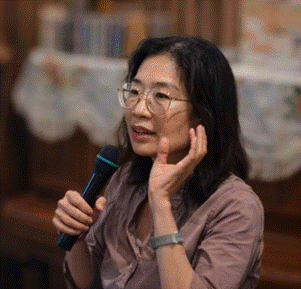
C. J. Anderson-Wu (吳介禎) is a Taiwanese writer and literary activist whose work explores historical trauma, transitional justice, and human rights. Her short story collections Impossible to Swallow and The Surveillance examine Taiwan’s White Terror era, while Endangered Youth—Taiwan, Hong Kong, Ukraine and her poetry collection Clear My Name—Taiwan, Hong Kong, Ukraine expand her focus to global struggles for freedom and sovereignty. Her writing has been recognized by numerous International awards, including the Writers’ Mastermind Contest, the Human Rights Art Festival, the Strands Lit International Flash Fiction Competition, the Invisible City Blurred Genre Literature Competition, the Wordweavers Literature Contest, the Flying Island Poetry Manuscript Contest, the Premio Letterario Internazionale Città di Arona, and the Miserere Review Writing Competition.


Deja una respuesta