
About Little Jack Horner
When I was a girl I loved nursery rhymes. I had a beautiful Mother Goose book which I used to read often. Over the years that book disintegrated from frequent use and it was eventually disposed of. When my oldest son was born, I replaced it with a few new nursery rhyme books, all of which are beautifully illustrated.
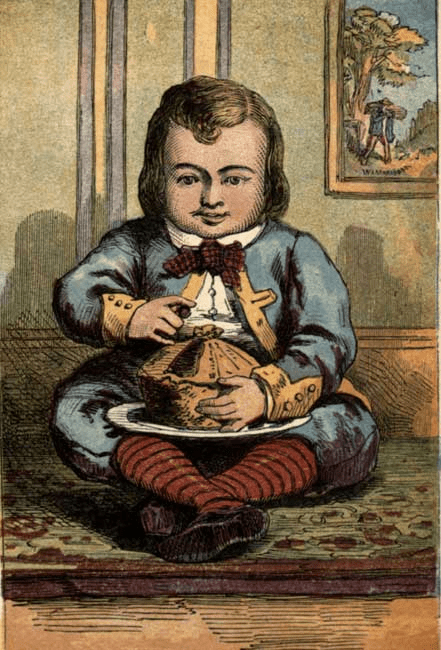
One of my favourite nursery rhymes is Little Jack Horner. The version form the Project Gutenberg ebook of The National Nursery Book by Unknown goes like this:
Little Jack Horner.
Sat in the corner,
Eating a Christmas pie;
He put in his thumb,
And pulled out plum,
And said “What a good boy am I.”
This nursery rhyme is believed to have originited in 1538 during the English Reformation. During the years 1536 to 1541, King Henry VIII set about an administrative and legal process whereby he disbanded monasteries, priories, convents, and friaries in England, Wales and Ireland. The incomes previously earned by the monasteries were expropriated by the crown and their assets were seized.
It is speculated that the Jack from this nursery rhyme is Thomas Horner who was a steward to the last abbot of Glastonbury, Richard Whiting. According to the story, Horner was sent to London with a Christmas pie for King Henry VIII. Inside the pie the deeds to twelve manor houses were hidden. These were intended to be a gift to the king and a last effort by Richard Whiting to prevent the nationalisation of church lands and the destruction of Glastonbury Abbey.
On the way to London, Horner discovered the deeds hidden in the pie and took for himself the deeds of the manor of Mells in Summerset. Shortly afterward, Horner moved into the manor and his descendants have lived in the manor house for generations. They dispute the claim that the deeds were stolen by Horner.
Little Jack Horner and Me
The origin of this nursery rhyme fascinates me so much I have incorporated it into my writing.
In my supernatural fantasy novel, Through the Nethergate, it is mentioned by one of the main supporting characters, the Monk.
The Monks story is included in my collection of short stories, And the Grave Awaits.
Extract from Through the Nethergate relating to Little Jack Horner
Here is an short extract from Through the Nethergate that details the original wording of this nursery rhyme and a peek into its history:
“Margaret continued to watch him. She wasn’t sure where this outpouring of information was going.
I’m talking to a ghost, she thought. Someone who says he was born in 1483. Bewilderment and fear fluttered in her stomach.
The monk seemed to pull himself together and continued to speak:
“In 1536, King Henry VIII set about the dissolution of the monasteries. Monasteries, priories, convents and friaries in England, Wales and Ireland were disbanded and their income and assets appropriated by the Crown.”
The monk’s eyes seemed to glisten in the dim light.
“In the run up to Christmas 1538, Richard Whiting sent a gift to the king in a last effort to prevent the nationalisation of church lands and the destruction of the abbey. The gift was a huge Christmas pie with the deeds to a dozen manor houses hidden inside it. The abbot chose two trusted men to deliver the gift; one was his steward, Thomas Horner, and the other was me.”
A smile suddenly lit up the monk’s face.
“Do you know the nursery rhyme, Little Jack Horner?”
Margaret nodded again. A little taken aback at this sudden change of direction to the conversation.
Now he sings of Jackey Horner,
Sitting in the Chimney-Corner,
Eating of a Christmas pye,
Putting in his thumb, Oh fie!
Putting in, Oh fie, his Thumb,
Pulling out, Oh strange! A Plum.
“That nursery rhyme was written about Thomas Horner. During the journey, he opened the pie and took out the deeds of the manor of Mells in Somerset, which he kept for himself.”
“What about you?” Margaret asked. “What happened to you?”
The monk looked at Margaret, his smile slowly fading.
“I was killed, of course. Stabbed through the heart by that treacherous and thieving Thomas Horner.”
The monk’s shoulders slumped dejectedly and his mouth turned downwards.”
About Robbie Cheadle
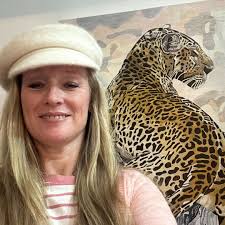
South African author, photographer, and artist, Robbie Cheadle, has written and illustrated seventeen children’s books, illustrated a further three children’s books, written and illustrated four poetry books and written and illustrated one celebration of cake and fondant art book with recipes. Her work has also appeared in poetry and short story anthologies.
Robbie also has two novels and a collection of short stories published under the name of Roberta Eaton Cheadle and has horror, paranormal, and fantasy short stories featured in several anthologies under this name.
You can find Robbie Cheadle’s artwork, fondant and cake artwork, and all her books on her website here: https://www.robbiecheadle.co.za/
Social Media Links
Bluesky: https://bsky.app/profile/robbiecheadle.bsky.social
YouTube: https://www.youtube.com/channel/UCVyFo_OJLPqFa9ZhHnCfHUA
Goodreads: https://www.goodreads.com/author/show/15584446.Robbie_Cheadle
TSL Publications: https://tslbooks.uk/product-tag/robbie-cheadle/
Amazon: https://www.amazon.com/stores/Robbie-Cheadle/author/B01N9J62GQ
Unsplash profile: https://unsplash.com/@r_cheadle


Deja una respuesta