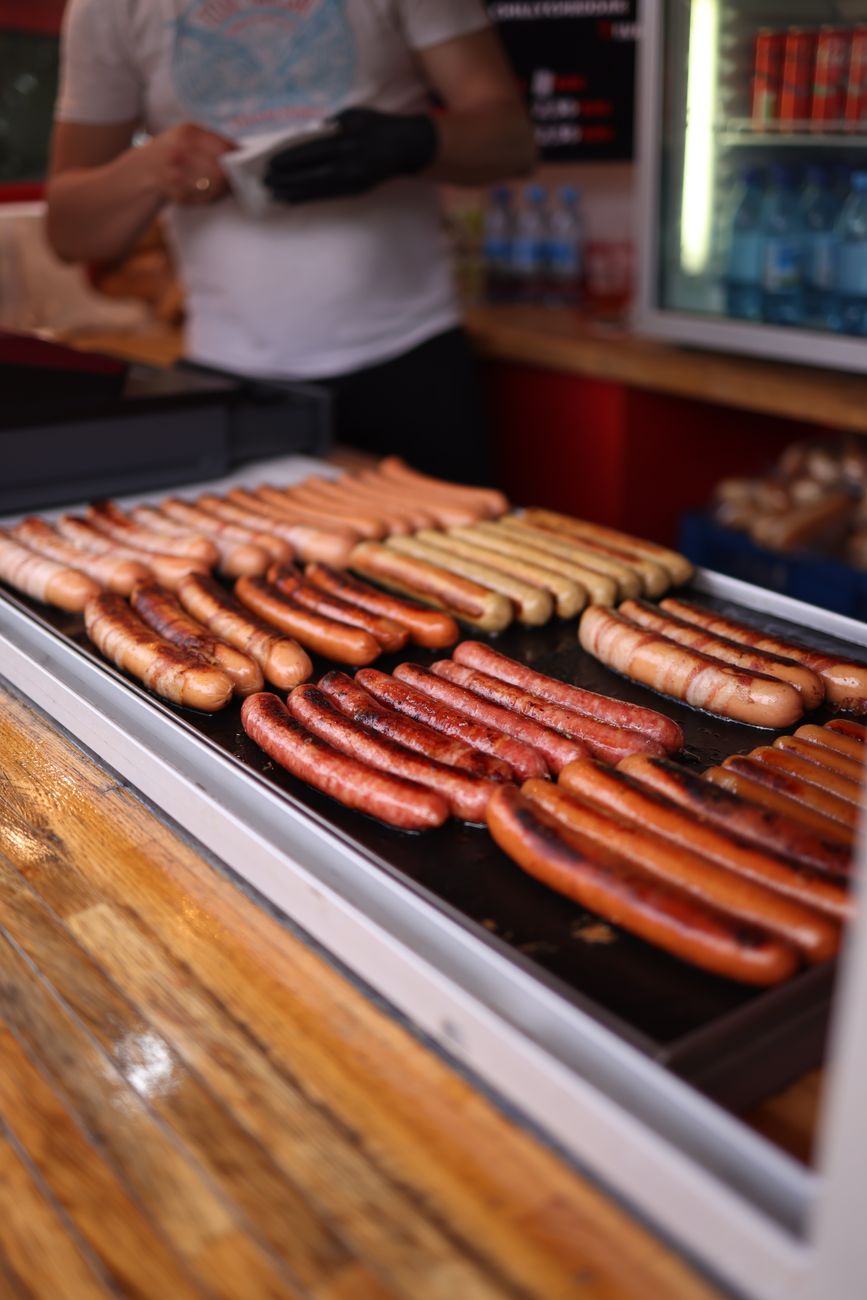
Darvon, a fiction editor based in New York City, wandered down the city street at noon, seeking lunch. He happened upon a pushcart, from which an elderly man was selling frankfurters. Upon the side of the pushcart was a stenciled sign that read, “$5.” It was 1971.
“Getcher’ red hots,” bawled the old gent, holding a wiener in a bun over his head and waving it about.
“I’ll take one, Pop,” said Darvon. He felt his stomach growl.
Reaching into the hot wiener water with a pair of tongs, the vendor turned up a steaming frank, which he plunked into Darvon’s outstretched hand.
“Yow!” bellowed Darvon, recoiling from the intense heat and dropping the dog. “What the hell?” he sputtered. “How about a bun–and onions and relish and mustard and all the rest?” he asked.
“For five bucks, you get a frank, and that’s it.” said the old man. “This ain’t 1950,” he pointed out. “You wan’ embellishments, you gotta pay!”
“Excuse me,” said another man, pushing up alongside Darvon and offering a five-spot to the pushcart vendor. Darvon paused to see what would happen.
“Hiya, Sid,” the new man said to the pushcart vendor.
Sid fished around in the boiling water containing the franks and pulled one out, slapped it into the palm of the newcomer. The new man hissed and grimaced, as Darvon had done, but made no remark. Without another word, he offered up another dollar, for which he received a dollop of relish and a slather of mustard and a small handful of onions, directly into his bare hand.
“See ya tomorrow, Sid,” said the man, and he walked away, munching his frank.
Sid glanced up at Darvon, who was still standing, forlorn, having dropped his frank.
“Hep’ ya?” Sid asked.
“Hot dogs cost only $1.50 per pound in the grocery store,” remarked Darvon pointedly. “Yet, you charge $5 per dog and don’t even include a bun! How do you account for that?”
“You wan’ a $5 frank,” groused Sid, “then go to your local supermarket.”
Taking the old man literally, Darvon journeyed to Kroger and bought his fill of wieners and buns. He tossed in an onion, a jar of relish, and a bottle of mustard as well. The store manager was much more buoyant and friendly than Sid had been. This left a mark on Darvon.
The next day, Darvon confronted the hot dog vendor again and recounted his financial success at the grocer’s.
“Lookit,” said Sid, leaning over his pushcart, “25 years ago, my old man was chargin’ $5 for a frank. You ever hear of inflation? Taxes? Fees? Insurance? Protection? Frankin’ kickbacks, for God’s sake?”
“Oh,” murmured Darvon in a more subdued voice. “I guess I never realized what you have to put up with. Sorry,” he said, and turned and began to walk off. He hesitated, turned back, and asked the vendor, “Why don’t you just raise your prices to keep up with the times?”
“Because,” said Sid, “then I’d have to make a whole new sign.”
Darvon nodded and walked off.
Later that afternoon, after he’d been summarily fired from his position as editor at a prominent publishing house, Darvon considered what course his life should take next. Resolving to create some form of recognition for the non-marketable but quality writers he’d had to disappoint as editor, he created an anthology and awards program for writers of the so-called Small Press. His wife was a co-conspirator in his endeavor. They toiled far into the night.
“What’ll we call it, Dar’?” asked Peggy.
Darvon stared back at her, drawing a blank. Then he thought back to the businessmen he’d met recently. He made his decision.
“We’ll call it,” he declared, “The Shopping Cart Prize.”
Deja una respuesta