Sometimes Our Past Is Part of Our Future.
There are places that never learn how to leave us.
They remain long after our feet abandoned their paths, long after childhood surrendered its innocence to adulthood, and long after the world gave us new names for the things we once knew by heart. They wait somewhere beneath our memories, patient as ancient soil, certain that one day we shall return—not necessarily with our bodies, but with the part of ourselves that never learned to travel.
Musoka is such a place.
Find it in Kyamatula Sublocation, Yathui Location, Mwala Subcounty, Machakos County, Kenya. Look beyond the familiar boundaries of maps, beyond the hurried descriptions of rural Africa, and there it lies: a lowland settlement breathing beneath a semi-arid sky, where the sun mastered the art of staying and rain perfected the art of being missed.
I was born there.
Not into a landscape of endless rivers or mountains dressed in permanent green, but into a country of dust, stubborn vegetation, open skies and seasons that demanded patience. Musoka did not possess the kind of beauty that announces itself to strangers. Its beauty had to be lived before it could be understood. It was hidden in the colour of its earth, in the silence between distant homesteads, in the familiar paths that childhood made enormous and memory later made sacred.
The land was never empty.
Even when the fields appeared exhausted, even when the sun pressed its weight against the ground, something remained alive beneath the surface. Roots continued their quiet negotiations with the earth. Trees held their ground. The wind travelled across the lowlands carrying the scent of yesterday, while the horizon stood open, as though the future had not yet decided where to begin.
In Musoka, the weather was not merely weather. It was a language.
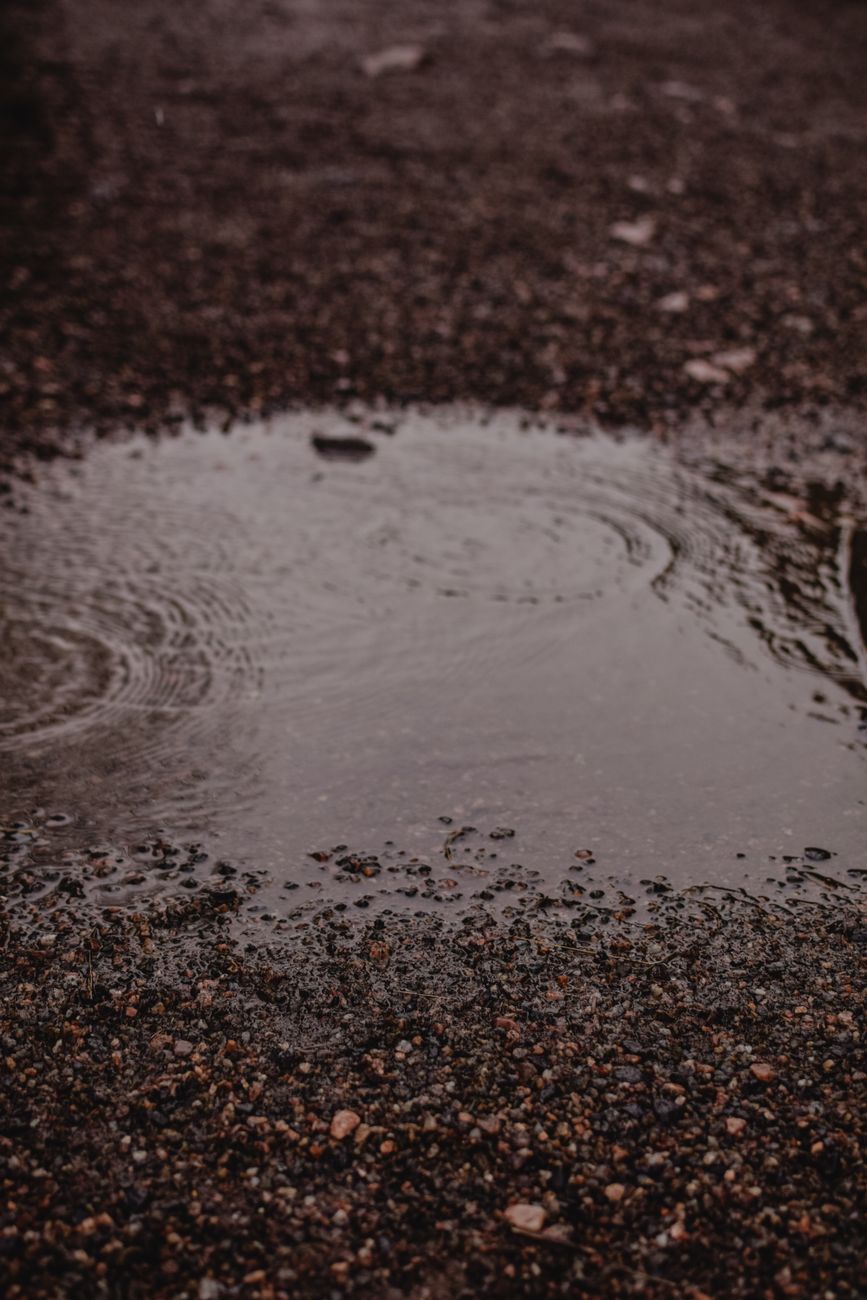
The sun spoke of endurance. The dust spoke of movement. The clouds spoke of possibility. And rain, when it came, spoke a language understood by everything that had waited.
There is a particular kind of gratitude that grows in places where abundance cannot be assumed. It is not the gratitude of people who have everything, but of those who understand the importance of what little arrives. A season of rain could change the appearance of the earth, but it could also change the appearance of hope.
I did not know then that I was growing inside a geography of lessons.
Childhood rarely tells us that it is becoming history. It simply happens. The paths are walked without being photographed. The trees are passed without being admired. The sky is watched without anyone thinking to preserve its colour. Ordinary days accumulate quietly until time gives them extraordinary value.
That is the cruelty and kindness of memory. It makes treasures out of things we once considered ordinary.
Today, I understand that Musoka was teaching me to recognize beauty without abundance, strength without applause, and belonging without explanation.
I also come from the Mbaa Muli lineage. That inheritance stretches beyond the limits of my own lifetime. It connects the present to lives I did not personally witness, to generations whose stories were written not in books but in the continuation of existence itself.
A lineage is an unfinished conversation.
It is the past refusing to become entirely past. It is the quiet knowledge that somewhere behind every beginning lies another beginning, and behind that another, until individual lives become part of a much larger human story.
We inherit more than names. We inherit landscapes, silences, values, struggles and possibilities. We inherit the consequences of decisions made before our arrival, just as those who come after us will inherit the consequences of ours.
Perhaps this is why a village matters.
Not because it can offer everything, but because it reminds us that everything must begin somewhere.
The modern world is very good at measuring distance. It measures how far we travel, how quickly we communicate, how tall our buildings rise and how much wealth we accumulate. It celebrates departure as evidence of ambition and sometimes treats humble beginnings as something to overcome.
But I have begun to question that definition of progress.
Must a person become unfamiliar with their birthplace to become successful? Must the language of childhood be abandoned before the language of the world can be learned? Must we mistake the absence of modern conveniences for an absence of wisdom?
Musoka asks these questions without speaking.
Its semi-arid ground offers an answer that is neither loud nor fashionable. Survival is not always a dramatic achievement. Sometimes it is simply the decision to remain rooted while circumstances change. Sometimes greatness is not found in escaping a difficult landscape, but in carrying its lessons into places where they are needed.
The world may see a dry village.
I see a library without walls.
Its shelves are the seasons. Its pages are the paths. Its oldest manuscripts are buried in the soil, and its most enduring lessons are written in the patience of trees. Nothing there needs to be translated for the person who belongs to it.
Yet belonging is not the same as being trapped.
I dream of a future in which Musoka is remembered without being romanticized. A future in which its people can enjoy opportunity without surrendering their identity, where development does not erase memory, where progress does not make the past disposable, and where the children who grow there understand that their beginnings are not a limitation on their destinations.
I want the world to know that extraordinary stories do not always emerge from extraordinary-looking places.
Some begin in villages whose names international audiences have never heard. Some begin beneath skies where rain is uncertain. Some begin on dusty paths that lead nowhere famous, yet quietly prepare a human being to walk towards the impossible.
And when the journey becomes long, when the world grows unfamiliar, when success arrives with its strange demand to become somebody new, the memory of home may become the most important possession we have.
Perhaps that is what I have been trying to understand all along.
We spend our lives moving forward, yet the things that sustain us are often behind us. We search for new horizons while carrying old landscapes inside our hearts. We imagine the future as a place waiting somewhere ahead, forgetting that it is also being shaped by everything we have already lived.
Musoka is not behind me.
It is beneath me, like the ground beneath every journey.
One day, another generation will inherit its paths. The seasons will change, the landscape will continue its negotiations with the sun, and new dreams will rise from the same earth. Perhaps those who come after us will build different lives, travel to distant countries and discover worlds that our childhood could never have imagined.
I hope they will go.
I hope they will become everything their dreams permit.
But I hope they will remember.
Remember that a small village can hold an enormous history. That dry land can produce deep roots. That a humble beginning is not a shameful beginning. And that the future does not always require us to abandon the past.
For if the world asks where I began, I will not search for a complicated answer.
I will say Musoka.
And if it asks what that place gave me, I will say something that no measurement of distance, wealth or achievement can adequately explain:
It gave me somewhere to belong before I knew how much belonging would matter.
Sometimes our past is part of our future.
Perhaps the greatest journey is not the one that takes us furthest from home, but the one that finally teaches us how to carry home without leaving it behind.
Musoka is a village on the map. In my memory, it is an entire world.
Deja una respuesta