Hotel on the Corner of Bitter and Sweet by Jamie Ford and the forced interment of the Japanese Americans during WW2 by Robbie Cheadle

Published by

on

An overview of the book

Hotel on the Corner of Bitter and Sweet is a historical novel written by Jamie Ford. The plot makes use of a dual timeline: one featuring Henry as a 12-year-old Chinese boy growing up during World War II and the other depicting Henry 44 years later as a widow with an adult son.

The storyline revolves around the friendship between Henry, the only son of immigrant Chinese parents living in Seattle, Washington, and Keiko, the daughter of a second-generation Japanese family. Henry and Keiko become friends as the only two Asian children at their elementary school. They are both bullied by their white peers, and they are both expected/forced to work as free labour in the school cafeteria dishing up meals and cleaning up in terms of their scholarships.

When Japan bombs Pearl Harbour and the USA enters the war, the anti-Japanese sentiment in America increases. Henry’s father, who only speaks Cantonese and who despises the Japanese because of the Japanese invasion of the Chinese province of Manchuria in 1931 and the impact it had on Henry’s father’s life, is concerned about his son’s safety. He forces Henry to wear an “I am Chinese” badge so that he isn’t mistaken for Japanese. Henry’s father is ardently anti-Japanese and Henry hides his friendship with Keiko and her family from him.

As the war progresses, the anti-Japanese sentiment in America increases and all people of Japanese ancestry are viewed as potential spies and war criminals. This culminates in the US government ordering all the people in Japan Town where Kaiko lives (adjacent to China Town where Henry lives) to relocate to internment camps.

Keiko’s family is transferred temporarily to Camp Harmony, a temporary internment facility on the Western Washington Fairgrounds in Puyallup, Washington. Henry is able to visit her through a collaboration with the lady who runs the cafeteria at his elementary school. He assists her in serving meals to the internees on a Saturday.

Eventually, Keiko’s family is transferred to the Minidoka internment camp in Idaho. Henry visits her there once with an older musician friend and they become betrothed. They agree to wait for each other and to write to each other.

Sadly, due to Henry’s father’s fanatical anti-Japanese attitude, this never turns out as planned and Henry loses touch with Keiko.

The second timeline features Henry as an older man with a grown son, Marty, who is studying at the local college. Henry wife, Ethel, has passed away from cancer and he is living alone. One day, Henry learns that the possessions of several Japanese American families who were forced to leave Japan Town have been discovered in the basement of the Panama Hotel. Henry goes to the hotel to investigate as he believes that some of Keiko’s families stored possessions might still be there. Henry has never forgotten Keiko even as he cared for his critically ill wife, but he kept his thoughts to himself. He eventually finds the courage to confide in Marty and his fiance about Keiko.

In summary, this book is about how warfare effects the lives of everyday people and civilians living away from the front lines. Keiko and Henry’s lives are both turned upside down due to the culture of fear, anger, and animosity that dominates during times of war.

Although the temporary and permanent internment camps where Keiko and her family live are both featured in this book, the camps are not a main character as is the case in some books about similar topics.

Dark origins

Hotel on the Corner of Bitter and Sweet revolves around the forced internment of Japanese American citizens during WW2.

During WW2, the US government forcibly relocated and incarcerated approximately 125,000 people of Japanese descent in 75 different internment facilities. Of those interned, approximately 67% were American citizens. The internments were undertaken as a result of Executive Order 9066 signed into effect by President Franklin D. Roosevelt. This order allowed regional military commanders to designate ‘military areas’ from which ‘any or all persons may be excluded’. People of Japanese ancestry were forced to leave Alaska, California and parts of Oregon, Washington and Arizona on the strength of this order.

Japanese Americans were initially prevented from participating in the military, but in 1943 this was changed and 20,000 Japanese Americans fought in the war on behalf of America. According to Hotel on the Corner of Bitter and Sweet, the internees volunteered for military services to prove their loyalty to their new country.

I was interested to learn that by 1992, the US government disbursed $1.6 billion in reparations to 82,219 Japanese Americans who had been incarcerated.

These are a few pictures that correlate with the content of this book taken from https://www.history.com/topics/world-war-ii/japanese-american-relocation
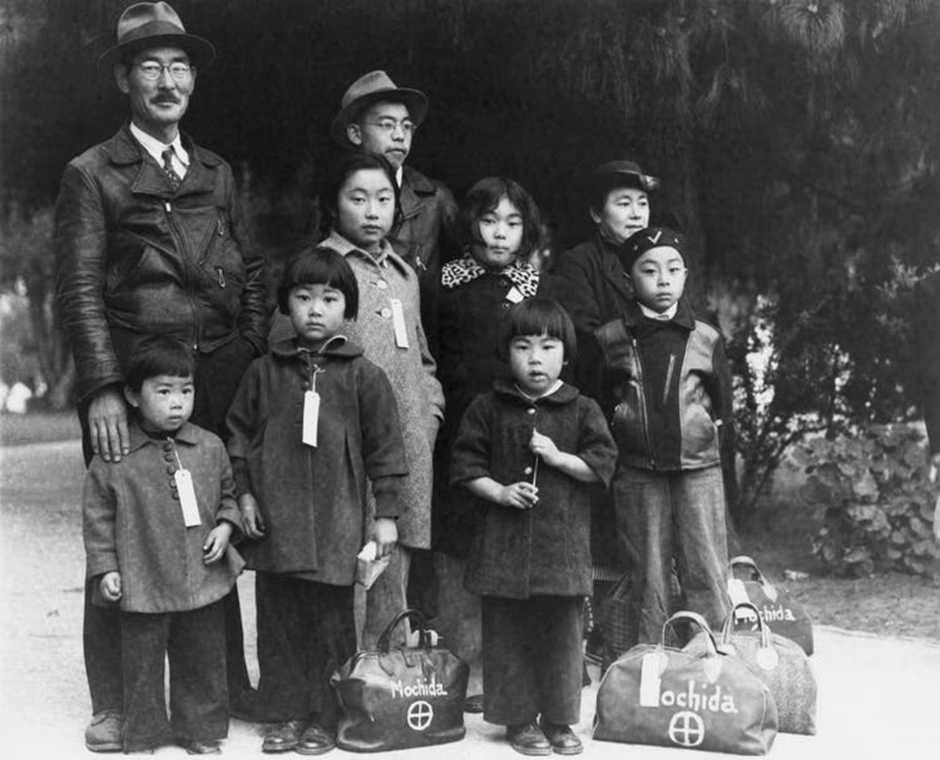
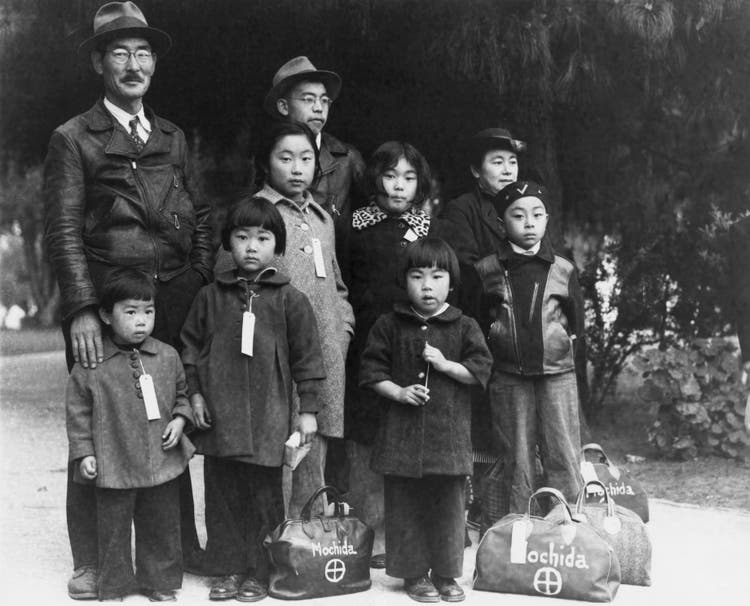
The Mochida family featured in this picture were among the thousands of Japanese-Americans forced into internment camps during WWII https://www.history.com/topics/world-war-ii/japanese-american-relocation
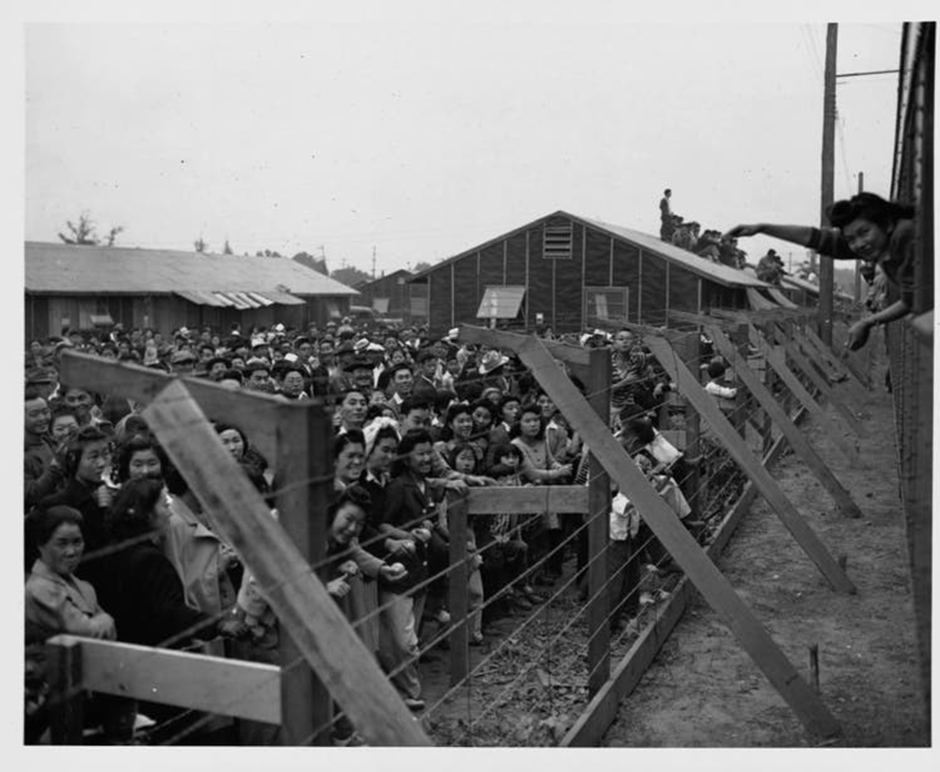
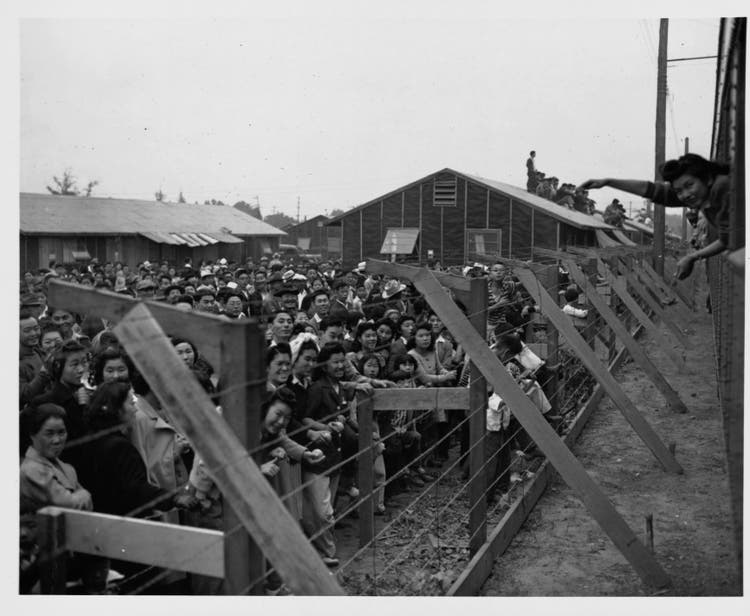
Japanese Americans incarcerated in crowded conditions in Santa Anita. https://www.history.com/topics/world-war-ii/japanese-american-relocation

A few powerful quotes from Hotel on the Corner of Bitter and Sweet

“The hardest choices in life aren’t between what’s right and what’s wrong but between what’s right and what’s best.”

“Henry, this isn’t about us. I mean it is, but they don’t define you by the button you wear. They define you by what you do, by what your actions say about you. And coming here, despite your parents, says a lot to them- and me. And they’re Americans first. They don’t see you as the enemy. They see you as a person.”

“The more Henry though about the shabby old knickknacks, the forgotten treasures, the more he wondered if his own broken heart might be found in there, hidden among the unclaimed possessions of another time. Boarded up in the basement of a condemned hotel. Lost, but never forgotten.”

“Henry looked up and down the empty avenue—no cars or trucks anywhere. No bicycles. No paperboys. No fruit sellers or fish buyers. No flower carts or noodle stands. The streets were vacant, empty—the way he felt inside. There was no one left.”

34 respuestas a “Hotel on the Corner of Bitter and Sweet by Jamie Ford and the forced interment of the Japanese Americans during WW2 by Robbie Cheadle”

  1. Avatar de Dave Astor

    Robbie, a great look at a great novel relating to a shameful episode in American history. And you provided excellent historical information about what happened.

    Le gusta a 1 persona

    1. Avatar de robbiesinspiration

      Hi Dave, this was such an interesting and insightful book. I learned a great deal about this time and what happened through reading it.

      Le gusta a 1 persona

  2. Avatar de Priscilla Bettis

    It’s such a horrible time in history. Hotel on the Corner of Bitter and Sweet sounds like a good read!

    Le gusta a 1 persona

    1. Avatar de robbiesinspiration

      Hi Priscilla, this was an excellent and insightful read. I didn’t know much about this event and time period in American history. My focus has always been on the war in Europe.

      Le gusta a 1 persona

  3. Avatar de robbiesinspiration

    Thanks for sharing, Juan

    Le gusta a 1 persona

  4. […] Hotel on the Corner of Bitter and Sweet by Jamie Ford and the forced interment of the Japanese Ameri… […]

    Me gusta

  5. Avatar de Darlene

    This sounds like a heart breaking novel. I have read a couple stories similar. Sad to say, the same thing happened in Canada at that time. Thanks for the well thought out review.

    Le gusta a 3 personas

    1. Avatar de Liz Gauffreau

      I didn’t know that Canada did the same thing.

      Le gusta a 1 persona

      1. Avatar de Darlene

        Sad to say, yes. Especially on the west coast where there were a number of Japanese-Canadian families. Joy Kowaga’s Obasan and Itsuka are excellent books about the internment of Japanese-Canadian citizens during WWII in Canada.

        https://www.goodreads.com/book/show/9723.Obasan

        https://www.goodreads.com/book/show/625174.Itsuka

        Le gusta a 3 personas

      2. Avatar de robbiesinspiration

        Thank you for these links, Darlene

        Le gusta a 1 persona

    2. Avatar de robbiesinspiration

      Thanks, Darlene, it happened in Brittain too. The Germans and Italians were interned. I brought it briefly into my book, While the Bombs Fell.

      Le gusta a 1 persona

  6. Avatar de Tina Opines

    It is a very moving & heart rending account. I wish American history used fiction along with facts to teach….books such as this are a blessing for those young readers to understand what happens on an emotional level.

    Le gusta a 2 personas

    1. Avatar de robbiesinspiration

      Hi Tina, I agree that fictionalised historical books present information in an engaging and relatable way to all age groups. Thank you for your comment.

      Me gusta

  7. Avatar de Liz Gauffreau

    Yet another shameful piece in American history.

    Le gusta a 2 personas

    1. Avatar de Book Club Mom

      I agree, Liz.

      Le gusta a 2 personas

    2. Avatar de robbiesinspiration

      This did follow Pearl Harbour which was also tragic and disgraceful.

      Le gusta a 1 persona

      1. Avatar de Liz Gauffreau

        Yes, when it comes to war, there is no shortage of shame to go around.

        Le gusta a 1 persona

  8. Avatar de Book Club Mom

    Hi Robbie – thank you for your review of this book. I read this a few years ago and enjoyed the story. I agree with Liz, it is a shameful period of American history, though.

    Le gusta a 2 personas

    1. Avatar de robbiesinspiration

      Hi Barbara, I think I learned of this book through you. I was a most engaging and educational read. Thank you

      Le gusta a 2 personas

    2. Avatar de robbiesinspiration

      Hi Barbara, I think I learned of this book through you. I was a most engaging and educational read. Thank you 😊

      Le gusta a 1 persona

  9. Avatar de T. W. Dittmer

    Mind-opening to think of these past acts by the U.S. government. Thank you for bringing it to my attention, Robbie.

    Le gusta a 2 personas

    1. Avatar de robbiesinspiration

      Hi Tim, these actions are taken at a point in time. This followed on from the attack on Pearl Harbour. Public outrage was very high after that terrible event

      Le gusta a 1 persona

  10. Avatar de Sue Dreamwalker

    It is always the innocent who get caught up within war, and this is one period of history along with others more recent unfortunately that hold a terrible scar on how we can soon turn to treat others so badly..

    The book sounds as its title suggests, as life gets caught between the bitter and the sweet…

    Many thanks for sharing this review Robbie… xx

    Le gusta a 3 personas

    1. Avatar de robbiesinspiration

      Hi sue, indeed, the title is most appropriate. An interesting insight into this terrible time in history. I’ve subsequently learned a lot more about the American entrance into WW2.

      Le gusta a 1 persona

      1. Avatar de Sue Dreamwalker

        Yes not all pleasant reading!..

        Le gusta a 1 persona

  11. Avatar de memadtwo

    This is a sad chapter of American history. There is so much animosity based only on one’s genetic heritage. Why did they not put Germans in interment camps or question their loyalty?

    I hope one day that humans will treat each other as all being part of the human race instead of making artificial designations of who belongs and who doesn’t. (K)

    Le gusta a 2 personas

    1. Avatar de robbiesinspiration

      In Britain they did put the Germans and Italians into interment camps. I mentioned it briefly in my book, While the Bombs Fell. My mother’s father, a dairy farmer, delivered milk daily to the Italian interment camp near Bungay.

      Me gusta

      1. Avatar de memadtwo

        Thanks Robbie, that’s something I did not know.

        Le gusta a 1 persona

  12. Avatar de petespringer

    The dual timeline sounds quite interesting for this novel. I normally don’t care for rap music, but there is a song called Kenji by a group called Fort Minor that I like that is about Japanese internment camps during World War II. I chose a version of the song with the lyrics because they are terrific.

    Le gusta a 2 personas

    1. Avatar de robbiesinspiration

      Thanks for sharing this link, Pete. It’s another interesting piece of world history.

      Le gusta a 1 persona

  13. Avatar de Cindy Georgakas

    What an insightful and historical read, Robbie and so very sad. I imagine it provides a lot of food for thought as you’re working on your book..

    Le gusta a 2 personas

    1. Avatar de robbiesinspiration

      Hi Cindy, I am always fascinated by the psychology of war and how people react within conflict circumstances. This is one of many war books I’ve read.

      Me gusta

  14. Avatar de acflory

    Very powerful! I’m not normally into books about war but this one tempts me because of the emphasis on /people/.

    Le gusta a 1 persona

  15. Avatar de Marcia Strykowski

    Nice to hear your thoughts on this book. I heard Jamie speak at one of his launch events, a really nice man. I also remember really enjoying Love and other Consolation Prizes.

    Me gusta

Replica a Marcia Strykowski Cancelar la respuesta