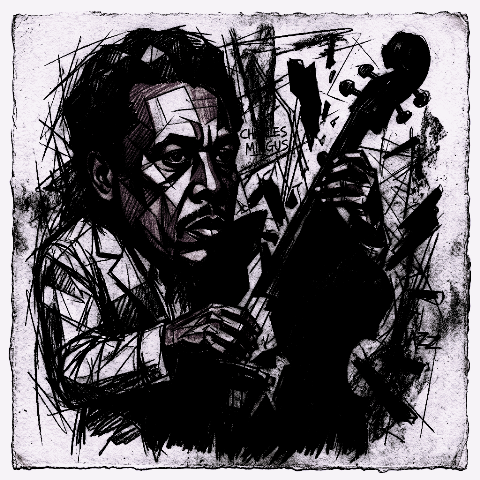

The Song Columbia Records Tried to Silence: The Story Behind Charles Mingus’s “Fables of Faubus”
In 1959, one of the greatest jazz bassist, composer, and band leader, Charles Mingus walked into a Columbia Records studio to record a piece that would become one of the most daring political protest songs in American music. The track was “Fables of Faubus”—a lurching, darkly comedic takedown of racist segregationist politics that record executives were too afraid to let the public fully hear. The typical censorship at work.
A Reaction to the Little Rock Crisis
Two years earlier, in September 1957, the nation’s eyes were fixed on Little Rock, Arkansas. Following the Supreme Court’s Brown v. Board of Education ruling, nine Black students—the Little Rock Nine—attempted to integrate Central High School. Arkansas Governor Orval Faubus responded by deploying the state’s National Guard to physically block the teenagers from entering the building, triggering a constitutional crisis that only ended when President Dwight D. Eisenhower sent federal troops to escort the students inside.
Watching the standoff unfold, Mingus didn’t want to write a mournful elegy. Instead, he chose a sharper weapon: satire.
Weaponizing Ridicule
To Mingus these segregationists were mostly a bunch of absurd clowns clinging to a crumbling, racist, system. He built “Fables of Faubus” around a jagged, stop-and-start melody that stumbles and lurches between tempos like a mocking circus march.
On stage, Mingus and drummer, Dannie Richmond, carried on with a sharp, call-and-response vocal routine. Mingus would ask Richmond to name someone «sick and ridiculous,» prompting Richmond to call out Governor Faubus for barring Black students from public schools. From there, the exchange escalated into a full blown indictment of white supremacy, calling out segregationists, the Ku Klux Klan, and federal inaction by name.
Censorship and the «Original» Comeback
When Mingus brought the piece to Columbia Records for his landmark 1959 album Mingus Ah Um, (one of the best albums released that year) executives loved the music but definitely not the words. Fearing commercial backlash and political controversy, the label refused to release the vocal version. Reluctantly, Mingus recorded “Fables of Faubus” as an instrumental—leaving the melody to speak for itself. But in live performances the lyrics were sung.
Mingus would not stay silenced for long.
In 1960, he took his quartet into the studio for the independent label Candid Records to record Charles Mingus Presents Charles Mingus—an album intentionally staged to capture the raw, unfiltered energy of his live shows. Because Columbia still held the copyright to the original title, Mingus renamed the uncensored vocal recording “Original Faubus Fables.”
A Living Protest
Over the next two decades, “Fables of Faubus” became a staple of Mingus’s live repertoire and a living vehicle for political commentary. Rather than freezing the song in 1957, Mingus and Richmond regularly updated the call-and-response lyrics to target new political targets—from segregationist governors of the 1960s to the Watergate scandal in the 1970s.
More than sixty years later, the track remains a masterclass in musical protest—proof that in the hands of a genius, a bassline and a punchline can hit just as hard as a speech.
Instagram: @Francisco_Bravo_Cabrera
YouTube: http://www.YouTube.com/@FranciscoBravoCabrera
CHEERS
Deja una respuesta