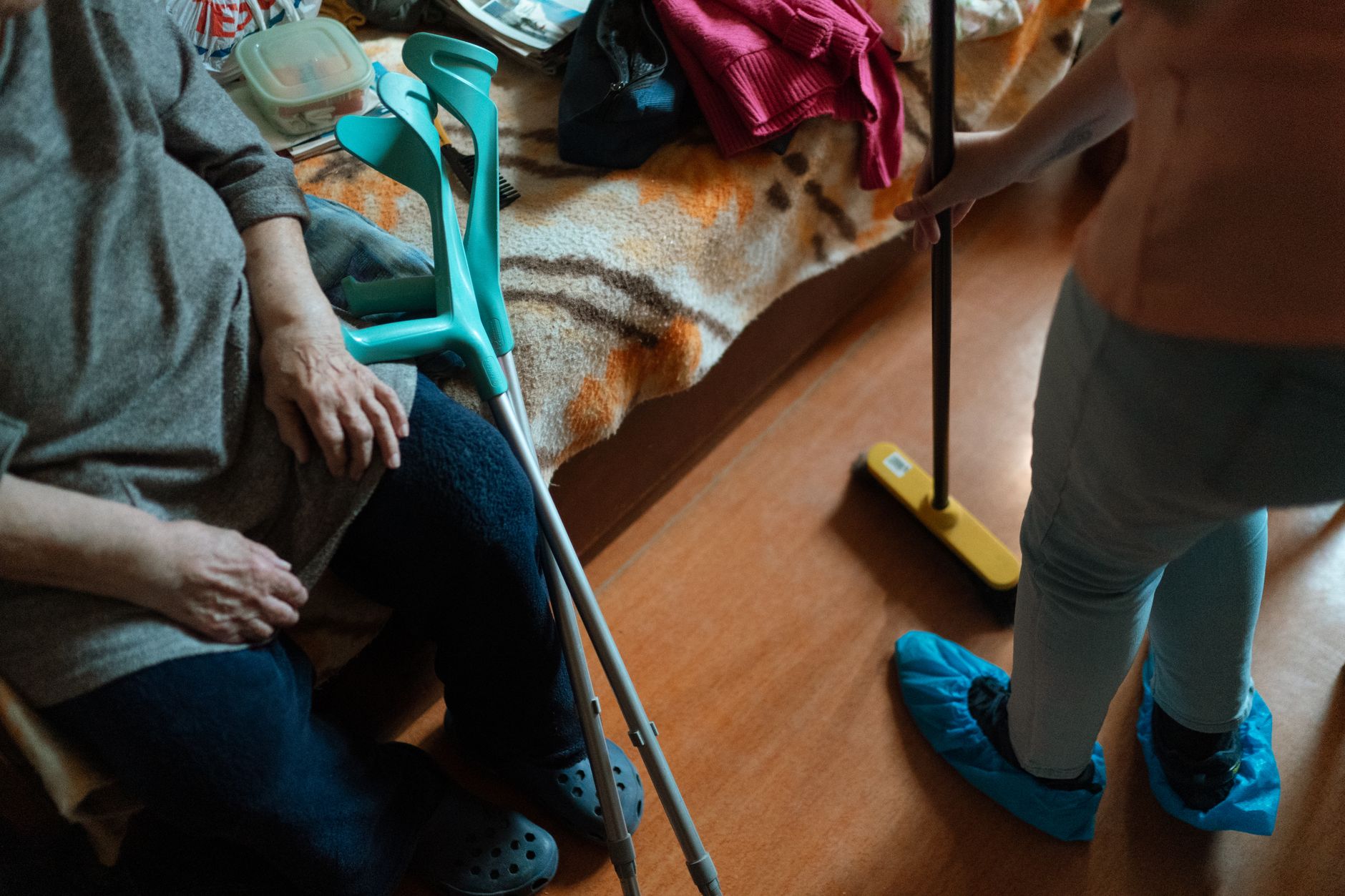
“When my Grandpa died, we had him at home. Now with my Dad, we let the nurses handle it all.”
Our 1989 Lexus wouldn’t start. We called AAA. They promptly dispatched a tow truck driver to our home. In no time, a mechanic arrived. He was a large man with long greasy hair, a full beard, and a friendly “Hallo.” His ample body cast a shadow over our pebbled driveway. The sun was at a slant.
“What’s the problem?” he kindly asked. Then he kicked the tires of our car with the attitude of a pro. “How long has this beauty been vacant?”
We explained that the Lexus was sitting idle during my husband’s lengthy hospital stay.
The driver looked us over with a benign grin. “I know old couples like you. This car needs to be driven, not just parked in your garage.”
I explained that my husband had been too weak to drive but would be behind the wheel again soon. “I know you will drive her as long as you can. I can see that,” he chuckled. “I also know your story.” He paused and then out of the blue, he said, “When my Granddad lay dying, we cared for him at home. Before my Dad died recently, we let the nurses handle the entire ordeal.»
After the tow truck driver left, his remarks made me stop and think. The move from a death happening at home to one in the hospital occurred in the mid-sixties, at the same time that hospice came into existence.
Simultaneously, breastfeeding, the liquid gold, was again encouraged, and praise for formula waned. Observing the changes in attitudes and practices in different areas, I wondered if different views about dying were also emerging.
The mechanization of healthcare is well established. Fewer office visits, less direct contact with doctors, and more Zoom calls, portals, and AI as a tool. Even the annual physicals are no longer required. Seldom does a doctor call a patient personally after a hospital stay. It is usually done by a nurse.
I am not suggesting a return to the old country doctor routine where the doctor was on call day and night with little private space to recoup. But today a relationship between doctor and patient is rare. Through technology, we are further estranged from one another. Diagnoses are made via tests and statistics, not individual encounters and assessments. The emergency room is the most visited and crowded meeting place for the variety of ailments, from terrible accidents to symptoms of the common flu.
To be cared for by strangers can be a personal decision. Families may want to spare members an unpleasant sight or experience. Or it can be a choice.
“I am not a pink lady,” one friend stated emphatically. Or, “That is not in my job description.”
It can also be a necessity. A family may not have the means to take care of a loved one at home. It can present a genuine conflict between a job, children, and a needy relative. It can be a choice.
One of my closest friends insisted, “I prefer a stranger to be with me during my final hours, not a friend.”
Taking care of an old or sick person can be a daunting task that not everyone is skilled to undertake. It might come as a choice between a young and an old relative. I once made the decision to be at our first grandchild’s Christmas, leaving my ailing mother alone. I later regretted the decision. Now I judge by need, not age or emotion.
The referral to a rehab facility following a hospital stay is common today. It gives the family a respite, and some patients might prefer good professional care and solitude to a crowded home environment. But emotional needs are often ignored. Nobody is at a rehab center to alleviate nightmares and fears, to hold a sweaty hand, to cradle a patient in pain.
There has long been a tradition of laying on of hands as in religious communities. Do we fear closeness or touching today? Infants wither without being touched. Animals become aggressive and mean. We are all connected through the body, first the throbbing blood-filled umbilical cord. Severed for a baby to grow, it still signifies an original physical bond.
Hospice is an attempt to bring the knowledge of medicine (especially pain management) and individual last wishes into a livable balance. I would also like to see colleges and high schools encourage students in their volunteer work to befriend older, even dying, people. Take a person on a walk, share music or read at the bedside. Schools could note this volunteer work on students’ resumes. Occupations that include personal touch often show favorable results, as occupational and physical therapists can attest to. Therapeutic riding calms nerves and restores balance.
Efforts to bring back some personal engagement happen with groups like Home Health Care, where providers visit a patient in the home, assess the situation, and share more than just knowledge about bodily ailments.
There are other attempts. Sharing the residence of an old or ailing person between households might be an option. The individual stays a limited time in one household before moving on to the next family member. How is this compatible with keeping a place of one’s own?
What is the greatest help we can give a caretaker to encourage a personal approach? A break! It can be a simple gesture such as taking the caretaker out for a cup of coffee or a walk, a phone call of encouragement, or a chance to air grievances. Anything will suffice, as it gives relief and allows for a refreshed return.
Not every person will profit from personal care, nor can every sick one be cured. It is a way of life we might choose, whether we succeed or not. I buried my face in my hands when my husband spiked a fever, and neither Tylenol nor wet cold wrappings brought it down. After hours of struggling, I was ready to give up when suddenly the temperature plummeted. Relief spilled into tears.
What did I learn from taking care of my husband? Years ago, I volunteered for hospice, but that involved mainly supporting and comforting a family. Now I had to acquire basic nursing skills like treating a fungal infection, changing and cleaning urine bags, helping with showers and dressing, steadying a weak body while walking, fending off nightly demons, and being surprised by how much urine we produce while sleeping.
The physical demands were harnessed by a tight schedule. The emotional demands kept changing like a kaleidoscope. Most difficult to acknowledge were my own limits. I had to admit fatigue and a fleeting sense that I was not up to a task. Luckily, my weaknesses were temporary, even though it took me a while to stop fearing the nights. Would I be able to calm my husband when he wanted to leave? How could I stay nonjudgemental when he turned against me? Most episodes were forgotten by morning, but when he remembered them, he felt regretful.
Did I love my husband less during these trying times? On the contrary, I felt an intensity close to compassion for what he had to endure. Then and now, I cherish the special evening hours when we talk over a glass of wine or when memory is revived while looking at a family photo album together.
It is death itself and the often treacherous path of dying that we shy away from. It is not what we would like to see happening. But there is comfort in leave-taking, which involves saying goodbye to the body and a relationship. Ignoring that farewell can distance us from the dying process and a dead body, but it may not help with the grieving.
Deja una respuesta