Never a person, never, that I have ever seen, such terrifying succinct evidence of destruction, undefined by age and time. More precisely the destruction of life, when life’s nothing but cruel destruction, savagery, destructive power of a poisonous snake constantly striking, at the eyes, nose, searing drops of aqua regia, scotched, forever, never easing at the forehead, mouth and now that destructive power had left behind crammed packed terrible scars all over, everywhere.
A short story in Vietnamese by Mai Thảo
Translator: Nguyễn Thị Phương Trâm
One at a time – all five of them – from their bedroom one after the other half-asleep head for the lounge room. I was in the middle of reading the paper. Once they were all in the middle of the room, they separated. The eldest boy had a six-barrel revolver dangling on his thigh, the stock was covered with sparkly gold glitter, on his left chest was pinned a huge five-pointed star, in silver cardboard. The smallest boy was the same. The walk, the way they moved, like the gadgets they had on them, were exactly the same. Their childish faces turned chilly, eyes glaring, bright, spitting fire – eyes that had recognised the presence of the enemy – watching the tiny bodies like mice, small bow-legged entities walking slowly deliberately and confidently on the patterned tiles, wide-legged with the swagger obstinate nature of trailblazers, tiny main characters in their story, holding their breath, they waited, alert they watched, tiptoed, quickly turned, their fingers firm on the trigger of the gun ready to shoot, their height halved as they lowered their forms closer to the ground, glaring, pierced through the thick veil of darkness in an imaginary corner – where the enemy had just showed up, and it was a face off – I couldn’t helped but laughed at the amusing scene, but I dared not laughed. Sank deep in a sacred magical imaginary world, the tiny gods were my very real nephews, really loved their little strange games, the friendly lounge room had turned into boundless mountainous enemy territory, a deadly valley, the furniture had turned into horses, a bar, house, boulder, they were hunting down, were taking care of their enemy, joking around laughing was a severe crime, I understood, and I was too scared to even laugh. One chilling shriek: “Hands up”. Startled by the black barrel of a gun pointing at my face. The kid had found his enemy, that enemy was me, I had no choice but drop the paper in my hands and lifted both hands in the air. But murderers must pay for their sins. Bang, bang. I dropped to the ground; I was dead and ignoring the despicable dead body of the enemy on the floor, my nephews focused, steady, strutted, ready, the eldest was the leader, his little brother followed suit, crossed the border back to their bedroom.
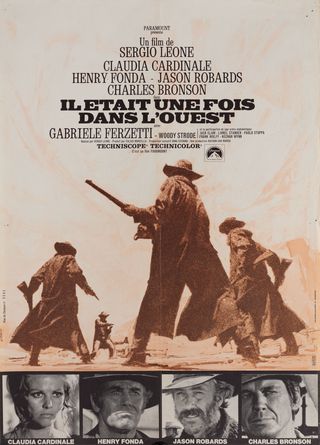
The game had played out for more than a week, more than a handful of times a day and I have been shot dead a hundred times over, since the Sunday, I took them to the cinema to watch Once Upon a Time In the West – Tráng sĩ với khẩu súng bá vàng by Henry Fonda. They were obsessed with Henry Fonda and my older brother’s quiet small villa, in the kitchen, on the verandah, in the guestroom, bedroom, out in the garden, in the storeroom, appeared the Henry Fonda in plural in the tight spaces with their golden guns and silver stars of ready and brave sheriffs. There was no game as fun compared to my older brother’s sons, my nephews were all into it, not just once – even though he also went to see the film – when Khôi was with them, not once did he join in; not once did Khôi participate.
He sat there, thoughtful, sunk deep into the depth of the lounge chair, both arms resting paralleled on his thighs, his crew cut hair sticking up on top of his head framed a generous forehead, eyes focus straight on what was in front of him, lips tightly shut, his expression serious, undistracted, immovable and silent like a statue. No attitude, no reaction. Picking up the paper, I asked him:
“You’re not playing with your little brothers?”
He looked at me, then look straight ahead, not shaking or nodding his head. For a minute, my question felt like the knocks on a securely shut door, he curled up like a snail in its shell, clad his small, childish body and soul in steel armour. I pulled out a five dollar note from my pocket and gave it to him: “For you”. Other than extending his hands to take it he remained still in his seat. I patted his shoulders, genially: “Go and get some meatballs from the intersection, quick”. It was only then that Khôi would remove himself from the chair, his solemn face and measured movement did not reveal any kind of excitement, he got up slowly, walked over to the front door, opened it and left.
*
I remember one morning, about six months ago, Đường, my oldest brother, received a letter from an auntie on my mother’s side from Biên Hòa. After he finished reading the letter, Đường was thoughtful for a moment, before he asked me:
“Are you busy?”
Surprised, I replied:
“No”.
Đường tapped his fingers on the letter:
“It’s auntie Linh’s letter about her son Quảng. And her grandson Khôi. I want you to go and fetch him for me, I want him to go to school with your nephews. Quảng, you remember him?”
“Quảng, auntie Cả’s son?” I asked.
“Yes, auntie Cả’s son”. Đường continued frowning: “Strange, auntie Linh said that Quảng had only the one son, how bad could be that he had to ask auntie Linh to ask us to take care of him? Never mind, just go and fetch him first. You should leave now so you can get back by the afternoon.” Đường rose from his chair and gave me the letter: “Quảng lives in Trảng Bom, his address is in here”.
*
On the creaky old bus climbing the no. One hill, an adventure, looking out at the endless rubber jungle, thousands of trees pulled the eyes along a road that seemingly did not end, light appearing from afar from under the deep green canopies of trees in the dark from bunkers, made me think of Quảng, pondered my memory of Quảng.
Quảng is one my aunties' eldest son – auntie Cả Đoàn – my father's older sister. In amongst my father's sisters, sisters-in-law from both sides of my father and mother's family close and far, auntie Cả was a woman with the worst luck, crazy fate, sad and pitiful to a point where my mother said in general was the fate of women from the house of Nguyễn. My mother said: "Women in the Nguyễn family has it tough, but no one has it as bad as your auntie Cả Đoàn". And it was true. My mother would sigh at the mention of auntie Cả: "Auntie Cả will never be able to relax". Auntie Cả was always working and it showed, from the way she looked, her voice, always snapping and rushing from one thing to another, half of her body leaning forward, as though she was running. The image my mother used to described women who married into the Nguyễn household, no different to the women who were born into the Nguyễn family – like auntie Cả – an image the epitome of the dictum "hạt mưa sa", a drop of falling rain. A drop in the field. A drop in the peach orchard. An image might it be fortunate or misfortune dependent of destiny, blessing, dealt from above. A life void of any kind of proactive saving grace. And my auntie was that unlucky drop of rain in the fields that is her situation, a gloomy, sad life with her husband, with the sad men born, grow up to then die in those tiny plots of land in a poor village, where a good turn of event meant leaving, going abroad, far from home, making a living elsewhere, under a different sky.
Lucky for the family with a man that had to carry the Nguyễn’s family name was brave enough to go abroad and made something of himself, a career – and he is my father – far away from the village was us barely there, generally around spring, just the one time we are back home in the village. But the rare visits were enough for me to never be able to erase it from my imagination, the impression of that bare naked way of life, in harshest conditions at the foot of Hồng Hà dyke the village activities continued.
The permanent puddles, duckweed ponds, muddy paths where the ox struggle to get through, the cogon roofs threatening to fall, threadbare bamboo groves howling in the wind, and more shadow than human huddled bent over, eyes on their their feet, rarely a chance to stand up right, against the unavoidable grey backdrop. People in the village do not own land, or any kind of vocation worth mentioning, enough to call it a living. The only source of income dependent on the unsteady growth of a handful of corn in the hundreds grown on the other side of the dike, the fragile income disappearing overnight if there was a flash flood, engulfed by the water, swept up, destroyed. And the season is lost, and there’s famine, villagers, from wizardly elders to the kid running around with his wooden fish in the village, no one spared, used their outdated skills in arts and crafts during desperate times: make gold. My auntie’s husband was the perfect example of one of those huddled bent over souls due to the lack of means, lack of ambition, feeble, resigned, dying young, old before their time next to a cheap pile of gold paper. Quảng in turn, also spent his childhood and grew up in that sombre environment, with little room to move, without an escape. Quảng was twelve years older than me. My most vivid image of Quảng in our childhood was his sickly form, humiliated face squatting on a pile of bamboo split into thin strips, stacks of pasted paper, a bucket of glutinous rice flour, awkwardly stands up at the sound of us noisily approaching, and Quảng’s sad eyes from the village gate looked up at us on top of the high dyke, when we leave get in the car and return to the light and brilliant life in the city.
My father saw Quảng’s intelligence, suggested that my auntie persists with Quảng’s education, and she did exactly that. But by the he reached Thành Chung level, Quảng had to leave school. Shortly after that, Quảng was twenty – with the decision to take on some of his family’s piling burden on the lonely shoulders of his unfortunate slight and frail older sister, my father fetched Quảng himself from the village to live with us, gave Quảng a monthly wage, what he would send to my auntie to help out, by letting Quảng take care of the books, and at night, helped us with our homework. Living under the same roof as our family, Quảng diligently and wholeheartedly fulfilled his duties, what made my father very happy, and had made my mother believed – that life was like “a pair of chopsticks” – took it upon herself in place of my auntie to mother Quảng. An adult, but his attitude remained the same, between us, Quảng was still a stranger, reserved, calculating, quiet, emotions and secret desires buried at the bottom of sombre inner world, the only thing revealed on the surface was a detached quiet disposition, nothingness, like a dream as Quảng paced back and forth in the backyard, the night I woke up in the middle of the night to find Quảng through the window staring at a sky full of stars, afternoons when Quảng alone crossed the small bridge toward the dike on the other side of the river, a shadow looming like a lonely bell tower.
Still, within that seriousness and reserve, in seconds, there are moments of rage that escape. And during the rage, Quảng completely loses control. Quảng’s eyes bloodshot. Quảng arms and legs shook, lips foamed, his face pale devoid of blood. Like a madman.
The time, when Quảng was deep inside an imaginary world of his own, and we had disturbed him, we were too noisy, or picking on him, Quảng was constantly daydreaming, and when he does you would find him pacing back and forth. And at times like that Quảng’s head was in the clouds, his dazed face seemed hypnotized by his own dream, times when, Quảng or pacing back and forth, or quietly recited a poem. And to just run over and hug Quảng, or making a racket around Quảng, pulled Quảng out of his continuous daydream, was when Quảng turned into some kind of monster, and it was inevitable that the culprit will get slapped. One of the lines from a poem Quảng liked to recite, I found out much later was by Lưu Trọng Lư:
If only the boats were there at every port.
I asked Quảng once about that line in the poem: “What does there at every port mean anh Quảng?”, “There at every port mean… ah, uhm..”. Quảng looked like he wanted to explained but he lost his temper instead, nothing children needs to know about, they should concentrate on their homework, he snapped. Now, the thought of Quảng would conjure the imagery “there at every port” from that old poem, an abstract image of desire, Quảng’s metaphysical obsession, and the line of poetry explained Quảng’s decision to cut ties with my family, at the time.
Living for us for almost two years, Quảng suddenly asked for time off, said he wanted to see his younger siblings. My father was unhappy but was insistent on Quảng come back. Especially my mother, made Quảng promised to come back, because she had a position in mind for Quảng and she wanted to asked for “the position” for Quảng. Quảng said yes. But Quảng returned home to never come back. My auntie was very upset, wept as she shared the news with my parents, Quang boarded a ship heading Cochin China with a group of laborers recruited for the rubber plantations.
*
The cargo truck’s engine came to a complete stop next to makeshift shelter right next to the road, at the entrance to a path. A row of shabby grass huts stacked like pillows on top of each other down the path, faced a rubber plantation, a factory and bright red tile roofs popped out against the leafy dark green backdrop. The old lady selling drinks told me, “Master Quảng’s place is the last one at the end.” I entered the path, imprinted with fresh muddy tire marks, dump trucks carrying heavy loads of timber. Half naked children sat around on discarded rubber tires thrown haphazardly in large piles down the path. The sun raging mad and angry. The light was glaring and the air thick and seemingly in the way. Arrived at a bamboo panel where the rain had framed its four corners with moss, I stopped. I spoked up in a loud voice: “Quảng, big brother, are you home”. There was the sound of someone dragging their feet on the dirt floor inside, a hand poked through the side of the panel pushed it outward, the shifted panel opened just enough to reveal the person standing in the narrow space in front of me was Quảng.
I can still remember, forever, how I felt at that moment, the chilling terrifying feeling in my chest, chilling sharp pain of a thorn through my heart. The years passed by; I could still recognise Quảng, without hesitation, recognised him immediately, the abnormal change in Quảng, evident on Quảng’s face. Never a person, never, that I have ever seen, such terrifying succinct evidence of destruction, undefined by age and time. More precisely the destruction of life, when life’s nothing but cruel destruction, savagery, destructive power of a poisonous snake constantly striking, at the eyes, nose, searing drops of aqua regia, scotched, forever, never easing at the forehead, mouth and now that destructive power had left behind crammed packed terrible scars all over, everywhere.
In my mind I was supposed to meet a middle-aged man but standing in front of me was an old man. And horrible was this abnormal aging. It gave me a disgusting chill, like some weird movie I saw, a teenager, young, a minute later changed, wrinkles all popped out all at once, blood vessels and veins all at once shrivelled up, a green fruit bent out of shape, bruised, rotting dropped from the branches suddenly. Quảng put such a mask on his face, a face that was withered, old and pathetic in all appearance, a pathetic terrifying death mask, a perfect display of a terrifying death, just the right amount, the epitome of horror on the face of someone who was still alive.
I have not seen Quảng for thirty years. But that meant nothing. Even if it had been three hundred years, I couldn’t have possibly anticipated such a change in Quảng.
It took a lot of effort before I managed to smile and asked Quảng:
“Quảng, do you still remember me big brother?”
Two bloodshot eyes on a face that had been completely destroyed stared back at me blankly, exhausted, Quảng shook his head: “No”, Quảng said, his voice hoarse, he was bent over in an exhausting fit of coughs. I had no choice but to explain further since my name was not enough, it was only then I mentioned my father Quảng understood. Quảng nodded ah ah a couple of times, as he stepped aside to let me in. The room was dark, a bit chilly from the cold rising from the dirt floor. A clothes cupboard missing both of its doors, clothes shoved haphazardly in the empty draws. Chõng tre, a low and wide rectangular bamboo bench and the bed with its mosquito net still down covering the entire bed, the net as grimy and as dark as the room devoid of light. A wood table, two chairs, on the table was thermos of water, miss matched bowls, an oil lamp, a white sickly light.
We sat down on the low bamboo bench. On the way, remembering the line from a poem Quảng liked, “If only the boats were there at every port.“, with every intention of teasing Quảng, but I no longer had the courage. The older cousin full of dreams that I knew had withdrawn far back into the distance behind this old man, the stranger in front of me, and truthfully, in that moment, I wanted to stand up and leave, quickly make my escape from that room, to preserve what fond memory I had left of Quảng before it was too late.
I asked Quảng:
“How are you?”
“I’m fine, thank you”. Quảng replied before he fell into a long silence as his lowered eyes stared at his hands, the boney hands I saw, shaking symptomatic of epilepsy. Clumsy hands and body burdened and destroyed by strong liquor. Not wanting to extend a silence that grew heavier, I went straight to the point:
“We just got a letter from aunty Linh…”
“Can you speak up”. Quảng cut in, as he lifted his hand and pointed a finger at his ear: “You have to speak up, otherwise I won’t be able to hear you!”
I was stunned. Depressing. Not only was Quảng old, Quảng was also deaf. I had no choice but to move closer, cleared my voice, announced loudly into Quảng’s ear that we had received aunty Linh’s letter, and Đường wants me to fetch your son Khôi so he can go to school with Đường’s kids. Quảng heard, clearly then. “I see, my son Khôi”. Looking out into the plantation at that moment, the rubber trees with the sun straight over head looked as though they were silently holding their breath waiting for something, Quảng mumbled: “I have no idea where he is right now”. And turned to me: “Yes yes, exactly, exactly that, if I could trouble you and your brother, please, take care of your nephew for me. Yes, yes, I have to trouble you both…”
Quảng’s body folded in half as though an invisible burden held him down and he continued to mumble over and over again: “I have to trouble you both, I have to trouble you both…” by the time Quảng lifted his head, his blood shot eyes were soaked. Poured from the corners of his tired eyes, rows of tears, full, poured, rolled down one at a time constantly and steadily leaving one stain at a time on the devastation of his face. Quảng cried, sitting there watching Quảng cried, showed up slowly was a change in Quảng. I could see how I might have been wrong. Life can be terribly cruel, but not as absolutely, as I had thought. On the homes destroyed by devastating natural disasters, I saw a glimpse of something buried under the rumble of Quảng’s soul, a new bud, it was alive, thriving, and very green. The new bud, grew along with the rows of tears, refreshing – like the first drops of rain of the season – my older cousin’s face, arid and dry like the desert.
The mention of Khôi, Quảng’s only child, Quảng touched on the last slacked strings in Quảng’s emotional instrument that had been paralyzed and at rest, igniting the last flame in Quảng’s dark and dense spirit. Faced with remorse, regret and endless misery, the father in Quảng was alive again. Life is an agonising resurrection. But Quảng was alive again to live with it.
It must have been a long time, since Quảng had cried like that. I figured it was best to leave Quảng alone to cry. The necessary tears were good for Quảng. With that thought from the bamboo bench I got up and walked to the door and looked out. The rubber plantation ran on as far as the eyes could see, as though they were the eaves of someone’s home rays of shimmering sunlight rested, caught momentarily by the dense canopy, where light could not penetrate, or reach the grounds carpeted with evenly spaced-out blankets of fresh green grass around the tree beds. The processing plant gate, deserted. Care takers huddled in groups ate their lunch in a clear space. The butterflies hovered at the end of a path where the trees ceaselessly opened up to an ancient jungle. Quiet, boundless, noon vastly fast asleep.
In a quick glance in my eyes were the strike contrast at the heart of life on the plantation compared to Quảng's diminished glaring barely breathable life. Unacknowledged and buried, a sad forgotten memory. The boats in a dream "at every port" remained unfulfilled here, the boats broken and falling apart on one's knees, left alone to perish on a deserted island, suffocating long planks of wood sighing now forgotten how to miss the oceans and horizon full of stars that they will never contemplate.
In the middle of ruefully weighing out Quảng’s sad life, a child turned up at the entrance of the street. He approached me from the drinking station at the opening of the street, huffing and puffing as he approached me. At the sight of me, he immediately stopped. He wore a large bucket hat, the brim torn, in one hand was a bottle of spirit and the other a parcel of something wrapped in banana leaves. I moved aside for Khôi – it was actually him – he stepped through the door. “It’s Khôi”. Quảng’s voice came from behind me. I approached him and patted his head, “Khôi, take off your hat. Where are you running off to? What’s the rush?”. In that undefinable darkness, the presence of a child was like a brilliant ray of light, and the place was lit up. His forehead was dotted with droplets of sweat. Sunburnt round face. Adorable plump limps. “Say hi to uncle, son”, Quảng prompted. Khôi gave his father then me in turn a kind look but did not say a word. I placed the bottle of spirit down on the table and went to fetch two plates from a basket at the corner of the house and placed them on the table, proceeded to untie the strings around the parcel wrapped in banana leaves, he poured the thinly sliced boiled pork rump into the larger plate. After the plating he headed for the top of the bed to fetch a ceramic jar from under the bed. Carried the jar to the table, lifted the jar to his chest, poured a small portion of peanuts into the smaller plate, before closing the lid to the jar to put it back to where it originally belonged.
During all the entire time preparing the drinking session for his father like any other day, Khôi did not speak, nor did he give me a single glance. Once done preparing the meal, he sat down at one corner of the low bamboo bench. I thought quietly to myself: "Like father like son", and I smiled and said to Quảng: "My nephew likes to keep to himself". Quảng lifted the corner of his mouth, looked at his son: "He's always like that". I asked my nephew: "Have you eaten?". He looked at me without opening his mouth, so Quảng had to fill in: "Don't worry about him, he had eaten already. Now go outside and play so your uncle and I can have a drink".
Khôi left, I sat down at the table with Quảng. Quảng lifted the bottle, Quảng’s fingers shook so much that I quickly took a hold of the bottle of rice wine. The wine was milky white in the grimy glass. “Please, have a glass”. Quảng said apologetically as he lifted the glass to his lips. I asked: “You drink quite a lot?”. Quảng nodded, before he took another sip. Quảng was suddenly alive again as he drank, his eyes became more and more blood shot as he drank, the veins popped out up and down and around his iris. “You’re not drinking?”. I shook my head. It was not long before Quảng was tipsy:
“It‘s a problem” – Quảng pointed at the bottle – “it has been ten years, now even if I wanted to, I can’t stop. My life sooner than later will perish in this corner of the jungle, no point giving it up. Quảng said more to himself than anyone. As for that kid, my son…” Quảng lifted his eyes to look at me, hair falling across a face where alcohol appeared to highlight the pitiful destruction, Quảng continued as though crying:
"If he continues to stay with me, he will end up as sad as I am right now. I truly feel bad for him. I don't want him to end up like me. He lost his mother early, while he has me, a hopeless alcoholic father. I his uncles can help me take care of his education, help him become a better person than me, I will be so grateful. He's very stubborn. You have to be strict otherwise he'll never learn".
I tried to find the words to console Quảng. My older cousin, the glimmer of last hope in a soul trying to right a wrong, a painful brilliant ephemeral light, like a buoy popped up suddenly in the middle of the sea to suddenly sank back into the dark waters again, and the alcohol brewed in his breath, scattered broken pieces of a tired and exhausting life.
It wasn’t long before Khôi was home. Quảng lifted his head from the sound of movement. Quảng asked his son to come closer. “Son, pack your clothes and go with your uncle to Saigon.” I was worried expecting a tantrum from the kid. But no. Khôi quietly picked up each piece of clothing and folded them in a neat pile before packing them in a canvas bag. The attitude and calm of an adult. I figured Quảng had explained beforehand. Not wanting to extend those torturous minutes with Quảng, as soon as the child had finished packing his clothes I stood up, ask Quảng for their permission to leave and immediately head for the car. Quảng stood leaning on the bamboo panel, watched us leave. I shook Quảng’s hand and took a hold of Khôi’s hand: “Let’s go son”. He followed me but refused to hold onto my hand. His bucket hat sat lopsided on his head, taking a step back to turn around and look at his father, not a tear in his eyes, repeating the action all the way to the main road. I tried to strike up a conversion on the way but failed every time. He sat up straight, both arms wrapped tightly around the canvas bag on his lap, face turned toward the window, quietly looked out of it, keeping that position the entire time until we were back in town.
*
Khôi had not been home for two days. Monday morning, just after breakfast, he took his school bag, put on his hat, along with Đường’s kids as usual left for school, but by noon, sitting down for lunch, we immediately felt his absence at the table. Asked, Đường’s eldest boy said the last time he saw Khôi was at the school gate, just before their class – they were not in the same class – after their classes he waited for Khôi so they can go home together but he couldn’t find him, thought Khôi had already headed for home. We were truly worried by three in the afternoon. I quickly got dress head straight for his school, there his teacher said Khôi did not turn up for class this morning, he thought Khôi was sick, so he did not not turn up for class. From Khôi’s school I caught a taxi heading straight for his aunties and uncles’ places we often visited, places where Đường and I often frequented with Khôi. But none of them had seen a glimpse of the kid.
After some thought, there was only Già Lâm’s place left, Khôi’s unlucky mother’s parents, (I found out later that Khôi lost his mother in a terrible accident at the rubber plant), and by the time I got there. The old man from the South kindly welcomed me had no idea either. The last light of hope simply disappeared, I had no choice but to go home to report what had happened to Đường, that my search from the start was a failure after a day that had dragged on. And until that night, as we stared at each other in the dark lit up by down lights, we could only conclude that: Khôi was lost or was involved in some kind of vehicle accident.
To the end of that day, to the next morning and the afternoon after, my time was focus on news of anyone getting hurt and had ended up in the hospital, public hospital emergency wards in the city and the surrounding area, secondly, I asked anyone I knew to help me look for him.
But another day passed by in vain. There was no news of Khôi.
At nine in the evening, exhausted, sick with the hopelessness of having to face the idea of a missing child, I felt that I had no choice but to contact the police.
Head down after listing all the details of height, facial features, earnestly on a small piece of paper, the policeman put his pen down and looked up at me and asked:
“Do you think the kid is heading for anywhere in particular? A relative, or a friend for instance?”
I shook my head and quickly told him about the result of the day I tried to look for him but failed.
“The kid is my cousin’s son staying with you and your brother?”
I nodded. He looked at me and nodded:
“So, you and your brother are both taking care of him. Tell me the truth: has he been mistreated, did you have a disagreement?”
I was exhausted, annoyed, the meaning of the question made me lost my temper. Glaring I snapped:
“What kind of people do you think we are to imply that we had mistreated him”.
Seeing how I had lost my temper, the policeman smiled and got out of his seat:
“Sir, the question is part of the job, please don’t be so quick to judge. But for now, you should go home and rest. We will put out and alert to all the districts. Any news, we will immediately notify your family”.
Leaving the police station, looking at my watch: it was already ten o’clock at night. I lit a cigarette and head slowly down the side of the street. Through the flickering shadows, stalls selling refreshments, flickering busy intersections, watched from big to small children playing under the watchful eyes of their parents, eating bowls of colourful whipped ice scream with their soft peaks, watched the small feet gingerly cross the road, gently guided by the large firm and protective hands of an adult, I thought of him. To the policeman’s question laced with dark implications. To Khôi’s presence in my family these last few months. To my responsibility with Đường. To the huge responsibility of an adult when it came to the life and soul of a child.
Deja una respuesta