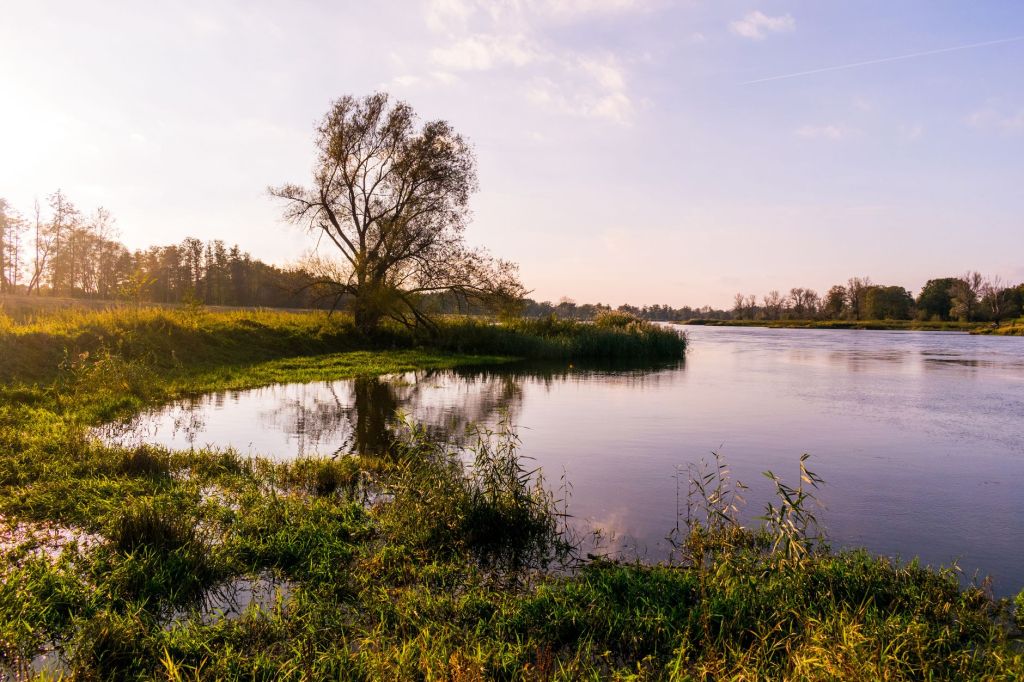
When I was a child, I believed the river knew everyone. It knew the names of the women who came before sunrise carrying yellow jerrycans against their hips, the boys who crossed its shallow back every morning on their way to school, the fishermen who returned at dusk smelling of mud and silver-scaled disappointment, and the old men who sat beneath the acacia trees arguing with the afternoon as though time was a stubborn relative. Most of all, I believed it knew me. My grandmother told me so. She said a river never forgets the feet that disturb its water, because every crossing leaves a story behind. I believed her until the year the river disappeared.
It did not vanish suddenly. It withdrew like an embarrassed guest, first abandoning the stones along its edges, then exposing roots that had slept beneath the current for generations, and finally leaving behind a long brown scar across the valley. We called it drought because that was the word adults used when they did not want children to understand fear. But drought was only the name we gave to something much larger. The cattle became walking skeletons. The maize leaves curled like burnt paper. Mothers began measuring water with their eyes before pouring it into cooking pots. At night, the village became unusually quiet because hunger taught even children not to waste their strength on crying.
My grandmother refused to leave. Her name was Nali, though everyone called her Mama Nali, and she had the peculiar habit of speaking to dead people as if they merely went to the next room. Every evening she walked to the dry riverbed and sat on a flat stone. Sometimes she carried a small metal cup and poured a few drops of water into the dust.
When I asked why, she said, “The river must remember what water feels like.”
I laughed because I thought old people were allowed to be strange. She looked at me without smiling. “One day,” she said, “you will understand that survival is not always about having enough. Sometimes it is about refusing to become empty.”
Those words followed me long after I forgot many other things she taught me. She told me that our grandfather once planted trees along the river after a flood destroyed half the village. She told me that people mocked him because trees took years to grow while hunger demanded food immediately.
“He planted for people he would never meet,” she said. “That is one of the greatest forms of courage.” I did not understand. I was twelve. At twelve, tomorrow belongs to you, and old age is a country you cannot imagine visiting.
Then the trucks arrived. They came one morning in a cloud of dust, carrying men with measuring equipment, metal poles, maps and promises. They said a company would build something beyond the hills. Some villagers welcomed them. Others were suspicious. The company representatives spoke of roads, employment, electricity and progress. They wore clean shoes that seemed insulted by our red soil.
A meeting was called beneath the largest tree in the village, and everyone came. I remember my grandmother sitting at the edge of the crowd, silent. One of the men spread a map across a wooden table and pointed toward the dry riverbed. He explained that the land was needed for a development project and that several families would have to relocate. There would be compensation, he promised. There would be new houses somewhere else. There would be opportunities. Someone asked what would happen to the river. The man smiled and said the river already died.
My grandmother stood. She was small, but the whole gathering seemed to become smaller when she spoke. “A river is not dead because you cannot see water,” she said. “Sometimes it is only waiting beneath the ground.”
The man folded his map. “Madam, we are discussing development, not stories.”
She answered, “Every development begins as somebody’s story.”
A week later, my grandmother disappeared. We searched the village, the hills, and the abandoned wells. I found her at sunset beside the river, sitting on the same stone. She was holding something wrapped in an old piece of cloth. When I approached, she handed it to me. Inside was a small wooden box containing photographs, letters, and a notebook whose pages turned the colour of old bones. “Your grandfather kept these,” she said. “He wanted you to have them when you were old enough.”
I opened the notebook. The first page contained a sentence written in faded ink: If the river ever disappears, follow the trees. I looked at her, confused.
She pointed toward the hills. “Your grandfather knew what they would do,” she whispered. “He knew that one day somebody would come and say this land was empty.”
That night, she finally told me the truth. Years earlier, when the first signs of drought appeared, my grandfather secretly marked the old underground water channels and planted trees along their paths. He also buried documents showing the traditional village boundaries, because he feared that one day people would call our ancestral land vacant. The company did not discover an empty place. It discovered a place whose history was deliberately forgotten.
The next morning, my grandmother took me into the hills. We walked for hours until we reached a cluster of trees growing where no other vegetation survived. Beneath one of them was a stone covered in moss. She told me to dig.
My hands shook as I moved the soil. Beneath the stone was a rusted metal container. Inside were maps, land records, and letters signed by elders who died decades earlier. There was also a photograph of my grandfather standing beside the river when it was still wide enough to frighten children. On the back, he wrote: To whoever finds this: do not believe anyone who tells you there was nothing here before they arrived. I carried the box home beneath my shirt.
For the first time in months, my grandmother smiled. “Now,” she said, “the river has spoken.”
The documents changed everything. The villagers took them to the authorities, and the proposed relocation was suspended while the land claims were investigated. The company denied wrongdoing. Arguments filled the newspapers. Lawyers arrived. Officials came and went. For the first time, our little village appeared on maps that mattered to people who never walked its dusty roads.
But while adults fought over papers, something else was happening. The rains came. Not a storm, not a miracle, but a hesitant beginning. The first drops struck the dry riverbed and disappeared immediately. Children shouted as if they discovered gold. Then the clouds opened. Water ran between the stones. It gathered around the roots of the old trees. By morning, a narrow stream returned.
My grandmother was gone by then.
She died three days before the first rain.
We buried her beside the hill, beneath the tree where we found the box. I carried the photograph of my grandfather in my pocket. During the burial, I wanted to cry, but grief sometimes becomes too large for tears. After everyone left, I remained alone beside her grave. The river could be heard in the distance, still weak, still finding its way home.
I opened her old wooden box one last time. Beneath the letters and photographs was a final note I never saw. It contained only one sentence: My child, if the river forgets your name, teach the river your story.
Years passed since then. The village changed. There are roads now, solar lights, new classrooms, and young people who speak about the future with a confidence my generation did not possess.
The river still disappears during the harshest seasons, but it always returns. And every time I stand beside it, I remember my grandmother sitting on a stone, pouring a few drops of water into dust because she believed memory itself could become a form of resistance. I used to think she was speaking about the river. Now I know she was speaking about us. People can take houses. They can redraw boundaries. They can rename places, erase records, and declare a community invisible. But there are stories that survive underneath the ground like water. You may bury them. You may deny them. You may walk over them for generations. Yet one day, when the rain finally comes, they rise.
And that is why, whenever a child asks me whether the river remembers him, I never laugh.
I simply tell him to step into the water, listen carefully, and say his name.
Because sometimes the river does not need to remember us.
Sometimes we are the ones who must remember who we were.


Deja un comentario