Always a realist, even in her wildest dreams, she decided to name the child Rain. Initially, Blood, seemed far more appropriate, looking at the mess this tiny creature had created upon arrival, but no. She promised herself, that she would not be a vengeful mother. When it came to naming a child, everyone had opinions and many forgot that they also had options. Some people studied books. She consulted her intuition.
Chaos became a strong contender in the hour after birth. Again, no. She concluded that sense, in the end, must always prevail.
As she settled on the hospital bed, her baby daughter securely latched onto her chest, and she considered the matter once more. For the briefest heartbeat, she chose Change, and that almost felt remotely appropriate given the circumstances. After all, nothing could ever prepare a first-time mother for the inevitable shock realization that nothing will ever be the same again.
Change took hold, made itself known and expanded with every wheezy breath that baby took.
Then, the drumming started. She’d heart it before.
Thrum, thrum, thrum.
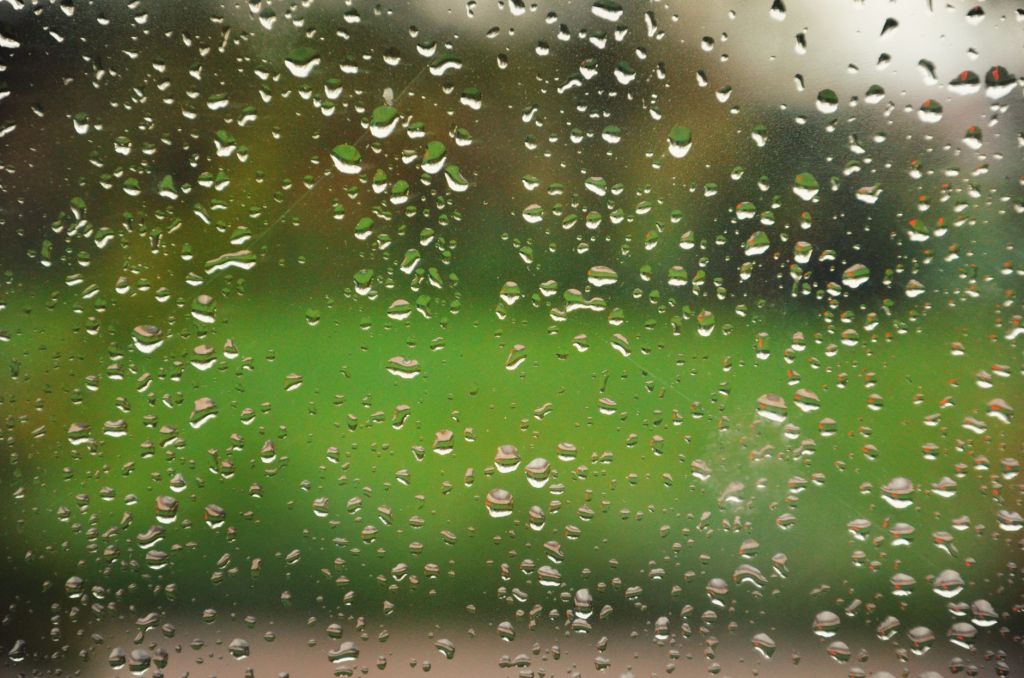
First, a gentle ping, pong of droplets, a pleasant and reassuring soundtrack in a world full of new. This was soon followed by a more and more threatening crescendo of whiplash thrashes against the window pane and she instinctively held the baby a little closer to her soul, wondering if that glass would prove thick enough to withhold. The world was a scary place on both sides.
Rain.
The only possible name.
This, she hoped, would nip all notions in the bud. Her logic solid, undisputable. Rain falls to the ground. Always. There is no up in rain. It’s down, down, down. Also, necessary. Life couldn’t thrive without downpours, even if the sun was by far the more popular companion. Life was not about being liked and the girl had better learn this right from the start.
Rain.
She congratulated herself on such a wise and thoughtful choice and the affirmative decision to ground this small life in the present realities of her world. She reckoned that her daughter would thank her, eventually. This child would not become one of those hopping, skipping and jumping Hollys, Daisys, or Poppys. There would never be a pink ribbon tied neatly into a bow in her daughter’s wispy hair. She didn’t believe in cruelty. She didn’t believe in lies either. Better be clear about future prospects and not raise hopes or expectations.
“We could at least spell her name R-A-Y-N-E,” her husband suggested.
But she would have none of it. The girl would be called Rain. Plain Rain. No middle name. What could one add to rain? It was self-explanatory. Self-sufficient, too.
Rain, a good name for such a moist and leaky creature.
When the infant was three months old, her father said, “Have you noticed? Ever since she was born, the rain hasn’t stopped.”
Hardly unusual, the mother thought. This was Scotland, after all. And the wrong coast. The west. Always wet. Still, she looked at her daughter, a tiny, wiggly body, restless and writhing in the crib. Never content, that one.
The girl screamed and her wail went through walls, through bones and through souls, right into the furthest away corners of hope. Thick globules of rain hit the windowpanes with a rhythmical thump. Thump, thump, obstructing the view. Hard to hold onto the belief that there was an outside at all, that there lay a garden and a world beyond the double glazing. This was relentless. Unbearable. True.
Tears ran down the baby’s cheeks.
“Surely, she must run dry at some point,” the mother said.
Almost unnoticed, something inside her snapped and all feeling stopped. She took a deep breath.
The wailing ceased. The rain decreased in intensity. Thrums turned into a gentle pitter, patter, running down the window like slow, congealed spit. A truce. A moment later, however, the floodgates opened again.
“I can’t stand this any longer,” the father said and shook his head. “This is wrong. You shouldn’t have called her Rain.”
The mother shrugged. “People call their children April, or May – and there’s still November, December. The year doesn’t change, no matter how many Junes walk about. Some people call their children Harmony or Peace, and then shout at them for the rest of their lives.” She took another deep breath before her final flourish. “Your brother named his baby daughter Prudence, and that little tyke burnt down the garden shed with a blow torch when she was five. So, I ask you: what’s in a name?”
Rain.
They stared at their child in silence for a while. Was that sweat on the small forehead? The mother placed her hand on the baby’s head and withdrew instantly. Cold. Freezing cold droplets, like a glacier, melting. Her daughter’s lips were looking for milk. How could she be still thirsty?
“I don’t know what she needs,” the mother said and that was only half the truth, for she knew that whatever Rain needed, she could not give.
“She’s a water baby,” the father replied. “Fairy folk. She doesn’t belong here.”
The mother didn’t need to let this sink in. She knew where her daughter had come from.
“We must return her,” the father said.
How can we return Rain, the mother wondered.
They both looked through the thick window tears until their gaze reached the garden pond. A small, almost half-hearted attempt at a water feature. Years ago, they bought fish and released them into the oval pond. They never saw the fish again. They then moved on to lilies, without any luck. Things disappeared in that pond. Wasn’t this the obvious solution?
The father shook his head.
“Too close,” he said. “We need distance.”
Rain.
They went for a walk in their mackintoshes and wellingtons, the pram safely covered with a waterproof top. A narrow path lead away from the row of terraced houses into a woodland at the outskirts of the village. The council had abandoned all efforts to fill in the holes or cut back the brambles years ago. The muddy, overgrown trail led through dense vegetation before turning a corner. There, a loch. A lochette. Not even marked on the map as a permanent feature, almost as if the planners had hoped it would vanish as inexplicably as it had arrived and perhaps, one day it would.
The verge of the path was uneven. “A pram could roll towards the water’s edge if someone tripped right here, don’t you think?” she asked.
A sudden numbness leaked into her muscles and her legs gave way under the weight, just like that. She sank and fell, something dislodged and then was gone. Forever. She couldn’t quite remember what it was, but when she looked up, the sun came out from behind the thick clouds and her husband reached for her hand to help her up.
It was time to go home.


Deja un comentario