previously published on Chewers / masticadores.com
The room was filled with light. In front of long windows stood a woman with stiff grey curly hair; she wore a red dress and held a red-and-white parasol. She was statue-still.
A group of around ten people, seemingly of all ages, were seated at easels. They were using charcoal sticks to draw the woman. Mostly, their expressions were calm and meditative.
Saffron didn’t feel calm or meditative. She hated being late for something new, but it had been almost impossible to get her mother out of the house. Judith had shouted that she didn’t want to go, and that Saffron should get out. It had taken two cups of tea before she had consented to come to the class. She had been silent since leaving the house.
A woman with spiky orange hair and purple glasses came up to them, smiling.
‘First time here, loves?’ she asked.
‘That’s right,’ Saffron said. ‘A nurse at the hospital recommended it; I signed up online. We’ve been looking forward to it, haven’t we, Mum?’
Judith didn’t respond.
‘This is my mum, Judith; I’m Saffron. Sorry we’re late – my sat nav stopped working when we were about five minutes away.’
How silly not to tell the truth, she thought.
‘I’m Marigold, I’m an artist and I lead this group,’ the woman said. ‘I got funding to set it up three years ago, and my team and I now run classes five times a week. You can come to as many or as few as you like. We have tea and biscuits afterwards, so if you don’t like art too much there’s something else to look forward to!’
‘I’m certainly not very good at art.’ Saffron gave a wry smile. ‘Not that I’ve done much of it since school. You’re very good at art, aren’t you, Mum? Do you remember the mural you painted on my bedroom wall? Seven different fairies, one for each day of the week. You did it all from your imagination, didn’t you? Even gave them names.’
Silence.
‘Fairies, how wonderful,’ Marigold said. ‘I can’t wait to see what you come up with here, Judith. And don’t worry about being good or not at art, Saffron, love, there’s absolutely no expectations here. This is about self-expression, and most of all having fun. I produce and sell a scrapbook of selected pieces produced at the classes, and you’ll see they’re all different and equally wonderful. I don’t know where the inspiration comes from, sometimes.’
Saffron couldn’t imagine it coming from anywhere, in her case.
‘We have lots of different models, who choose different props and outfits to pose with,’ Marigold continued. ‘We’re lucky enough to have Freya today. I shouldn’t have favorites, but I have to say, she’s one of our best. Have a go and see what you come up with. The great thing about working with charcoal is that if you don’t like something, you can just rub it out!’
There were two unused easels at the back. Saffron held her mum’s arm as she moved unsteadily across the room.
‘Here we go, Mum, you sit here.’
‘Don’t go away.’ Judith grabbed Saffron’s arm, squeezed it so hard, Saffron gasped.
‘I’m not going anywhere, Mum. I’ll be sitting right next to you.’
‘I’m losing you,’ Judith said.
‘No, Mum. You’re not. You never will.’
She knew what her mother meant, though. But it felt like the other way round; her mum was vanishing. A solidity reduced to hand-held size. The Judith she knew was being erased by the cruelest disease, meanings and words unmade.
When Saffron was nine years old, she lost her best friend, Verity. They and three other girls had been playing British Bulldog at morning break. After a frosty night, there were slippery patches on the playground. Trying to avoid Saffron’s clutches, screaming with laughter, Verity fell and hit her head. She died instantly. The coroner said in his report that Verity had had unusually thin skin.
Judith took Saffron to a child psychologist. She did it because of what her daughter had witnessed, and because she had stopped speaking.
The psychologist, George Behr, had a long white beard but unlike Santa, offered nothing in the way of laughter or presents.
‘Mutism,’ he said, fingers steepled, ‘is one of the brain’s ways of dealing with stress. The brain wants to protect us.’
He liked the brain, Saffron could tell. Maybe instead of a wife at home he had a brain in a jar. She imagined him stroking it as he expounded about the strange patients he had met.
‘But what can we do about the mutism?’ Judith asked. She and Saffron were seated on a powder-blue sofa, facing Doctor Behr. On either side of them were floor-to-ceiling bookcases; Saffron felt trapped by the heavy words that lurked within the books.
‘Do about it?’ Doctor Behr stared at Judith; his eyes were sharp black stones.
‘That’s right. What can I do – how can I help her?’
Judith always wanted to be doing something, looking after someone, making another person better. That had been her job as a nurse, before she gave it up to be a housewife and mother. Judith had wanted to be a mother more than a nurse, but was thirty-six before that dream came true. She hadn’t managed to have more children and sometimes cried about it when she thought Saffron couldn’t hear.
‘Your daughter will speak when she is ready, Mrs. Wilkes. Mutism rarely lasts beyond childhood, especially when it is selective,’ pronounced George Behr.
‘What a relief,’ said Judith sarcastically. ‘Come on, Saffron, let’s get a McDonald’s.’
Saffron wanted to tell George Behr and her mother that her speechlessness wasn’t selective. She wasn’t making a choice. Her voice just didn’t work. Her throat felt frozen inside, as if a snowball had lodged in her esophagus.
Two months passed. Her mother went to the school numerous times. Saffron’s class teacher spoke to Saffron; her headmistress spoke to her. They found paths around her silence. Saffron wasn’t made to read out in English lessons, could work on her own when the class was doing partner work. Her teacher came over when she was working to ask if she were okay, and didn’t seem to mind not getting a reply.
The school told Judith (for free) what George Behr had said, that Saffron would grow out of it. The headmistress reassured her that Saffron was doing her work and hadn’t fallen behind. They were keeping an eye on her at playtimes. They were keeping an eye on all the pupils at playtimes now, of course.
Judith worried that Saffron would be labelled as weird and end up friendless if she carried on not speaking. She phoned other girls’ mothers and asked if their daughters would come to tea. Saffron imagined the girls were forced into it by their mothers. She and the randomly selected classmate would play wordlessly with her Barbies, then eat tea while Judith chatted to them both in birdlike tones.
Saffron knew that her mother was embarrassed by her muteness. On two occasions when out shopping, they met one of Judith’s friends who didn’t know what had happened and they asked Saffron questions. Judith answered for her. The second time, on leaving the supermarket, her mother shouted at Saffron to ‘Stop this nonsense! It won’t bring Verity back, behaving like this.’ Then she apologized and bought Saffron another Barbie.
‘I don’t mind if this is how you need to cope,’ she said, wiping away tears.
Saffron wanted to explain how much she needed silence. That it was a fortress she had retreated behind because she feared what words could do. She took her mother’s hand and they walked to the bus stop.
Judith found out about an art therapist. She took Saffron to see her after school, just before the Easter holidays. A lady called Veda with an Indian accent and very bright jewelry sat in a room that had birds, butterflies and flowers stenciled onto its walls. Saffron liked the stenciling because it reminded her of the fairies her mother had painted on her walls.
Veda gave Saffron an A3 piece of paper and asked her to draw how she felt on that day. Whatever she felt: there was no right or wrong.
Saffron stared at the colored pencils. She stared at the white-as-snow paper. Beside her, her mother vibrated with hope. Saffron picked up a red pencil and wrote: Sorry.
‘Oh,’ Judith exclaimed, ‘Saffron! You don’t need to say sorry. Does she, Veda?’
Saffron wasn’t saying sorry to Judith or to Veda. She was saying sorry to Verity. It was Saffron who had suggested playing British Bulldog. If she hadn’t said that, her best friend would be alive.
The only sounds in the room were the tsk of the charcoal on paper, a few coughs and splutters and the shifting of chairs. The model, Freya, had not moved at all.
Judith was staring into space, leaning to one side, like an unbalanced lump of clay.
‘Are you going to draw, Mum?’ Saffron asked. ‘You don’t have to, if you don’t want to. We can just watch. Wait for the tea and biscuits!’
Please draw, she thought. It’ll be embarrassing if you’re the only one who doesn’t. Plus her mother was so good at drawing; besides the fairy mural, she always made birthday and Christmas cards for friends and family. She painted the house she shared with Saffron’s father until his death, which she now lived in alone. Every room was a different, vibrant color.
Judith picked up the charcoal. She drew a circle. The model’s head, presumably. Then she drew another circle. Quicker and quicker, the circles overlapping.
‘Lovely, Mum. I can get you more paper, if you want to draw the model next?’
‘No,’ said Judith.
‘Okay – well, I’m going to have a try.’
Saffron picked up her charcoal and squinted at Freya. She too started with a circle, to represent her head. There was soon more charcoal on her fingers than on the paper.
She sighed. It was impossible to translate what she saw into art. She wanted to give up, but this was meant to be a pleasant activity she could do with her mother and they could talk about afterwards. It was wrong to give up so quickly. She finished the drawing and thought it at least looked like the model, albeit a lifeless rendition. She turned a woman into a doll.
People started talking and moving away from their easels. Marigold went round the room, chatting about what the artists had produced. There was a lot of laughter.
‘That’s gorgeous, Judith,’ Marigold said, looking at the circles. She touched Judith’s shoulder. ‘I love expressionistic pieces. I’ll take a photo for the scrapbook, if you don’t mind?’
Saffron waited for her to ask what the circles represented. She didn’t. Marigold took her photo and moved on to Saffron’s art.
‘You said you weren’t very good an art, Saffron,’ said Marigold.
‘I’m not.’
‘You do yourself a disservice, my love. This is very realistic. You’ve captured everything in such detail, even that small crease between Freya’s eyebrows.’
‘I can’t imagine how she stays still so long,’ Saffron said. She couldn’t believe Marigold’s kindness was truth. ‘How about I get you a tea and a biscuit, Mum?’
Marigold’s hand rested briefly on Saffron’s arm. ‘Get yourself one, too.’
In the summer, Saffron’s speech returned. One morning, she came down to breakfast and thanked her mother for the toast and orange juice. From then on, she spoke as she had done before Verity’s death. It felt as though her throat thawed, but she didn’t say that. She didn’t say much, her words rusty with lack of use. She never spoke about Verity.
That Christmas, there was a parcel with different wrapping paper than all the others under the tree. Saffron tore off thin silver foil to reveal a sketchpad and coloring pencils.
‘Who’s this from?’ she asked. There was no gift tag.
It was from Verity’s mum; she brought it round when Saffron was at school.
‘Phone and thank her,’ Judith said. ‘She’d love to hear from you.’
Saffron thought that if Verity’s mum wanted to speak to her, she wouldn’t have come round when she was at school. She hadn’t seen her since Verity’s funeral.
Saffron wrote a note thanking Verity’s mum for the gift. She wrote that she would enjoy drawing in the sketchpad with the pencils very much. She then put the present at the bottom of her wardrobe, concealed first by toys and then by clothes. She forgot about it until she had to do an art project in Year 9 that required them to sketch someone from their past. Saffron was about to buy a sketchpad when she remembered the gift. She retrieved it and stared at the blank page. She would draw Verity, she decided. The most important person from her past.
She tried to remember what Verity looked like, but over the years her best friend had become a pencil drawing slowly rubbed out by her mind.
Her mother kept packets of photos she had had printed at Boots in her room. Verity had come on two summer holidays with Saffron’s family; there must be photos from those.
Saffron found lots of photos. Time stood still as, drenched with pain, Saffron gazed at Verity’s two-dimensional smiling face.
Over the next week, Saffron copied every photo of Verity into the sketchpad. Every time she did, she remembered what had happened directly before and after the photo was taken. Hearing Verity’s voice in her head, she cried and laughed.
And then she submitted the drawings for her project.
‘Technically good,’ said the teacher, ‘but rather flat and lifeless.’
Saffron was awarded a B grade. She decided not to take Art GCSE.
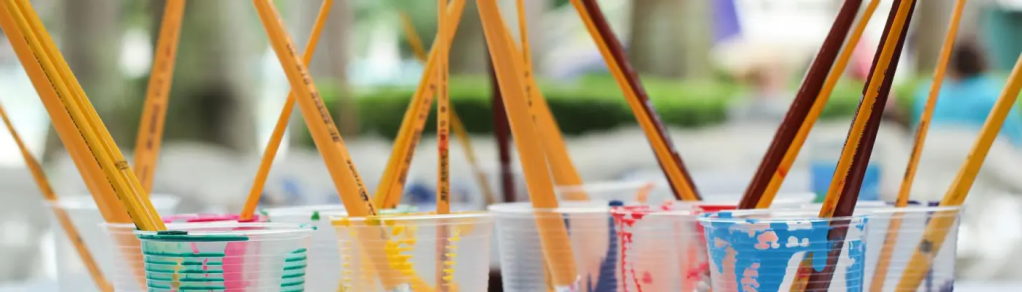
At the next class they attended, the artists were given paints and seated at tables rather than easels (‘It gets messy,’ Marigold said with her usual smile).
The model, who looked about twenty years younger than Freya, was dressed in a robe with a gold paper crown on her head. Unlike Freya, she changed her pose frequently: she sat, she stood, she crouched, she walked.
Judith had not protested about going to the class this time. She was calm as she painted using a range of colors. It looked as though it was going to be another abstract piece.
Saffron’s initial attempts to paint the model were abysmal, she thought. She couldn’t get the spirit of her onto the paper. She was about to give up when she noticed how thick and dark the model’s eyebrows were. She decided to exaggerate the eyebrows still further in her painting: to make a feature of them, as Frieda Kahlo had done in her self-portraits.
A memory tugged as she was painting the second eyebrow. Someone else had had thick eyebrows. Verity. Thick dark eyebrows. She had been teased about them by Ryan Clarke and Saffron had hit him.
The model had straight, mid-brown hair. Saffron drew Verity’s hair instead. She’d had long, dark curly hair. Verity’s mum plaited it in the mornings, believing it would prevent her catching head lice, and Verity unplaited it when she got to school.
Saffron thought of those photos she had copied for her school art project. They were of her and Verity on Cornish beaches.
She drew a sea in her picture, painting it turquoise, and then she drew the sun, which she painted orangey-red. Then she managed a bird she knew was a seagull even if no one else would. For a moment, she smelled the salt in the air and the suntan lotion Judith had slathered on their bodies and faces. It hadn’t stopped a constellation of freckles appearing on Verity’s face. She hated them; Saffron thought they were cute.
‘What a lovely painting,’ Marigold said, making Saffron jump. ‘Everyone has been so imaginative today.’
When Marigold had moved on, Saffron looked at her mother’s paper. Judith had painted stick figures, one wearing a crown. They were holding out their hands but not touching.
‘Fantastic, Mum,’ she said. ‘Who are they?’
Judith didn’t answer.
Were the figures herself and her mother? Saffron wondered. Her mother and father? Her mother and her own mother? Two strangers?
Judith looked at Saffron’s picture.
‘I remember her,’ she said.
Copyright © 2024 Sam Szanto
All Rights Reserved


Deja un comentario