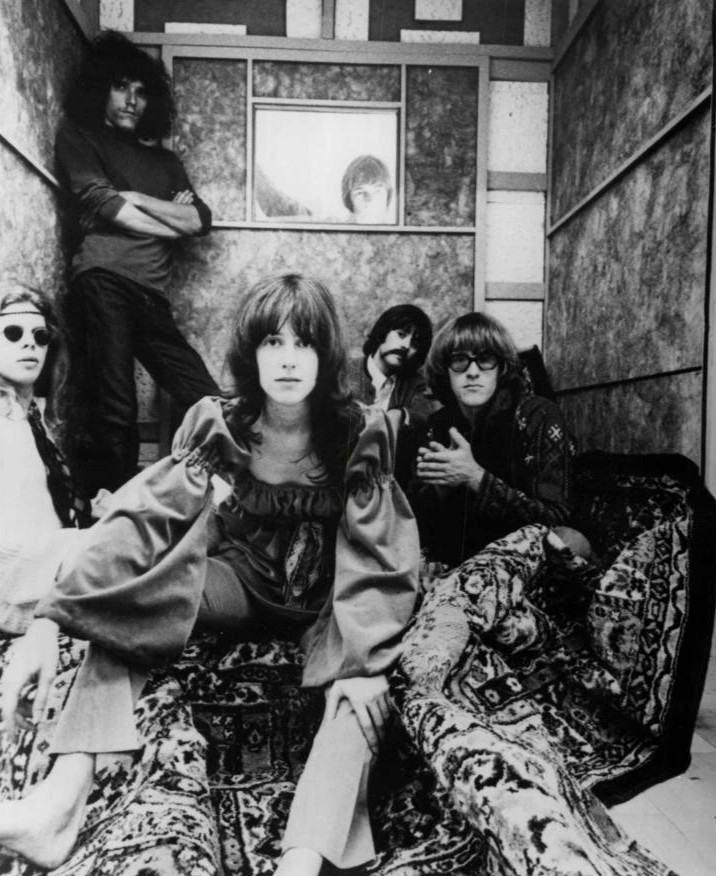
Somebody to Love
There was a time when The United States began to hear itself differently. The old voices were still there. Presidents spoke from podiums. Generals appeared on television. Newspapers announced another escalation, another speech, another distant place whose name suddenly mattered because young men were being sent there. But underneath the official language, something was moving.
The hippies. In San Francisco, young people gathered in the streets of Haight-Ashbury. Music became louder, stranger, more meaningful, more beautiful. Hair grew long. Old rules began to look ridiculous. People spoke about peace, the peace that implies courage. They spoke about freedom—not merely the freedom to vote or to buy things, but the freedom to decide who you were, whom you loved, what you believed, and what kind of world you were willing to inhabit.
And then a song arrived that asked: What happens when the truth becomes indistinguishable from lies? I do not believe it was about romance. It belonged to a generation learning that governments could lie while young people died in their wars. It belonged to those who looked at the world their parents had built and wondered whether obedience was really the same thing as virtue. The song’s anger is not about destruction but about the knowledge that something better is possible. That distinction matters.
Revolution is not necessarily about tearing down governments. Sometimes it begins much earlier, inside the imagination, like when a young person looks at an inherited world and says: This cannot be the only way. And perhaps that is where love enters the story. Because what is the opposite of a culture of war? Not merely peace treaties or political slogans. We need to rediscover another human being.
The song keeps returning to the idea of wanting somebody to love, and beneath that repetition one can hear a challenge to a society becoming increasingly mechanical: Have we forgotten all about love?
We manufacture bombs without compassion. Orders and wars can be justified without compassion. But love interrupts that machinery. With love one looks at a stranger and refuses to see an abstraction.
The soldier is somebody’s son. The enemy becomes somebody’s child. The protester becomes somebody’s brother. The stranger across the street becomes somebody whose life matters. And suddenly the political becomes intimate.
This may be why the song felt so perfectly placed in 1967. Surrealistic Pillow appeared in the year of the Summer of Love, while the United States was deeply divided by the Vietnam War and the counterculture was challenging established ideas about politics, sexuality, authority and everyday life. The Library of Congress describes Jefferson Airplane as one of the bands that carried San Francisco’s hippie culture into the national consciousness.
++++++++++++++++++++++++++++++++++++++++++
I have always liked this song and I never thought of it as anything other than a commentary on the political situation of the time. And now, these times do not look much differently. I ask you to listen to Jefferson Airplane’s “Somebody to Love” without pretending that every line was originally written as a political slogan, but as an expression, and as a demand.
The historical background makes that reading especially compelling. Darby Slick, (1965) who wrote the song, later said that his experiences around the Cuban Missile Crisis and his opposition to the Vietnam War were part of its “backstory,” and he associated its language about lies with government deception. The Library of Congress also notes that, although Grace Slick’s Jefferson Airplane performance shifted the song toward the personal, the song emerged directly from the political and cultural ferment of the counter-culture.
And that gives us an interesting paradox: a song apparently asking for love can also be heard as a song asking a society to recover its humanity.
Instagram: @Francisco_Bravo_Cabrera
CHEERS


Deja un comentario