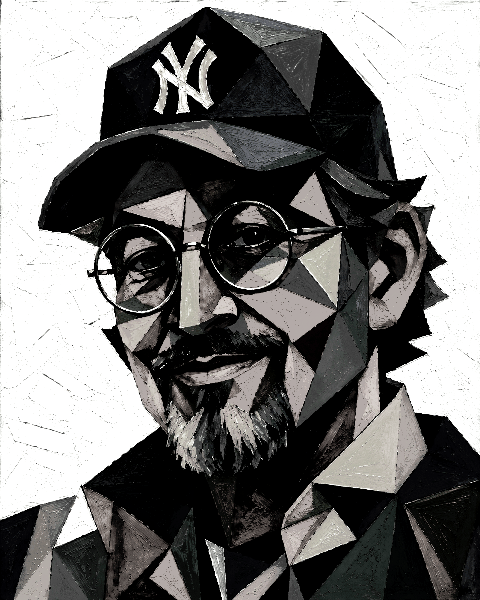
Imagine you walk into one of the great museums of art museum and in one room you stare at most interesting and well crafted portrait that looks so real you expect the subject to breathe. Then in the next room, you find a real banana duct-taped to a plain white wall. You might not believe that it actually an item of the museum, but you check and realise that this exact «artwork», titled Comedian by «artist» Maurizio Cattelan, sold at a Sotheby’s auction for $6.2 million (5,4 million euros approximately). Well, you might ask yourself, I’ve a banana at home and duct tape, can I just put it on my wall? So let us instead ask ourselves: «Is the art world playing a massive joke on us?” Well, to try and figure all this out art «experts» (good grief experts!), philosophers, and historians split the world of art into two totally different universes. Here’s what we have.
Universe 1: The Art of Physical Skill (The «Wow» Factor)
Art always had rules, (and many of us, including myself as an artist, believe art still does). Rules were based on the Greek concept called mimesis, which means «copying nature.» This is the kind of art that requires hard work, which leads to talent, and also education (preparation), and practice (skill and technique).
To create traditional art, (and also in modern times, good art), an artist has to spend thousands of hours learning: Human Anatomy: Knowing exactly how muscles shift under a person’s skin. Physics and Chemistry: Learning how light bounces off glass, and how to mix raw coloured powder with oils so the paint doesn’t crack over time. Extreme Muscle Memory: Training your hand to carve solid marble stone until it looks like soft, flowing clothing.
When you look at a classical masterpiece, the value is built right into the object. You are paying for the artist’s rare labor and years of education. If the painting gets ruined, that incredible human achievement is gone forever.
Universe 2: The Art of the Concept (The «Brain Backflip» Factor)
During the early XXth Century, the vanguard artists started wondering if art had to be a physical object made by a skilled hand? Or can art just be a pure idea? Or a ready made, or an objet trouvé (found object)?
This was the birth of Conceptual Art. In this universe, the physical object doesn’t matter at all. The real art is the thought, the question, or the rule-breaking idea the artist is tossing into your brain. It sounds brilliant, but it has led to many «artworks» that have no thought behind them, no brilliant idea, no concept at all, just a lot of explanations. Many of these conceptual artists know nothing about art and are fooling the world with their narratives filled with disparate philosophical pronouncements which are nothing more than long words which when knitted together mean nothing. Art, after all is visual. If you cannot see it, you probably will not like it no matter how many pages of text the «artist» has added to «make you see, hear and understand» what he has done.
Take a look at how these three famous, mind-boggling modern artworks compare to classical art:
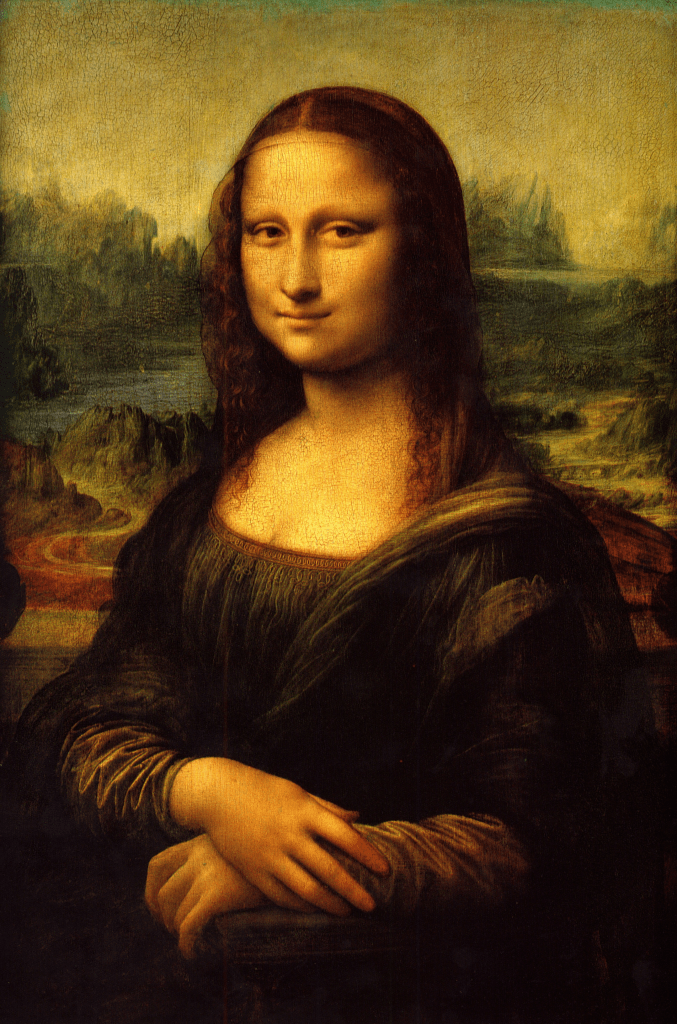
Here is the famous (although for me a second rate portrait) Mona Lisa. It took Leonardo years of training, development, intuition and technical skill to produce this small painting.
Then you have An Oak Tree by Michael Craig-Martin. The «artwork» consists of a plain glass of water on a shelf. The artist claims that because he named it an oak tree that it magically becomes one. Really? I have a glass of water in my kitchen waiting for an oak tree, so far, only water… What skill does it take to «create» this? What training? This is truly an example of the «art» of having no talent.
(I do not put an image because I think you know what a glass of water looks like)
And thirdly, and this one is truly amazing… We have Io sono by Salvatore Garau. This is an «invisible» statue occupying only an empty space. Made of the air we breathe. We have to imagine it. So maybe he should pay us as we are «sculpting» with our imagination his masterpiece. If this is not a joke, you tell me what is. And believe it or not, it sold!
And here is the image:
In closing I would just like to add that Arthur Danto (1924-2013), a US born philosopher, professor and art theorist, created the concept of the «artworld» and explained that a museum acts as a «magic frame». If a fruit is in your kitchen then it is just that, a fruit. But if an «artist» places it in a museum, it is now a work of art. It has been established that the museum is the golden ticket. If your artwork, no matter how ridiculous it is, i.e. an invisible sculpture, makes it into a museum, it is now art. I, of course, as an artist and a student of Art History, refuse to accept such a notion. Art does not «become» art in accordance to where it is placed. Art is the result of education, preparation, technique and hard work by the artist. And a work of art is a visual phenomenon. It rarely requires a written explanation. Maybe just the technique, the year and its name are all that is required.
(Francisco Bravo Cabrera – Omnia Caelum Studios Valencia)
Instagram: @Francisco_Bravo_Cabrera
X: @Euskadi_Bakero
CHEERS


 LatinosUSA
Deja un comentario