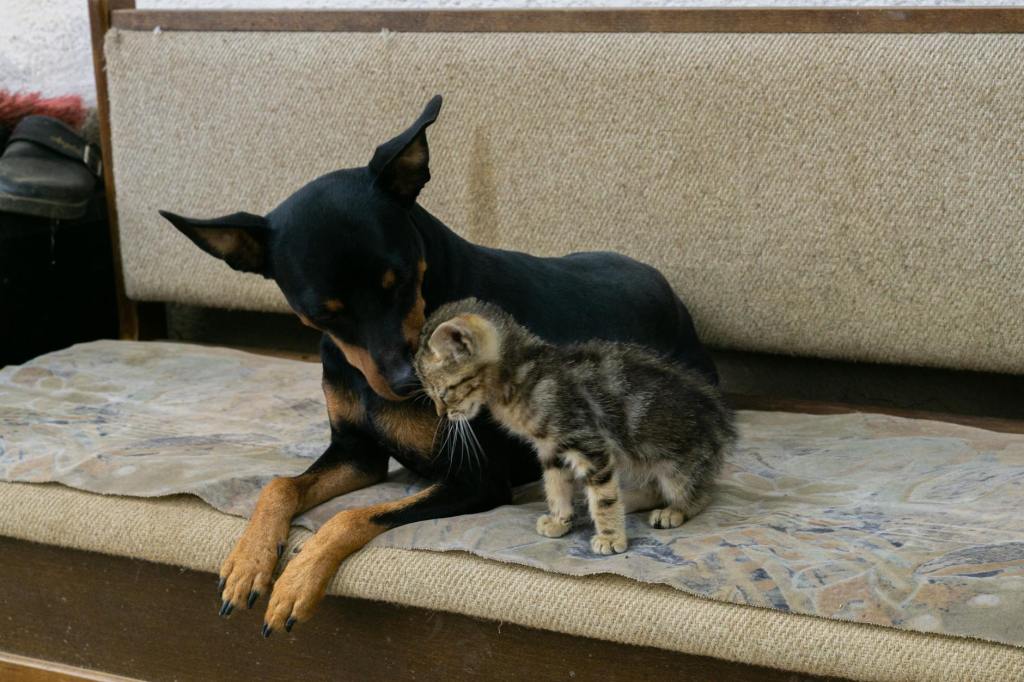
The office waiting room was mostly empty. One man sat with a dog by his side. The dog had a white muzzle and sprawled on the floor as if he had no interest in the world around him. A bulletin board in one corner was only half full. The section on geriatric care of pets was covered in posters. An empty section was labelled, “Puppies and Kittens Needing a Home.”
Dr. Marindell smiled. So much easier this way. Everyone laughed when she promised the spay and neuter program would save millions of lives. Not a single kitten or puppy was put down at an animal shelter in the entire state in over seven years. In fact, only a few geriatric animals were put down.
Something was wrong, though.
“Dr. Marindell, your next patient is waiting.” The receptionist nodded toward the exam room.
“Who is it?”
“Mr. Greshen with his Dachshunds.”
Dachshunds. A breeder whose dogs had not had puppies since she sprayed the state with mammal contraceptive. She smiled. No more inbred dogs by incompetent breeders.
Dr. Marindell took the folder and walked into the exam room. “How can I help you today?”
Mr. Greshen had placed one of his older dogs on the exam table. She had three litters before the spraying. None in the seven years since. “She has lumps on her side. She hasn’t been in heat. Not in years.”
Dr. Marindell examined the dog. Lumps. Many of them. They were common in geriatric animals. Often fatty tumors. “I can test it, do surgery, or wait. Probably only fat. As long as it doesn’t interfere with her walking, she should be fine.”
He loaded the dog back into her crate. «I’ve been looking for registered pups. I haven’t found any in the state. After seven years with no bred dogs, I need new stock.”
“You have ten dogs.”
He shook his head. “No. I have four left. The others all died. Three in labor seven years ago. Their pups didn’t live either. The others have tumors like this one.”
“I’m sorry.” Dr. Marindell stood straight and tall. This man didn’t deserve dogs. They were nothing more than a paycheck for him. He was a breeder for forty years. Until she stopped it. At one point, he had twenty female dogs, most of whom were repeat pregnant moms, sometimes having two litters a year.
In fact, he was one of the main breeders she fought to sterilize. It took five years to develop the sterilization spray. And three months to cover the state with it using crop dusters. It was expensive. Even by the price standards of seven years ago. Doing so saved her much time and grief over the years. No more mother dogs dying in her arms when their pups were too large to pass through their birth canals. No more unwanted, flea-ridden cats.
Mr. Greshen turned and walked out the door carrying the dog crate.
Dr. Marindell set the folder down. These people would never know what she had done for them.
“How many more cases today?”
“Only one more.” The receptionist was tired of half days. She’d have to do something about that, soon, if people stopped coming to the clinic. She hurried through the last case. Another geriatric dog.
After he left, she returned to the front desk.
“A woman and her daughter want to speak to you.” The receptionist smiled. “I hope you can help them.”
Dr. Marindell glanced at the woman and her young daughter. “How can I help you?”
“I’m Dabney, and this is my Gelidea, my young daughter. We moved here a few months ago. She has no friends. Her brother died before he was born. Last week. I want to find her a young kitten to be her friend.”
Dr. Marindell softened. She was that little friendless girl once. It led her to become a veterinarian. “I’m sorry. I don’t know of any kittens.”
“We’ve called everywhere. It seems there aren’t any, and haven’t been in a long time. Can you please contact some of your friends to help us find one?”
“I’ll see what I can do.” She turned and walked away.
It wouldn’t hurt to check the internet. After all, it was almost a year since the last spraying. Or maybe less. Some of the crop dusters began spraying for this year in the last few weeks.
She scrolled through the pages of notices. No pets up for adoption under geriatric age for hundreds of miles. Dr. Marindell gulped. At least a few should have had litters once a year.
The search led onward. Reports of a strange chemical had seeped into waterways. Whole populations of short-lived mammals were dying out, including squirrels, rats, mice, hamsters, and rabbits. Cows died. No new calves to replace the herds of beef and milk cattle. Goats, sheep, and even lamas stopped reproducing. Not only that, schools were closing. Very few children under the age of five were born in the state. Most under the age of five immigrated from other countries.
Dr. Marindell gulped. The airborne sterilization chemical was only supposed to work on cats and dogs. And only for a year at a time. The hope had been to deplete the unwanted animals that roamed the streets.
Someone knocked at the clinic door.
She walked to answer it. It was dark.
A man flashed a badge at her.
She closed her eyes. They caught up to her. One of the crop dusters must have turned her in.
She stepped out the door and locked it behind her.
~~
At her trial, the judge did not believe her testimony. “You destroyed our food supply. Murdered our next generation. For what?”
“I had to spay and neuter the dogs and cats for those who could not, or would not, afford it.”
“Did you not realize that the chemicals would spay and neuter farm animals, and humans as well?”
“It shouldn’t have.” Dr. Marindell covered her face with her hands. As she did, the tear-streaked faces of Dabney and Gelidea danced before her. Two women whose lives were destroyed by her choices. A mother looking forward to the birth of her son, who did not live. A daughter looking forward to being a big sister. With not even a kitten to comfort her. “I am sorry.”
“Sorry isn’t good enough.” The judge pounded his gavel.
Dr. Marindell wasn’t listening. It wasn’t good enough. It could be years, maybe decades before farms could raise animals again. Maybe longer for people to be able to reproduce in the region again. For now, outsiders wouldn’t even move here for fear of not being able to have children in the future.
previously published in “Concurrent Earths”
 LatinosUSA
Deja un comentario