Hi all, I bring you a book I discovered through Rosie’s Book Review Team. I read historical fiction sometimes, but I hadn’t read any set in the period covered by this novel. And it does make for a fascinating read.
Oh, before I forget, you can preorder the book, but it is scheduled for publication on the 16th of June, so you’ll have to wait a little to read it.

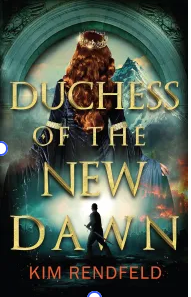
Duchess of the New Dawn by Kim Renfeld
740: Chiltrude, the daughter of Francia’s most powerful family, aspires to wed her beloved Odilo, the duke of Bavaria, and rule by his side. But her dying father forbids the marriage. As her brothers’ rivalry threatens to shatter the realm, she faces imprisonment in an abbey and fears for the baby in her womb.
Defying her kinsmen, she will risk everything to seize her heart’s desire, protect her child, and preserve Bavaria’s cherished independence. Amid the shifting loyalties of the duchy’s influential clans, she must outmaneuver Odilo’s archrival, her hostile in-laws, and most of all, her own brothers.
In Duchess of the New Dawn, Kim Rendfeld brings to life forgotten historical characters and events from the days of Charles Martel and tells the story of one woman’s determination to choose her own path.
https://www.goodreads.com/book/show/239567916-duchess-of-the-new-dawn?
Expected publication June 16, 2026
About the author:
A lifelong fascination with fairy tales and legends set Kim Rendfeld on her quest to write fiction.
She grew up in New Jersey and earned her bachelor’s degree from Indiana University. A former journalist, Kim spent almost twenty years in public relations for universities before her retirement. She has also written four novels set in early medieval times
Kim, a member of the Historical Novel Society, lives in Illinois with her husband and their spoiled cats. The couple has a daughter and four grandchildren.
My review:
I write this review as a member of Rosie’s Book Review Team (author, check here if you are interested in getting your book reviewed) and thank her and the author for this opportunity.
This novel is historical fiction with emphasis on ‘fiction’ as the author states in her note at the end. Let me start by recommending that note, where Renfeld not only explains the origin of this book and some of the sources her information comes from (for the rest, I also recommend reading her acknowledgements’ section), but she is also very candid in explaining the true facts behind the events that appear in the novel, and what is not known of that historical period (that is plenty).
The author is very knowledgeable about an era not as popular with writers of historical fiction as others (Tudor England comes to mind), the VIII century and the fights and battles that helped configure much of what Europe is today.
The protagonist of the story, who narrates the events in the first person, and the ‘duchess’ of the title, is Chiltrude, daughter of Charles Martel, whose family is very powerful and right in the middle of many of the battles and fights for the lands and kingdoms in existence at the time. If she were alive now, hers would be called a dysfunctional family, but it seems that was the norm at the time. Her mother had died, her father had remarried when the story starts, but he also had concubines and children out of wedlock, and her brothers would go on to fight among themselves for land and power, disregarding their father’s will when he died.
Despite all the people who surround her, and those change over time due to the circumstances, this is Chiltrude’s story, and that is one of the strengths of the novel, but also one of its limitations, as we only see things from her point of view, and we only rarely get to see what others think of her. Also, at times, her role is very limited, because she is sidetracked and even imprisoned while the men get to decide what to do, because “she is only a woman”.
Despite all that, I liked the protagonist the author created, a learned woman who was educated in an abbey (because education was rare and mostly in the hands of religious orders), who enjoyed reading and writing, who was knowledgeable of politics and understood well the workings of the palace and the psychology of the powerful men of the period.
I also enjoyed how closely the story resembled a modern spy novel at times, with all sides sending spies who impersonated servants or other roles in court and tried to discover the plans of their enemies, plenty of intrigues, crossings, and double-crossings, deals and alliances that sometimes were less than exemplary.
We get a good sense of what life must have been like for a woman of the noble classes in that day and age, down to the importance of religion and superstition (that Chiltrude uses to her advantage a few times), without getting bogged down in too many details that might have slowed down the story. We get brief references to clothes (that can be used to hide one’s identity or to emphasise one’s importance), buildings, weaponry, and means of transport, but only as they relate and are relevant to the events and circumstances. (Imagine having to travel by horse, days and days, being heavily pregnant and trying to hide your pregnancy. Not easy or comfortable at all!)
Perhaps the element I least enjoyed was the insta-love (or insta-lust) Chiltrude feels for Odilo, the Duke of Bavaria, whom she ends up marrying against strong family opposition. When we first meet her, she is determined not to let anybody impose a marriage on her, being quite content looking after her father and helping him maintain his power and correspond with all the important rulers of the era. Then, she quickly falls for a man she describes as very attractive, although he is also portrayed as an interesting, cultured, and enlightened man, to the point of accepting her opinions and her interests, so all is well.
Although it might seem amazing to read that letters could take months to reach another kingdom (unless you could pay extra for a change of horses), and travelling relatively short distances was a huge undertaking at the time, some things, like the dishonourable behaviour and the willingness to compromise and betray anybody (family or fiend) for power make us realise we haven’t advanced that much in certain aspects of life, especially politics.
I recommend this book to lovers of historical fiction who want to discover periods not so often reflected in literature. And don´t worry about having to remember difficult or very similar names, and to keep in mind too many characters. The author has included a list of characters (Dramatis Personae) at the beginning of the novel, with information about which of them existed in reality, and which were created or adapted for the story. And, in case you want to check other books by the author, she includes an excerpt from Queen of the Darkest Hour, and readers can also subscribe to her mailing list, and learn more about her books and her.
Thanks to the author for this opportunity, thanks to Rosie and the team for their hard work and their support, and thanks to all of you for always being there, reading, sharing, commenting, and encouraging. Take care, keep smiling, and keep reading! Anything but watch the news!

 LatinosUSA
Replica a robbiesinspiration Cancelar la respuesta