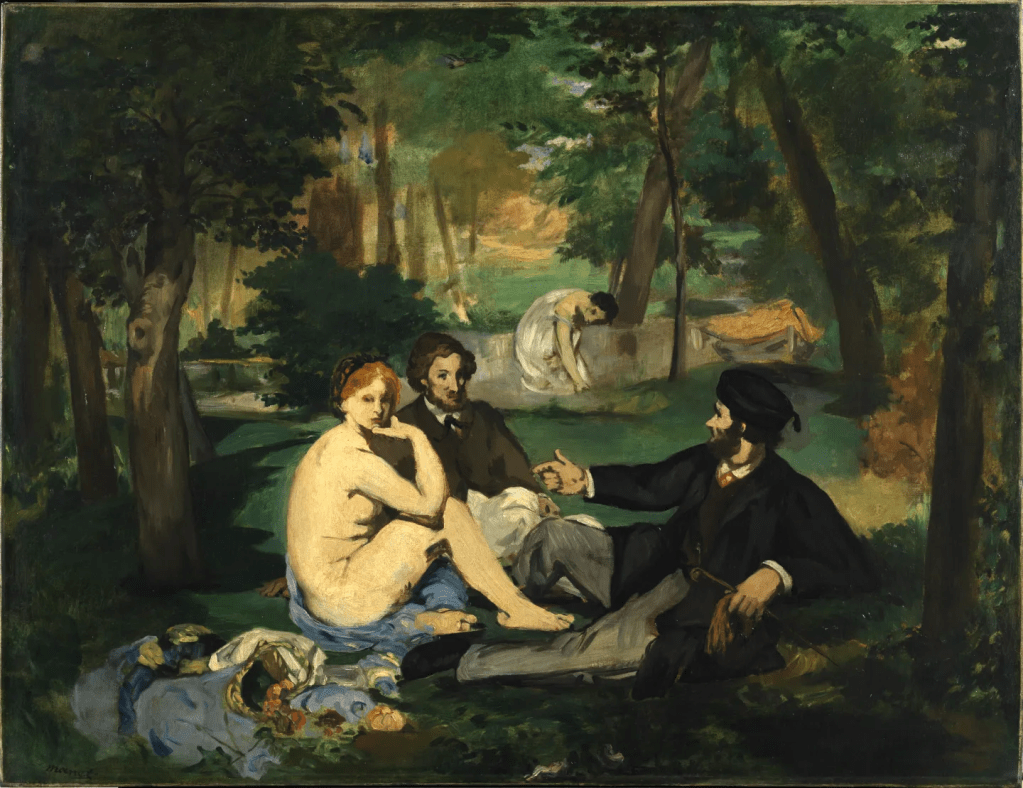
Édouard Manet – 1863 – Le déjeuner sur l’herbe
The word “picnic” comes from the French language, and it became popular pastime in France after the Revolution (1789,) when royal parks became open to the public for the first time.
The term derives from pique-nique, used to describe a group of people dining in a restaurant who brought their own wine. The concept of a picnic therefore had the connotation of a meal to which everyone contributed something.
Picnic may be based on the verb piquer which means ‘pick’ or ‘peck’ with the rhyming nique meaning “thing of little importance”, or on “pique un niche” meaning “pick a place”, an isolated spot where family or friends could enjoy a meal together.
During the Victorian Age picnics were ways for people to escape the restrictions of etiquette and formality and offered the rare opportunity for young men and women to spend time together in the open air. They could also be quite elaborate since a picnic for twenty people might feature cold salmon, lamb, veal, chicken, ham, pigeon pie, sandwiches, fruit, a selection of cheeses, and a variety of baked food!
The modern-day picnic is much less complicated. In fact, the phrase “it’s no picnic” is used to describe a difficult or unpleasant situation.
PS: Italy’s favourite picnic day is Easter Monday, called “Angel’s Monday” or Pasquetta (“Little Easter”).


 LatinosUSA
Replica a Tina Opines Cancelar la respuesta