Review: Brave New World by Aldous Huxley, by Robbie Cheadle

Published by

on

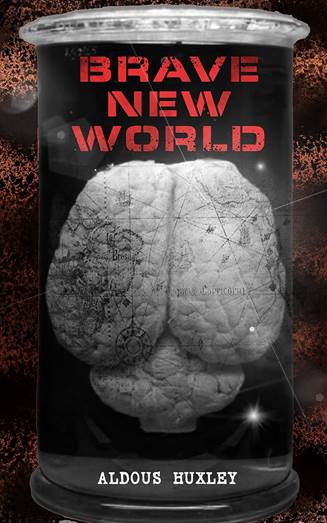
Picture caption: Cover of Brave New World by Aldous Huxley

Overview

A colleague of mine who is a philosopher recommended I read Brave New World, a book written in 1931 by English author Aldous Huxley.

I have read several dystopian novels including 1984 by George Orwell, Anthem by Ayn Rand, The Time Machine by H.G. Wells and Fahrenheit 451 by Ray Bradbury, but this one disturbed me the most.

In all other dystopian novels I’ve read, compliance with the despotic authoritarian regimes that demand the surrender of knowledge, creativity, and individuality are enforced by strict control over the behaviour and actions of all people and the maintenance of power through force, intimidation, and torture.

In Brave New World, the freedom of choice of individuals is taken away by the removal of the normal human reproductive system, family units, and relationships. Reproduction is replaced with a state-controlled artificial system whereby babies are grown in test tubes and the developing foetuses are ‘interfered with’ so that the babies are suited to their pre-designated status in life.

Once the babies are decanted, they are conditioned by repetitive mantras during their sleeping hours which condition their behaviour towards each other, the different societal castes, and their leisure and consumption behaviour. Everyone is conditioned to accept everyone else and appreciate their contribution to the smooth functioning of society. They are also conditioned to accept death and to not have any strong emotions or feelings. There are no human attachments through love or a sense of belonging.

In this manner, everyone is happy as their physical human needs are met and even exceeded, as they are kept entertained as well as fed, clothed, and employed. All people are also provided with a soothing happiness-maintaining drug called Soma to take the edge off any mild emotional upsets they might experience.

The society in Brave New World is that of a rigid caste system where status, intelligence and worth, all of which are designated from conception through the method of development of the foetuses, is prescribed equally for males and females from almost all population groups on earth.

The Alphas are the intellectuals of the World State and take all academic jobs such as college professors, scientists, and leadership roles. They wear grey and have a lot more freedom provided they do not stray outside of the societal norms of ‘everyone is for everyone’ and they do not try to push the boundaries of the search for freedom, truth, or science. They do not have relationships but engage in numerous sexual encounters with many different people. The maintenance of their status costs them their individual thoughts and ideas. They are dedicated to maintaining the system and thus the happiness of the masses.

The Betas wear mulberry or maroon and are one level below Alphas. They are more ‘regular’ than Alphas as they don’t have the accelerated intelligence or physiques gifted to Alphas during their foetal development.

The Gammas, Deltas, and Epsilons are the workers, and their intelligences are artificially impaired. This impairment increases as you go down the castes with Epsilons being mentally incapacitated in their artificial wombs through depriving the developing foetuses of oxygen for limited periods.

The purpose of this intellectual impairment is to ensure the workers are happy in their repetitive and boring jobs and do not become unsettled or dissatisfied due to unfulfilled higher purposes and ambitions by the workers.

The Gammas, Deltas, and Epsilons are the majority and wear green, khaki, and black, respectively. Many of the work groups are grown from the same embryos so they share common features and are in effectively all ‘twins’ and related.

Plot

Lenina Crowne, an Alpha female who works in the hatcheries (baby production factories) is a little unsettled when the book starts. She is looking for a mysterious little something more than what she currently has in life. She is interested in an Alpha male called Bernard Marx who has offered to take her with him to a Savage Reservation in New Mexico. Very few Alphas can travel to the Savage Reservation and observe natural-born people who are not part of the new world order and who have relationships, suffer from aging and diseases, and still have their religion. They also have babies.

At the Savage Reservation, the pair meet Linda, a woman originally from the World State, and her natural born son, John. The story moves on from there drawing parallels between the two worlds and the lifestyles, wants, and desires of the inhabitants.

Why is this book important?

Although some aspects of this book are dated due to modern technology, there is much in the concept of the World State that is applicable and quite possible. The technology for genetic engineering and the creation of designer babies already exists, as does the future elimination of diseases and slowing down of the aging process. It seems likely, given our money-orientated society, that those with greater means would have access to these new technologies.

Controlling people through drugs and consumerism is already a known concept and the idea of a world benefits system has already been posed. The impact of over population is making itself felt and the idea of a set number of life years for people as presented in this book, seems possible. 

It seems a valid theory that the removal of human relationships, together with the satisfaction of all physical needs, would drastically reduce conflict situations in the world. Conflict is driven by strong emotions of want, greed, desire, revenge, and others and it is reasonable to think that these emotions would be less likely to present themselves in such a placid and unchallenging environment.

This is a book that needs to be preserved so that we can be reminded that constant happiness comes at a price and would be likely to diminish, or even destroy, creativity, innovation, and further progress, as well as our freedom of choice. The question to ask ourselves whether constant happiness is worth sacrificing our freedom of choice for, especially as that happiness restrains further human development and restricts knowledge and reading.

We also need to ensure that no single world power gains absolute control over all of humanity thereby allowing it to make all decisions, unopposed, about the welfare and future of all people. Keeping people satisfied in their work by reducing or limiting their brain growth sounds so horribly viable in the author’s context of peace and happiness, but is a gross violation of human rights.

Some interesting quotes

“Social stability. Standard men and women, all exactly the same. The staff for the whole of a small factory from one single bokanovskified egg.” Relates to the mass production of identical twins who all look the same and who all have an artificially generated low IQ.

“Books and loud noises, flowers and electric shocks; already in the minds of the babies these pairs of things were connected, and repeated lessons would make the connection permanent.” Relates to conditioning during baby and toddlerhood.

“”I want to know what passion is,” he said. “I want to feel something strongly. “We are all grown-up intellectually and during working hours,” he went on, but we are infants where feeling and desire are concerned.” Relates to the removal of emotional stimulus.

Amazon US purchase link: https://www.amazon.com/BRAVE-NEW-WORLD-Uncontrolled-Psychological-ebook/dp/B06X9778CB

25 respuestas a «Review: Brave New World by Aldous Huxley, by Robbie Cheadle»

  1. Avatar de Dave Astor

    Excellent review, Robbie, of an unsettling/prescient book. I agree that «Brave New World» is different from many other dystopian novels.

    Le gusta a 1 persona

    1. Avatar de robbiesinspiration

      Hi Dave, this book is different and the ideas are deeply disturbing. Thank you 🧡

      Le gusta a 1 persona

  2. Avatar de thomasstigwikman

    It is a famous book but I have not read it yet. It seems like a really disturbing but thought provoking read. Your description of the book and your review is very intriguing and very helpful. I think you are right. It is a book with an important message and reminder for our time. There are dangers we need to pay attention to. Perhaps I should read it.

    Le gusta a 1 persona

    1. Avatar de robbiesinspiration

      Hi Thomas, there are messages in this book about interference with nature and designer children (top or bottom end IQ) that are truly scary. The word building and ideas are extraordinary. The plot for me, wasn’t as amazing on a standalone basis but that didn’t matter. It was a means to share the ideas and concepts.

      Le gusta a 1 persona

      1. Avatar de thomasstigwikman

        Yes I can undersstand that is scary. It is one of the great books I have not got around to reading (yet).

        Le gusta a 1 persona

      2. Avatar de robbiesinspiration

        💚

        Le gusta a 1 persona

  3. Avatar de lyndhurstlaura

    This was a book that I read many years ago, and to which I’ve returned many times; one of my top ten, in fact. I seem to recall that Huxley was criticising the theories of the sociologist Talcott Parsons; but don’t quote me on that. Whatever, it’s still one of the greats so thanks for giving it an airing for those who may not yet have read it. 😊

    Le gusta a 1 persona

    1. Avatar de robbiesinspiration

      Hi Laura, I’m not sure what inspired this book but the world building is truly horrifying. A dystopian novel that was incredible impactful for me.

      Le gusta a 1 persona

  4. Avatar de beetleypete

    I was given this to read by a teacher when I was at secondary school, and I was too young to fully appreciate it. I actually bought a Kindle copy for 75p last year, and it is on my device waiting to be read again.

    Shared on Twitter. Best wishes, Pete.

    Me gusta

  5. Avatar de Darlene

    Thanks for the great review. I find dystopian books like this one so disturbing that they keep me up at night, so I probably won’t ever read it. But you gave me enough info to know what it’s about.

    Me gusta

  6. Avatar de Violet Lentz

    I like you have not yet read this one. And in all truth Robbie- I just do not have it in me to do so with all that is currently going on in the world- although I do appreciate its relevancy all the same.

    Le gusta a 1 persona

  7. Avatar de Edward Ortiz

    Great review, Robbie. I think your point about our money-oriented society is spot on. Those with resources would take advantage of medical advances to try to create the “perfect” human being, which is, of course, impossible, because our knowledge will always be limited, and we are never going to reach perfection in the way some people imagine it.

    Le gusta a 1 persona

  8. Avatar de John W. Howell

    An excellent review, Robbie. When this book was written, the great depression was in full swing and a lot of folks wondering if socialism or communism might be a better path of life than the capitalistic society that got the world into the mess in the first place. I always views this one as a warning manifesto on what could happen if socialism got carried away. There were some around in those days who thought Huxley’s world looked pretty good. Thanks.

    Me gusta

  9. Avatar de Rebecca Budd

    Thank you, Robbie for your thoughtful and deeply considered review. What I appreciate most is how clearly you hold the tension at the heart of the book: the seduction of comfort and stability, and the quiet cost to freedom, creativity, and human growth. That question you pose, whether constant happiness is worth the price, feels especially resonant now. Brave New World reminded me that such worlds don’t arrive all at once. They emerge gradually, through choices made for convenience, safety, or efficiency, often with good intentions. In that sense, the book feels less like a prediction than an invitation to remain attentive to our own responsibility. That is to notice where we participate, consent, or look away. Preserving stories like this helps us keep that awareness alive, not to frighten us, but to remind us of what it means to remain fully human.

    Me gusta

  10. Avatar de Teri Polen

    I can’t believe I’ve never gotten around to reading this book, Robbie. Then again, with the state of the world right now, it might be too terrifying.

    Me gusta

  11. Avatar de memadtwo

    It’s really interesting to hear your interpretation Robbie. I read this book in high school, along with all the other ones you mentioned, and found Fahrenheit 451 much more disturbing. But of course the advances in technology have made it a reality in a way. Fewer and fewer people know how to think for themselves and allow their lives to be guided by memes and the latest recreational drugs. The rulers almost don’t need test tube babies.

    Your remark about paying a price for a life without any conflict is my chief objection to the idea of Heaven as a desirable destination. What’s the point if you don’t have any problems to solve, if everything is provided for you? No thank you. (K)

    Me gusta

  12. Avatar de T. W. Dittmer

    Great review of this fascinating book, Robbie. Its plot theory is quite disturbing to me.

    Me gusta

  13. Avatar de Annette Rochelle Aben

    This takes me back to English classes and I am shaking my head in total agreement.

    Me gusta

  14. Avatar de derrickjknight

    This is an excellent, very thorough, review, Robbie. You might like to read this much shorter one from me: https://derrickjknight.com/2020/09/30/91271/

    Me gusta

  15. Avatar de Liz Gauffreau

    Hi, Robbie. Thank you for calling attention to this book that should be widely read. It’s been years since I read it, but from reading your review, I would argue that the «happiness» depicted in the novel isn’t happiness at all. What a horrifying vision of a future that is, as you note, not outside the realm of possibility in the world we currently inhabit.

    Me gusta

  16. Avatar de Dawn Pisturino

    I read this book many, many years ago, and it reminds me of how Hollywood tries to define «happiness» for us, pop culture tries to keep us «happy» through escape, spiritual gurus try to put us on a path to «happiness,» and substance use is at an all-time high.

    Le gusta a 1 persona

  17. Avatar de Resa

    Interesting how this and the other dystopian novels have one big thing in common – bits and pieces of each are here already.

    So much imagined/predicted has come true.

    Thank you for the review Robbie!

    Me gusta

  18. Avatar de Smitha V

    This sounds like an interesting and disturbing book, Robbie. More like a ‘Scary world’ rather than brave. The caste system sounded like the Hindu caste system, only this is created and people are happy because of ‘Soma’. I wonder if the author took the word ‘Soma’ from ‘Somras’, a drink taken by the God in Hindu mythology.
    I enjoyed your review.

    Me gusta

  19. Avatar de acflory

    Great review, Robbie. I can’t help wondering though whether the desire for constant happiness is already the main motivator of an awful lot of humans. Just as an aside, Brave New World was written after the rise of communism in Russia, when the rest of the world was coming to terms with what communism might mean.

    C.J.Cherryh tackles the underlying issues from more of a capitalist base, and Cyteen is a brilliant look at a whole sub-class of clones developed, again, to fit rigid niches in society. It’s not an easy read, but then none of these book are. It’s worth it though. 🙂

    Me gusta

  20. Avatar de Carla

    This is a book I read and studied in high school, but it was so long ago (50 years or more) that I don’t remember much about it. Maybe it is due a reread. Great post, Robbie and I enjoyed reading your thoughts.

    Le gusta a 1 persona

Replica a beetleypete Cancelar la respuesta