Meet Colleen M. Chesebro
Today, I am thrilled to introduce author and poet, Colleen M. Chesebro, for my February author interview on LatinosUSA.
Colleen and I have been blogging friends for years and she was instrumental in my development as a poet, especially in the area of syllabic poetry. Colleen and I have published two anthologies as co-editors, Sunflower Tanka: An Anthology of Tanka, Tanka Prose, & Experimental Tanka and Sunflower Tanka: A 2025 Anthology of Tanka, Tanka Prose, & Experimental Tanka.
Colleen is also the founder of the Tanka Tuesday poetry challenge which I host from time-to-time along with a few other poets and Colleen. You can learn more about Tanka Tuesday here: https://tankatuesday.com/tanka-tuesday-poetry-challenge-rules/
You are a leader in the WordPress community for the creation of syllabic poetry. How did you start writing syllabic poetry? Why do you like syllabic poetry specifically?
Thank you, Robbie for inviting me for an interview. I’ve been writing short stories and poetry since I was a kid. I wrote haiku in grade school and fell in love with the form. Those Japanese forms speak to me.
In 2011, I went back to college. I took an English class with an emphasis in poetry. We covered Japanese syllabic poetry and how important the form was to the Imagist movement in the early 20th century. The Imagist movement stressed the use of concrete images, influenced by the haiku. Poets like Ezra Pound and Hilda Doolittle added haiku elements in their poetry. I fell in love with haiku all over again!
I love Asian culture. I helped to raise my two half-Thai stepdaughters. That led me to the exploration of paganism and Buddhism. Japanese culture is deeply interwoven into many of the syllabic forms. In Japan, haiku is part of the culture. It reflects on the Japanese aesthetic highlighting simplicity, brevity of words, and observations of nature. Haiku is a meditation which leaves the reader with a deep appreciation for the transient moments in time.
Tell us a bit about your activities on WordPress in relation to syllabic poetry? You run weekly writing challenges and publish an annual poetry anthology – tell us a bit about these events.
When I started blogging in 2014, I discovered a haiku challenge on Ronovan Writes. I participated in this challenge for over a year. I began experimenting with the tanka form and decided I would start my own challenge using the tanka form. Tanka Tuesday started in August 2016. At that time, I was the only other syllabic challenge on WordPress.com. 2016 marks the tenth year for the weekly Tanka Tuesday poetry challenges.
In our weekly challenges, we started with the tanka and in subsequent years, moved on to senryu, haiku, haiga, haibun, tanka, tanka prose, renga, American cinquain, Etheree poetry, Nonet poetry, and the shadorma. I added many more forms. The last few years, we’ve introduced a team of hosts to help keep the challenges fresh. In early 2024, I asked Robbie Cheadle if she would like to help me edit a yearly syllabic poetry journal. Robbie agreed and has graciously created a piece of art for each cover. Between the two of us, we’ve edited and created an anthology for 2024 and 2025. Sunflower Tanka is a new journal of contemporary tanka, tanka prose & experimental tanka forms. We’re both committed to providing syllabic poets a publication where they can see their poetry in print.
What led you to write Word Craft: Prose & Poetry? What were your aims for this particular book?
I wrote Word Craft: Prose & Poetry to help budding syllabic poets learn how to create the different kinds of forms. I researched the details on how to create the forms and added links and resources from reputable sources. I shared the way I create forms as a starting point for poets who want to learn the basics of the forms. Our Tanka Tuesday poets provided examples of the forms from our challenge posts.
What is your favourite syllabic poetry form and why?
I love tanka poetry. The Tanka in English is written in syllables of 5-7-5-7-7. This form is derived from the Japanese Waka, a song-like chanted poem. The themes surrounding tanka are love, passion, courting, nature, natural beauty, life, death, and the affairs of regular men and women. Tanka give us a wide range of possibilities, and they can be written about any theme contrasting haiku and senryu.
I also love creating haiku. This form is written in a 5-7-5 or a short-long-short syllable count. The use of a kigo (season) word is required. The best haiku are written in 11 or 12 syllables. Haiku offer a simplistic approach to nature. They capture a moment in time with the use of mono no aware. This is where we examine the bittersweet realization of the transient nature of all things.
Please share one or two of your favourite of your own syllabic poems
Here’s an example of a tanka poem:
at daybreak’s first light
I watch the ghosts of seasons past
shining in the dew
the clicks and rattles of crows
confirms autumn’s quick approach
© Colleen Chesebro
Here’s a haiku:
outside my window
swirling lake effect snowflakes
play tricks on the cat
© Colleen Chesebro
My review of Word Craft: Prose & Poetry
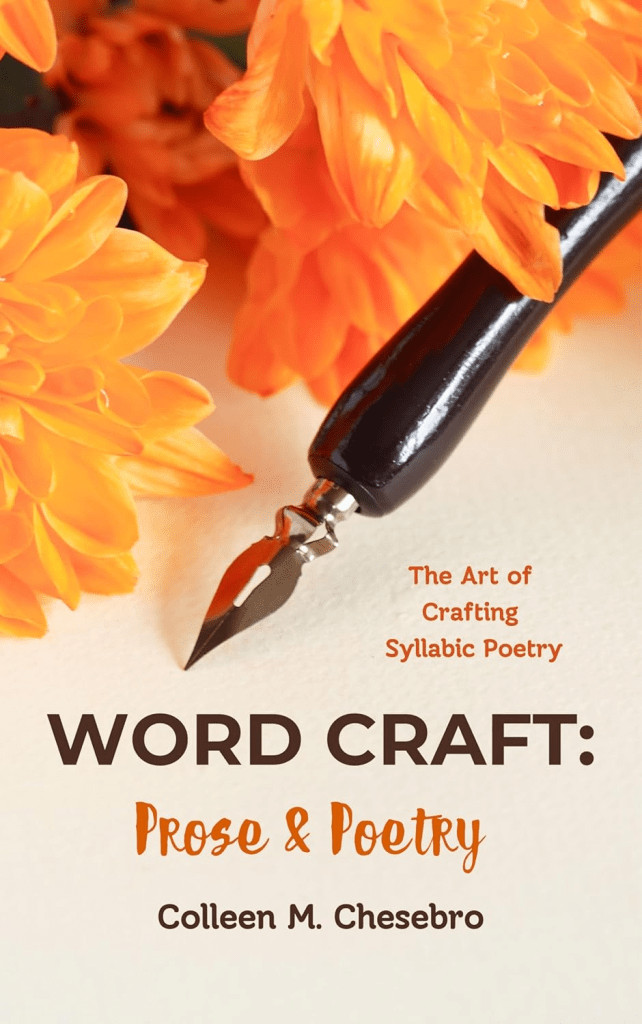
I have been practicing writing syllabic poetry for 10 years and most of what I know about the various syllabic forms, both American and Japanese, comes from Colleen M. Chesebro who has a wonderful website with a lot of guidance on these forms. Having visited Tokyo in December 2024, my interest in haiku, tanka and other Japanese syllabic poetry forms increased even more. I purchased this book with a view to learning even more about syllabic poetry. It did not disappoint and I learned a lot of new information. I have been practicing writing more English haiku in the non-traditional 3-5-3 form which I find punchy and powerful. I have learned to really think about the words I am using in a syllabic poem and how they work together to create a short, sharp, and interesting statement. I am also practicing including a subtle twist in the final phrase.
This same learning process applies to the numerous other poetry forms covered in this book, including my personal favourite forms, shadorma and haiku. My learning curve on haibun (prose with a haiku) and tanka prose (prose with a tanka) has also gone through a sharp learning curve and I will be amending the way I write these poems going forward.
I also gained from the insightful material about American cinquain poetry in various forms, as well as Etheree and nonet poetry. I find that certain subject matters work better using different poetry forms and I always like to think about the content of a poem before I start writing and match it to the best poetry form. This book has expanded my knowledge on different forms which is very pleasing.
If you are interested in learning to write syllabic poetry, this is a wonderful instruction manual with an excellent mix of instruction and examples for a variety of poets.
Amazon US purchase link: https://www.amazon.com/Word-Craft-Poetry-Crafting-Syllabic-ebook/dp/B094P1XSYG
About Colleen M. Chesebro
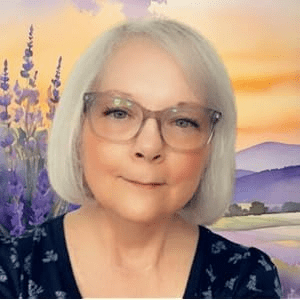
Colleen M. Chesebro grew up in a large city in the Midwest. Keen on making her own way in the world, she joined the United States Air Force after graduation to tour the world and find herself. To this day, that search continues.
An avid reader, Colleen M. Chesebro rekindled her love of writing poetry after years spent working in the accounting industry. These days, she loves crafting syllabic poetry, flash fiction, and creative fiction and nonfiction.
In addition to poetry books, Chesebro’s publishing career includes participation in various anthologies featuring short stories, flash fiction, and poetry. She’s an avid supporter of her writing community on her blog on by organizing and sponsoring a weekly syllabic poetry challenge, called #TankaTuesday, where participants experiment with traditional and current forms of Japanese and American syllabic poetry.
Chesebro lives in the house of her dreams in mid-Michigan, surrounded by the Great Lakes with her husband and two (unicorn) cats, Chloe & Sophie.
About Robbie Cheadle
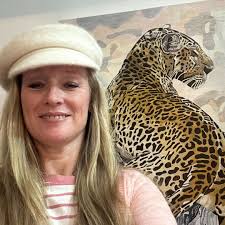
South African author, photographer, and artist, Robbie Cheadle, has written and illustrated seventeen children’s books, illustrated a further three children’s books, written and illustrated four poetry books and written and illustrated one celebration of cake and fondant art book with recipes. Her work has also appeared in poetry and short story anthologies.
Robbie also has two novels and a collection of short stories published under the name of Roberta Eaton Cheadle and has horror, paranormal, and fantasy short stories featured in several anthologies under this name.
You can find Robbie Cheadle’s artwork, fondant and cake artwork, and all her books on her website here: https://www.robbiecheadle.co.za/
Social Media Links
Bluesky: https://bsky.app/profile/robbiecheadle.bsky.social
YouTube: https://www.youtube.com/channel/UCVyFo_OJLPqFa9ZhHnCfHUA
Goodreads: https://www.goodreads.com/author/show/15584446.Robbie_Cheadle
TSL Publications: https://tslbooks.uk/product-tag/robbie-cheadle/
Amazon: https://www.amazon.com/stores/Robbie-Cheadle/author/B01N9J62GQ
Unsplash profile: https://unsplash.com/@r_cheadle


 LatinosUSA
Replica a Dave Astor Cancelar la respuesta