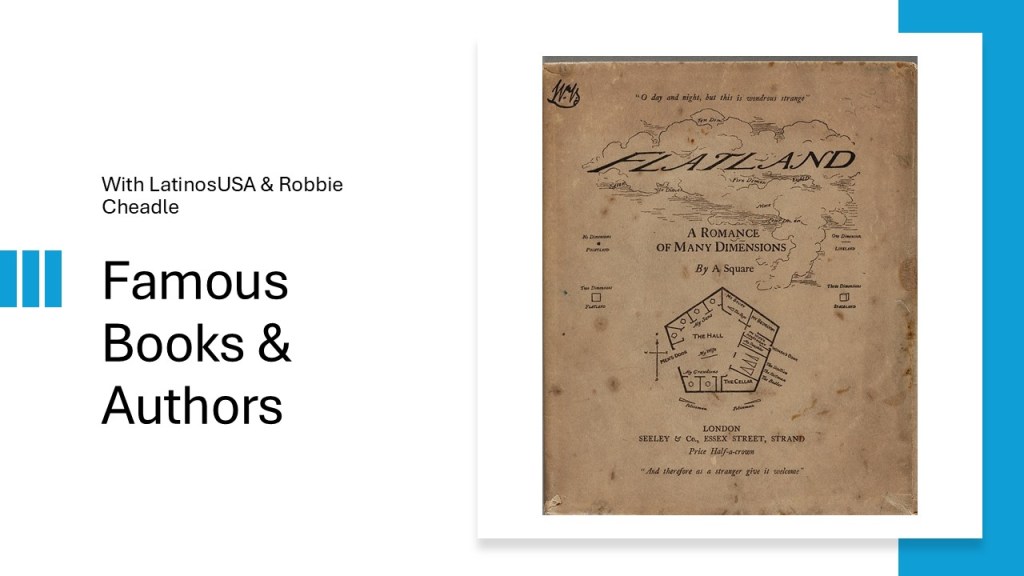
Background
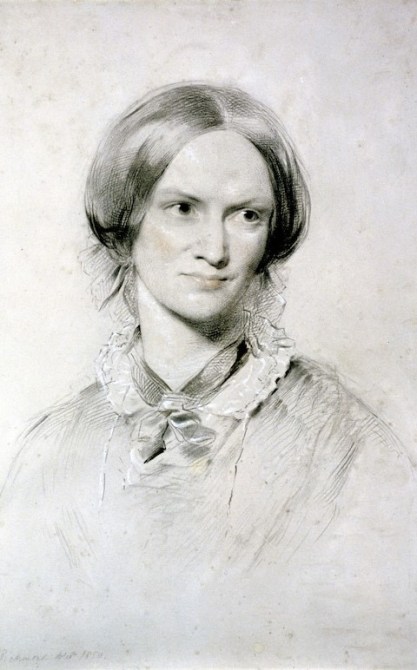
Charlotte was the third and middle daughter born to Patrick and Maria Branwell Brontë. She had two older sisters, Maria and Elizabeth, who both died as children from tuberculosis, and two younger sisters, Emily and Anne. She also had a younger brother, Branwell. Subsequent to their mother’s death from uterine cancer, Charlotte and her young siblings were brought up in Haworth, Yorkshire, by their father, Patrick, and their aunt, Elizabeth Branwell.
Maria, Elizabeth, Charlotte and Emily all attended Clergy Daughters’ School at Cowan Bridge in Lancashire during 1824. The fees were low, the food of a poor quality and the discipline harsh and often unfair. It was reported that the food provided by the school was generally poorly cooked and unhealthy, and the cook was “careless, dirty, and wasteful”.
Lowood Institution, the school which features in Charlotte’s famous novel, Jane Eyre, is said to have been based on Charlotte’s recollections of Cowan Bridge School.
Maria and Elizabeth both sickened during their time spent at this school and were effectively sent home to die in June 1825. They died within six weeks of each other at the ages of eleven and ten years old, respectively. After the deaths of his two oldest children, Patrick removed Charlotte and Emily from the school and the remaining four siblings were all home schooled for five years.
In 1831, Charlotte attended Roe Head School in Mirfield, West Yorkshire, and this is where she met her lifelong friends, Ellen Nussey and Mary Taylor. Charlotte returned home a year later to teach her sisters, but she returned to the school as a teacher in 1835. Charlotte did not enjoy teaching and her health declined and she succumbed to depression during her time at Roe Head School. She eventually left her position at the school in 1838 and returned home.
During the period 1839 to 1841, Charlotte worked as a governess to families in Yorkshire. She did not enjoy this work either, claiming that her employers treated her as a slave and constantly humiliated her.
In February 1842, Charlotte and Emily attended a finishing school in Brussels in order to improve their qualifications in French and learn some German. Their goal, together with Anne, was to open their own boarding school. It was at this school that Charlotte met Constantin Héger, an unusually devoted teacher with a brilliant and unusual mind. Charlotte and Emily returned to Haworth after the death of their Aunt Branwell in October 1842, but Charlotte returned to Brussels on her own, in January 1843, to take up a teaching post at the school. Charlotte was homesick and became overly devoted to Constantin Héger, who is believed to have been the subject of her first book, The Professor, which was rejected by publishers and only published after her death. Constantin’s wife is said to have become jealous of her and Charlotte decided to return home to Haworth in January 1844.
During the course of 1844, the three Bronte sisters attempted to open a boarding school in their home. Their efforts did not attract any pupils and the project was abandoned in October.
In May 1846, Charlotte, Emily and Anne self-financed the publication of a joint collection of poems under the assumed names of Currer, Ellis and Acton Bell. They used these pseudonyms to veil their sex as female writers were regarded with disdain by Victorian society at that time. This book was not a success and they only sold two copies.
Despite the rejection by publishers of her book, The Professor, and the failure of the poetry book, Charlotte went on to write, and successfully publish, Jane Eyre in September 1847. In 1848, Charlotte started writing her second novel, Shirley. It was during the writing of this novel that she suffered the losses of her brother, Branwell, and both her sisters, Emily and Anne, all from respiratory diseases. Shirley was published in October 1849.
Charlotte’s last novel, Villette, was published in 1853, soon after her marriage to Arthur Bell Nicholls, her father’s curate. Charlotte became pregnant soon after her wedding and died, together with her unborn child, on 31 March 1855, at the age of thirty-nine. She is believed to have died from dehydration and malnourishment due to vomiting caused by severe morning sickness or hyperemesis gravidarum.
Interesting information about Charlotte and her siblings
Tiny books
The Bronte siblings used to produce tiny books which were no bigger than matchboxes and were packed with stories and advertisements written in tiny writing. They stitched the books together using printed scrap paper and leaves. These tiny manuscripts were produced through their teenage years and into their twenties. They found miniaturization to be amusing and suggestive and like the idea of being giants carrying around these tiny pieces of literature.
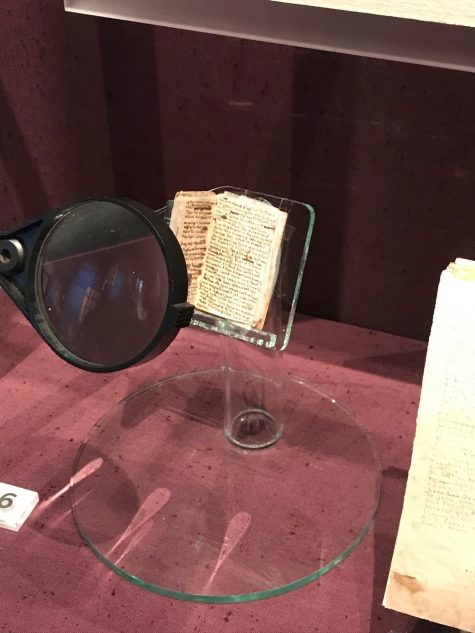
Picture caption: One of the surviving tiny books created by Charlotte Brontë. Photograph by Robbie Cheadle
Tiny person
Charlotte was a very tiny person. Her estimated height was approximately four foot seven and her clothes that are displayed at the Brontë Parsonage Museum, including shoes, corsets, gloves and dresses, would fit a modern child. She was self-conscious about her height and her looks in general, thinking of herself as being very plain. Charlotte also rarely smiled because her teeth were bad and many of them were missing.
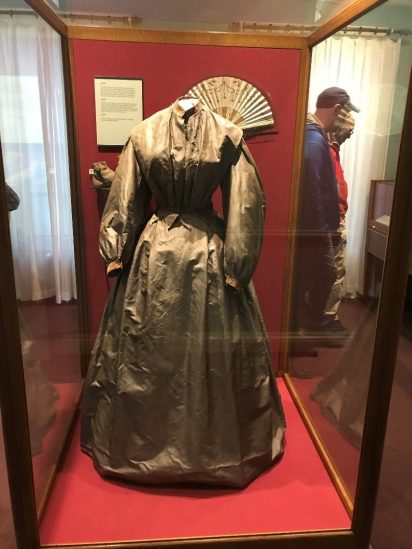
Picture caption: A dress Charlotte bought for her honeymoon. Photograph by Robbie Cheadle.
Charlotte wrote to her friend Ellen Nussey in October 1849, two years after Jane Eyre was published, saying: “I find I really must go to Mr Atkinson the dentist [in Leeds] and ask him if he can do anything for my teeth.”
Her bad teeth were one of the first things Elizabeth Gaskell noticed about Charlotte. In a letter after they first met, Gaskell gave a less than flattering description of her friend: “a reddish face, large mouth and many teeth gone; altogether plain.”
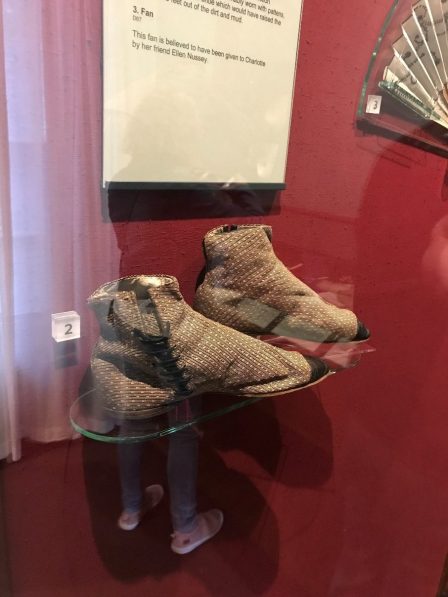
Picture caption: Charlotte’s boots. Photograph by Robbie Cheadle
About Robbie Cheadle
South African author, photographer, and artist, Robbie Cheadle, has written and illustrated seventeen children’s books, illustrated a further three children’s books, written and illustrated four poetry books and written and illustrated one celebration of cake and fondant art book with recipes. Her work has also appeared in poetry and short story anthologies.
Robbie also has two novels and a collection of short stories published under the name of Roberta Eaton Cheadle and has horror, paranormal, and fantasy short stories featured in several anthologies under this name.
You can find Robbie Cheadle’s artwork, fondant and cake artwork, and all her books on her website here: https://www.robbiecheadle.co.za/
Social Media Links
Bluesky: https://bsky.app/profile/robbiecheadle.bsky.social
YouTube: https://www.youtube.com/channel/UCVyFo_OJLPqFa9ZhHnCfHUA
Goodreads: https://www.goodreads.com/author/show/15584446.Robbie_Cheadle
TSL Publications: https://tslbooks.uk/product-tag/robbie-cheadle/
Amazon: https://www.amazon.com/stores/Robbie-Cheadle/author/B01N9J62GQ
Unsplash profile: https://unsplash.com/@r_cheadle


 LatinosUSA
Deja un comentario