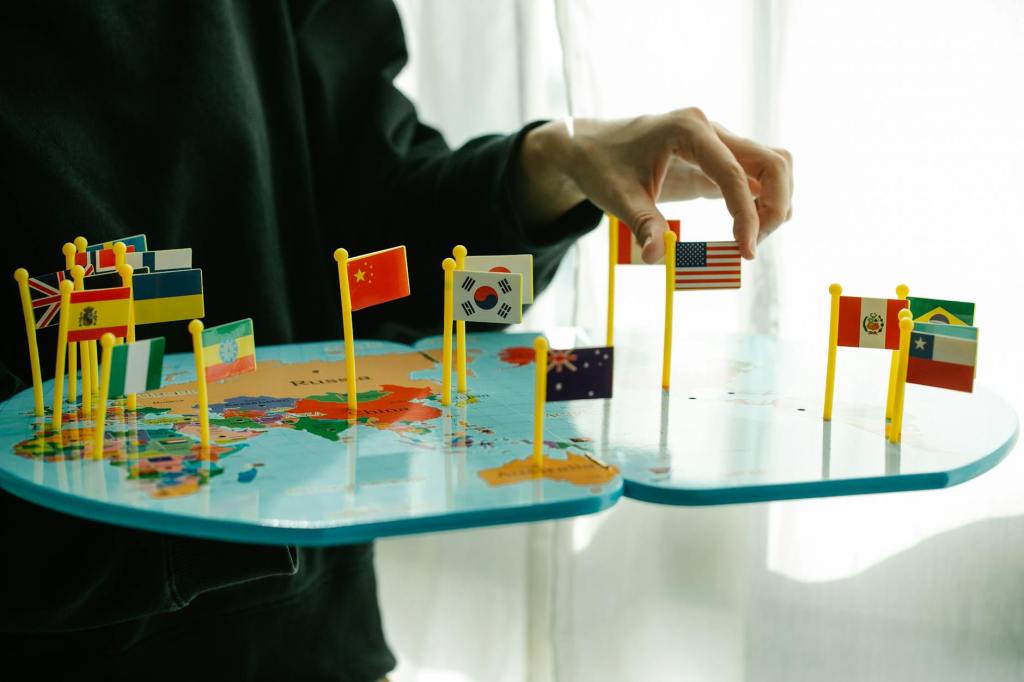
Over the Thanksgiving holiday, I heard the term “Third World” quite a lot. I think this is one of those expressions that needs to be erased from our vocabulary, since there is only one world, and all countries belong to it. Using that term promotes discrimination and disdain toward people living in countries with fewer resources. People who continue to use it today are stuck in the past; I, for one, am done using it.
The term “Third World” originated during the Cold War. Back then, world leaders and politicians divided our planet into three groups. The First World consisted of the United States, Canada, Japan, South Korea, Western Europe, and other allies. The Second World included nations aligned with the Communist Bloc. The Third World consisted of everyone else.1 Interestingly, some countries, such as Sweden and Switzerland, were not aligned with either the First or Second World.2
Today, that term is outdated. Terms such as least developed countries (LDCs) are more appropriate—at least in political and policy contexts—so that efforts can be directed toward supporting the needs of people living in those countries. The United Nations maintains a list of least developed countries on its website, and it currently includes 44 nations.
According to the UN:
“The LDCs host about 40% of the world’s poor. Most are suffering conflict or emerging from one. LDCs account for 13% of world population but only about 1.3% of global GDP and less than 1% of global trade and FDI. Even if on the rise, still barely a fifth of the population in LDCs has access to the internet.”3
LDC is likely the right term for governmental and non-governmental organizations as they conduct their official work, but everyday people like you and me should avoid using labels altogether. We are all human beings—people who want the best for our families—so we should respect one another and see each other as equals.
As we mature and broaden our understanding over time, we need to recognize those who purposely use the term “Third World” and begin distancing ourselves from them. When we hear people use that expression, we must understand that they are not just talking about “the people from that country over there.” What they’re really saying is, “If you don’t look like me or have the resources I have, you are worthless”—and that is dangerous. It’s dangerous because they are dehumanizing people living in the least developed countries as well as those in the United States who are struggling to make a living or who don’t look like them. The same applies to leaders around the world, since discrimination and racism exist in every country to some extent.
We can do better, and we don’t need to wait for anyone else to begin making the necessary changes. Let’s start by treating our neighbors as human beings, regardless of their sociodemographic background, and by rejecting terms like “Third World.”
Change won’t happen on its own; we must take action to make it happen.


 LatinosUSA
Replica a SAYOR BASELENOUS Cancelar la respuesta