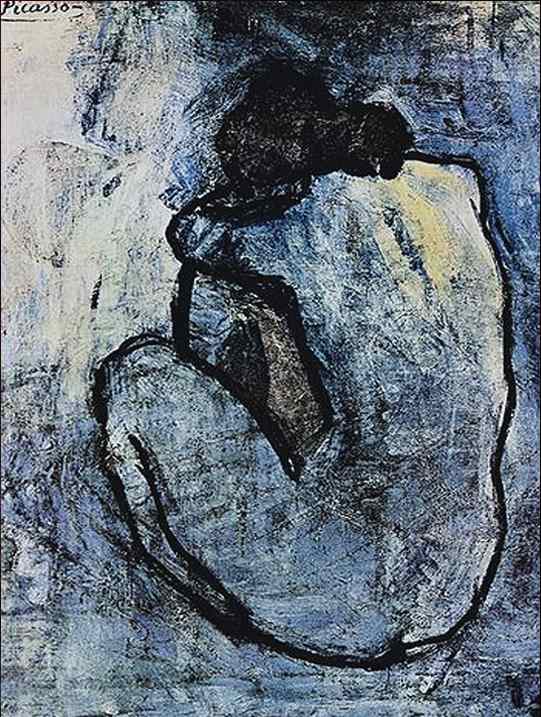
According to the Oxford English Dictionary, English speakers have used the term “blue” to refer to sad or melancholy emotions since the 15th century. This may derive from a custom among many old deep water sailing ships. If the ship lost the captain or any of the officers during its voyage, she would fly blue flags and have a blue band painted along her entire hull when returning home
In the 1800’s to go blue referred to the medical condition of a person at the last stage before passing away. In our cardiovascular system, oxygen-rich blood is reddish, oxygen-depleted blood is bluish and people deprived of oxygen will turn blue, so there is some basis in physiognomy (appearance of facial expression) for the explanation that to be blue means to be lethargic or depressed.
In the Western Hemisphere blue generally symbolises boys, in contrast to pink used for girls. However, the early 1900s, blue was the colour for girls, since it is the colour of the Virgin Mary
In China, the colour blue is commonly associated with torment, ghosts, and death. In a traditional Chinese opera, a character with a face powdered blue is a villain.
In Turkey and Central Asia, blue is the colour of mourning
The men of the Tuareg people (North Africa) wear a blue turban which protects them from the sun and sand of the Sahara desert. It is dyed with indigo which transfers to the skin, and is seen as a sign of nobility and affluence. Early visitors called them the “Blue Men” of the Sahara.


 LatinosUSA
Replica a gabychops Cancelar la respuesta