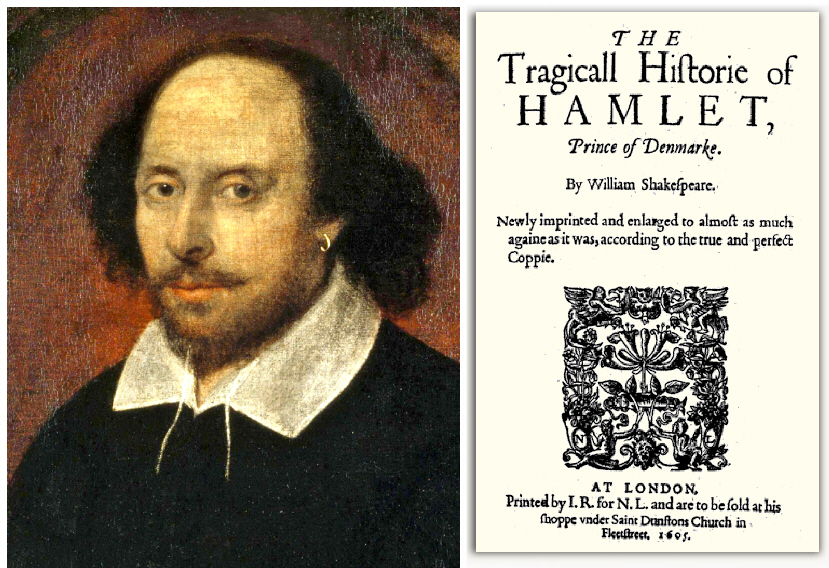
Hamlet and Modernity
Of Shakespeare’s plays, Hamlet is often said to be the most popular and beloved due to its timelessness and “universal appeal”.
Hamlet is a modern prince, not a medieval one, a university scholar and a skeptic, one who dares to question religious authority in his private thoughts, in which he questions what happens to us after death.
Yet, he is charged with the task of the medieval warrior – to enact vengeance on his father’s murderer.
Hamlet’s tragedy appears as the quintessence of a moral and metaphysical instability, which can be associated with the experience of modernity
Most of the characters observing Hamlet’s behaviour can’t agree whether it is fake and calculating or a real mental illness. His madness has not only the effect of disturbing those around him, it also allows him the freedom to transgress the court’s rules of etiquette and obedience.
Hamlet gives many soliloquies, all centred on important existential themes: the emptiness of existence, suicide, death, suffering, action, the fear of death and of the beyond, the degradation of the flesh, the triumph of vice over virtue, the pride and hypocrisy of human beings, and the difficulty of acting under the weight of thought. (It seems that Hamlet can act only when he has no time to think, as in the slaughter of Polonius). These themes represent the history of human thinking from the Renaissance to the existentialism of the twentieth century. The soliloquies are pieces of pure poetry, their language is really beautiful.
To sum up, Hamlet is not simply a revenge tragedy because the theme of vengeance is used to deal with a series of themes central to humanity, such as:
- relationships between father and son, mother and son, and Hamlet and his friends
- love relationships
- power handling
- madness, feigned madness,
- youth and age
- action and inaction
- corrupt power and power corrupting
- existential questions.


 LatinosUSA
Replica a Klausbernd Cancelar la respuesta