“LAPALISSIAN”
Monsieur de la Palisse est mort
Est mort devant Pavie
Un quart d’heure avant sa mort,
Il était encore en vie. (*)

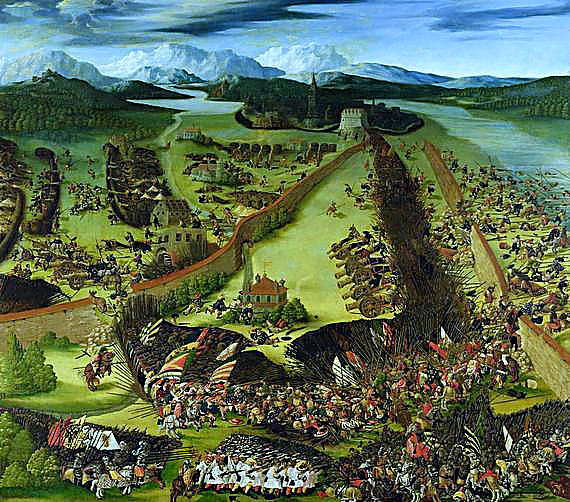
On 24 February 1525 Jacques de La Palice, a French nobleman and military officer died during the battle of Pavia, while fighting as a Marshal under Francis I.
That battle, fought on the morning of 24 February 1525, was decisive in the Italian War of 1521–26, since the Spanish-Austrian army defeated the French army
La Palice’s epitaph read:
“Ci-gît le Seigneur de La Palice: s’il n’était pas mort, il ferait encore envie.”
(“Here lies the Seigneur de La Palice: If he weren’t dead, he would still be envied.”)
But these these words were misread as “…il serait encore en vie” (“he would still be alive“).
In the 16th century this misreading was incorporated into a popular satirical song, and in time many other variants developed. But the following quatrain was always present
(*)
Monsieur d’la Palisse est mort, Monsieur de la Palisse is dead)
Il est mort devant Pavie, (He died before Pavia)
Un quart d’heure avant sa mort, (A quarter of an hour before his death)
il était encore en vie. (He was still quite alive)
Therefore the French term lapalissade (used also in English) means an utterly obvious truth, that is, a truism or tautology. Other synonyms include “platitude” and “bromide” or “Captain Obvious” to refer to someone who has just stated something self-evident.
The adjective lapalissian means very obvious, completely apparent. and it was borrowed into several other languages. For example, in Italian we say “lapalissiano” .


 LatinosUSA
Replica a luisa zambrotta Cancelar la respuesta