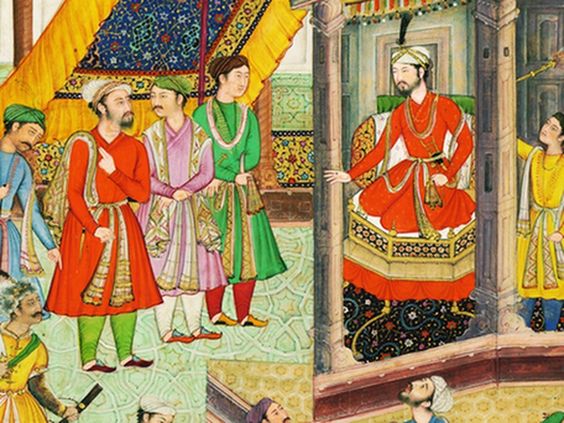
I tre principi di Serendippo was published in Venice in 1557 by a printer called Michele Tramezzino who claimed that one Christoforo Armeno had translated the poem “Hasht-Bihisht” from Persian into Italian
It has been suggested that the Italian used Serendippo in the title of his book because it conveyed an exotic flavour
“In ancient times there existed in the country of Serendippo, in the Far East, a great and powerful king by the name of Giaffer. He had three sons who were very dear to him. And being a good father and very concerned about their education, he decided that he had to leave them endowed not only with great power, but also with all kinds of virtues of which princes are particularly in need.”
This is the beginning of the story, which goes on with the king father looking for the best tutors for his sons.
The three princes are very intelligent, and soon become highly trained in the arts and sciences. However, when the tutors inform the king of their achievements, he is sceptical and calls each of them, in turn, announcing he will retire to a monastery leaving them as king. Each politely declines, affirming the father is wiser and should reign until his death
The king is pleased, but he decides to send them on a journey to acquire more experience. After a long journey, they reach the kingdom of a great and powerful emperor. Here a merchant stops them on the road and asks them if they have seen one of his camels.
Although they have not, they have tracked the animal’s progress through the land, so they can describe the merchant’s lost camel. They speak of a lame camel, blind in one eye, missing a tooth, carrying a pregnant woman, and bearing honey on one side and butter on the other. The description is so accurate that the merchant suspects them of having stolen it and takes them to the Emperor, demanding punishment. The Emperor asks them how they could give such an precise description of the camel if they have never seen it. It is clear from their replies that they have interpreted the little evidence observed along the road and used those small clues to deduce the nature of the animal.
When a traveller arrives and says that he has just found a missing camel wandering in the desert., the Emperor not only spares their lives, but he even appoints them his special advisers, in recognition of their talents.
The story continues with many other adventures, in which the three princes continue to display their sagacity.
therefore is not just a synonym for happy accident, but it means the occurrence and development of events by chance in a satisfactory or beneficial way. It is a capacity of individuals able to “see bridges where others saw holes” and connect events creatively.


 LatinosUSA
Replica a Francine Hamelin Cancelar la respuesta