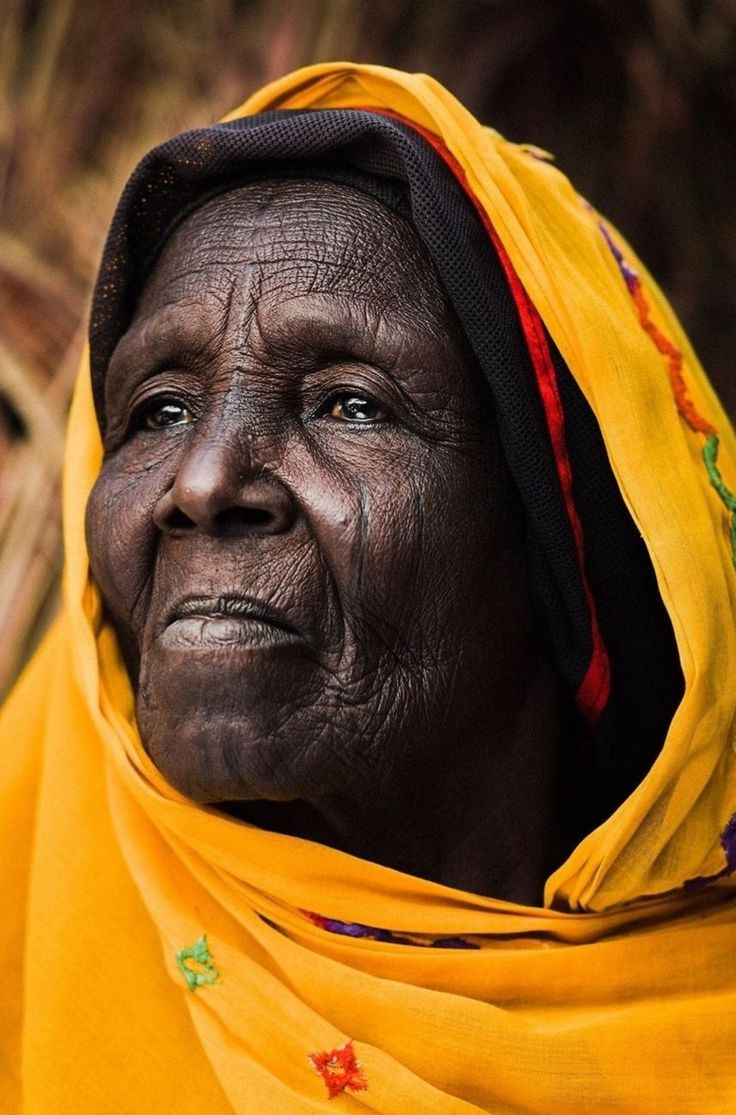
In the dusty outskirts of Maiduguri, where the sun scorched the earth and the air transported the weight of unspoken fears, Zainab lived a life stitched together by survival. She was a schoolteacher, or had been, before Boko Haram’s shadow fell over Borno State. Now, her days were spent weaving baskets to sell at the Monday Market, her dreams of educating children buried beneath the rubble of her burned-out classroom. Aisha was twenty-six, with eyes that held both defiance and despair, and a secret she guarded like a wound.
The Nigerian government had declared Maiduguri «liberated» from Boko Haram, a claim blared through radios and plastered on posters. Military checkpoints dotted the city, soldiers in faded uniforms barking orders, their rifles slung carelessly over their shoulders. To the world, they were heroes, guardians of a fragile peace. To Zainab, they were part of a lie — a façade of control in a land where fear still ruled. Boko Haram was not gone; they were merely quieter, their attacks more sporadic but no less brutal. And the government? It thrived on the illusion of victory, while villages burned and families vanished.
Zainab’s secret began with a man named Umaru, a wiry figure with a soft voice and a limp from a shrapnel wound. He had appeared at her stall one sweltering afternoon, his face half-hidden by a scarf. “You’re Zainab, the teacher?” he’d asked, his eyes scanning the market for threats. She nodded, wary. He leaned closer, whispering, “We need you. The Monkey needs you.”
The Monkey. A whispered network of civilians, some said, working to undermine Boko Haram from within. Zainab had heard rumors — brave men and women passing information, smuggling supplies, even sabotaging the insurgents’ plans. But Umaru’s offer wasn’t about courage; it was about deception. He needed her to pose as a sympathizer, to infiltrate a Boko Haram cell operating on the city’s fringes. “You’re perfect,” he said. “No one suspects a woman selling baskets.”
Zainab’s heart pounded. She wanted to refuse, to cling to her small, broken life. But the memory of her students — children stolen or slaughtered — burned in her chest. She agreed, not out of heroism, but out of guilt. If she could save even one life, perhaps she could sleep without their faces haunting her.
Umaru trained her in secret, teaching her the insurgents’ coded language, their habits, their paranoia. She learned to mimic their fervor, to speak of jihad with a conviction that sickened her. Her role was simple: gain their trust, report their movements to Umaru, and never, ever let the mask slip. The Monkey would use her intelligence to guide military strikes, they said. The government would crush the cell, and Zainab would fade back into her quiet life.
But the government, she soon learned, was no savior. Her first meeting with Umaru’s contact, a soldier named Captain Yusuf, set her nerves on edge. Yusuf was tall, with a polished smile and a uniform too clean for the dusty frontlines. He took her reports in a dimly lit safehouse, his questions sharp but his attention fleeting. “Good work,” he’d say, slipping her a small wad of naira. “Keep them trusting you.” But Zainab noticed the way his eyes lingered on her, the way he never asked about the risks she took. Once, she overheard him on a call, laughing about “milking the insurgency budget.” The government’s war on Boko Haram, it seemed, was as much a performance as her own.
Weeks turned into months, and Zainab’s double life became a tightrope. By day, she haggled over baskets, her smile a practiced shield. By night, she met with the Boko Haram cell, a group of gaunt men led by a fanatic called Ahmad. He was young, barely older than her, with a voice that could shift from sermon to scream in an instant. Ahmad believed her story — a widow seeking purpose in their cause — and gave her small tasks: delivering messages, hiding supplies. Each meeting left her trembling, her lies a weight that threatened to crush her.
One evening, Ahmad called her to a shack on the city’s edge. The air was thick with the smell of diesel and fear. “Zainab,” he said, his eyes gleaming with suspicion, “you’re one of us now. Prove it.” He handed her a package, heavy and wrapped in cloth. “Deliver this to the market tomorrow. A gift for the infidels.”
Her stomach churned. A bomb. She nodded, her throat dry, and took the package. That night, she met Umaru in an abandoned school, her hands shaking as she handed it over. “They’re planning an attack,” she whispered. “Tomorrow, at the market.”
Umaru’s face hardened. “We’ll handle it. You’ve done well.” But as she left, she caught a glimpse of Captain Yusuf in the shadows, watching her. His presence unnerved her. Why was he there? Why hadn’t Musa mentioned him?
The next day, the market buzzed with its usual chaos — vendors shouting, children darting through crowds. Zainab waited, her heart in her throat, expecting soldiers to swoop in, to seize the package she’d described to Umaru. But nothing happened. No raid, no arrests. Instead, at noon, a blast tore through the market’s heart. Screams filled the air, smoke rising where a fruit stall had been. Twenty dead, the radio later reported. Zainab stood frozen, her baskets scattered at her feet, the world blurring around her.
She confronted Umaru that night, her voice raw with rage. “You knew! You had the package, the location — why didn’t you stop it?”
Umaru’s face was a mask of regret, but his words were careful. “The military… they have their priorities. Sometimes, they let an attack happen. It justifies their budget, their power.”
Zainab felt sick. The government she’d risked her life for, the soldiers she’d trusted to act on her intelligence — they were playing a game. The war on Boko Haram wasn’t just about defeating the insurgents; it was about perpetuating a cycle of fear, one that kept funds flowing and careers intact. Captain Yusuf’s clean uniform, his casual laughter — it all made sense now. They were hypocrites, cloaking their greed in the language of heroism.
But Zainab was no better. She’d lied to Ahmad, to the cell, to herself. She’d convinced herself she was saving lives, but her hands were stained with the market’s blood. The Monkey, the military, Boko Haram — they were all threads in the same tapestry of deception, each side justifying their sins with a different story.
She wanted out, but there was no escape. Ahmad’s trust in her had deepened after the attack. “You’re blessed,” he told her, mistaking her silence for devotion. “Allah sees your sacrifice.” The irony burned. She was no martyr, just a pawn in a war where truth was the first casualty.
Days later, Umaru gave her a new task: infiltrate a meeting where Ahmad would reveal a major attack. “This is it, Zainab,” he said. “This could end them.” But she no longer believed him. The Monkey, the military — they’d betrayed her trust. Why should this time be different?
Still, she went. The meeting was in a village outside Maiduguri, a cluster of mud huts under a moonless sky. Ahmad spoke in hushed tones, outlining a plan to bomb a military base. Zainab memorized every detail, her mind racing. She could pass this to Umaru, but what then? Another ignored warning? More blood?
As she left, a hand grabbed her arm. Captain Yusuf. His smile was gone, replaced by a cold stare. “You’re playing a dangerous game, Zainab,” he said. “We know you’re doubting us. Don’t!”
Her blood ran cold. They were watching her, maybe had been all along. Was Umaru part of it? Was The Monkey just another arm of the government’s charade? She pulled free, her heart pounding, and fled into the night.
Back in Maiduguri, Zainab made her choice. She couldn’t trust Umaru, Yusuf, or Ahmad. But she could act. She slipped into the market at dawn, where she knew Ahmad’s men hid supplies. Using a lighter from her stall, she set fire to their cache — a stockpile of explosives meant for the base. The flames roared, drawing shouts and chaos. She didn’t wait to see the outcome.
By the time the sun rose, Zainab was gone. She left Maiduguri with nothing but a scarf and a handful of naira, heading for a village where no one knew her name. The fire would disrupt Ahmad’s plans, maybe save lives, but it wouldn’t end the war. Boko Haram would strike again, and the government would spin new lies about victory. The Monkey, if it even existed, would find another fool to play their game.
Zainab walked until the city faded behind her, the weight of her secrets lifting with each step. She’d been a deceiver, a hypocrite, a tool of men who cared nothing for her or the people they claimed to protect. But in that final act, she’d reclaimed something — her own truth, however small. The war would go on, but Zainab would no longer wear its mask.


Deja una respuesta