Sometimes life suddenly takes a turn and wakes you up just like that. You have a bad dream you can’t forget, that keeps grinding in your brain while you drink that coffee that’s supposed to wake you up. And the morning goes on, the afternoon passes, and you keep thinking and reflecting on the content of the dream—and then you know it’s real, that you must make that decision without further delay, that a breaking point is necessary now.
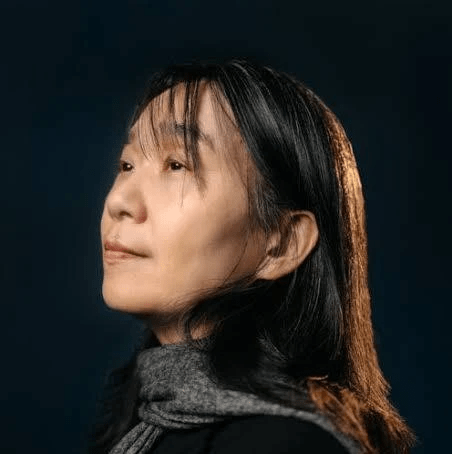
These are the opening pages of the book The Vegetarian, one of the best-known novels by the South Korean writer who stares directly into the darkness of humanity and dresses it, endows it with light through her subtle, symbolic, and moving prose.
There is, we could say, a heroine named Yeong-hye who suddenly decides to stop eating meat. It is her choice, but notice the context in which that decision takes place: it is a whole revolution, not with shouts, but still a revolution. A fact that shakes her closest circle—her family, her marriage, and her very being (her identity).
That gesture, of refusing meat, becomes an exploration of violence, of desire, of the body itself, but above all of the freedom to be and to do—and of the comfort or discomfort of being in a patriarchal society where appearances matter so much, and where the idea persists that a woman’s body always belongs to someone other than herself.
And what captivates and draws attention in this work is that we come to know the voice of the protagonist through the eyes of her loved ones: the husband (a gray office man), her brother-in-law (an artist obsessed with beauty), and her sister (empathetic but broken inside). It is a questioning of everything, a discomfort with everything, a discovery of feeling—perhaps a different one.
Her words are like a delicate flower growing in a field where landmines were once sown, in an ambiguity that is beautiful, even though sometimes everything seems so real—that unreality she handles.
She didn’t win the Nobel, but she was recognized with the Man Booker International Prize, which brought her worldwide recognition.
In short, a strong yet silent critique, one that must be read slowly, felt with disquiet, and reflected upon…
Is silence a form of resistance?
And you—have you read it yet?
Because sometimes just saying “no” is enough to start a revolution.
@María José Luque Fernández
 LatinosUSA
Deja un comentario