Hello everyone, today is the fifth Wednesday of July and I’m doing a Literary Jackpot post.
Today, I am featuring a novel set in what is now known as the Western Cape of South Africa. Fiela’s Child, originally written in Afrikaans, starts of in the Knysna forest as it was during the 19th century when hundreds of elephants occupied the forest, moves to Oudtshoorn, a town on the otherside of the Outeniqua (meaning ‘honey collectors’) Mountains during the ostrich feathers boom, and returns to the forest. For some reason, perhaps because it is set in a place where I have lived and is thus familiar to me, this story really resonated with me when I read it in Afrikaans as a school girl and when I re-read it recently in English.
Overview of Fiela’s Child
Deep within the forest, the three-year old son of a poor woodcutter, Elias van Rooyen, and his wife goes missing on a foggy morning. The community search for several days for the missing child but he is not found. The following spring, the skeleton of what could have been a child is found but it could also have been a monkey. The parents accept that their son, Lukas, is dead.
On the other side of the mountain range, a woman of colour (multiracial) called Fiela Komoetie, discovers a white Afrikaner child of approximately three years old on her doorstep late one night. Having tried to report the finding of the child to the authorities twice, Fiela decides to adopt the boy and names him Benjamin. She raises him as one of her own children on her piece of land, Wolwekraal. Fiela is one of the only non-white property owners in the area having inherited the land from her parents. Despite having an ailing husband, Fiela is a very determined and hard working woman who has a plan to uplift her family and expand her property ownership. One of her main plans is to breed a pair of ostriches and take advantage of the feathers boom. Ostriches are very dangerous and can ‘kick a person open’ but she is careful and clever in her handing of the breeding pair. Despite her love for her ‘hand child’ Benjamin, Fiela doesn’t send him to the local school, preferring to home school him, and she keeps him away from the community. She knows that the fact he is a white child will eventually create a problem in the South Africa of the time period.
I enjoyed the descriptions of the Long Kloof in Oudtshoorn and the information about the ostriches and Fiela’s breeding programme. I also enjoyed the character of Fiela. She was very enterprising and generated respect in the reader.
As feared by Fiela, Benjamin is discovered by men from the government nine years later when he is twelve years old. The men have come to the Long Kloof to do a census and they are very perturbed by a woman of colour raising a white child. The wheel of time turns and Benjamin is taken away to appear before the magistrate in Knysna to determine whether he is the child of the woodcutter, Elias van Rooyen, and his wife, Barta, who had gone missing in the forest nine years previously. The cards are stacked in favour of the white couple and Benjamin is declared to be the missing Lukas van Rooyan and forced to go and live with the woodcutter family. Elias is a lazy man who is always looking for short cuts to make money and spare himself work. His family is poverty stricken and his youngest child, a daughter called Nina, runs completely wild. The contrast between the clean, orderly and hardworking Fiela and the browbeaten and grubby Barta van Rooyen is jarring.
The book is a beautiful and poignant story about Benjamin who is taken away from his loving adoptive mother, Fiela, and her family and forced to live with the dominating and abusive Elias and his family. After being beaten by Elias, Benjamin ultimately assumes the name of Lukas and does his best to fit into his new life and family. It is confusing for him as he doesn’t understand why Fiela never came for him as she had promised she would. He isn’t aware of the manipulative behaviour undertaken by the magistrate and his colleagues, the threats made to Fiela when she went to the court to enquire about him, or the racist beliefs and attitudes of the time. It is heartbreaking to read about the erosion of his faith in Fiela and the breaking down of his spirit and ability to resist Elias.
The book follows Lukas’ life and development until he reaches his late teen and is a young man. Something happens when he goes on a journey to the town at Elias’ instance to find Nina and he doesn’t return to the woodcutter’s forest home. There is a romantic thread and other sub plots that change the course of Lukas’ life leading him to confront his past and the question of his real parentage.
Is Benjamin really Lukas, the son of Barta and Elias van Rooyen? The story takes the reader on a journey to discover this one simple truth.
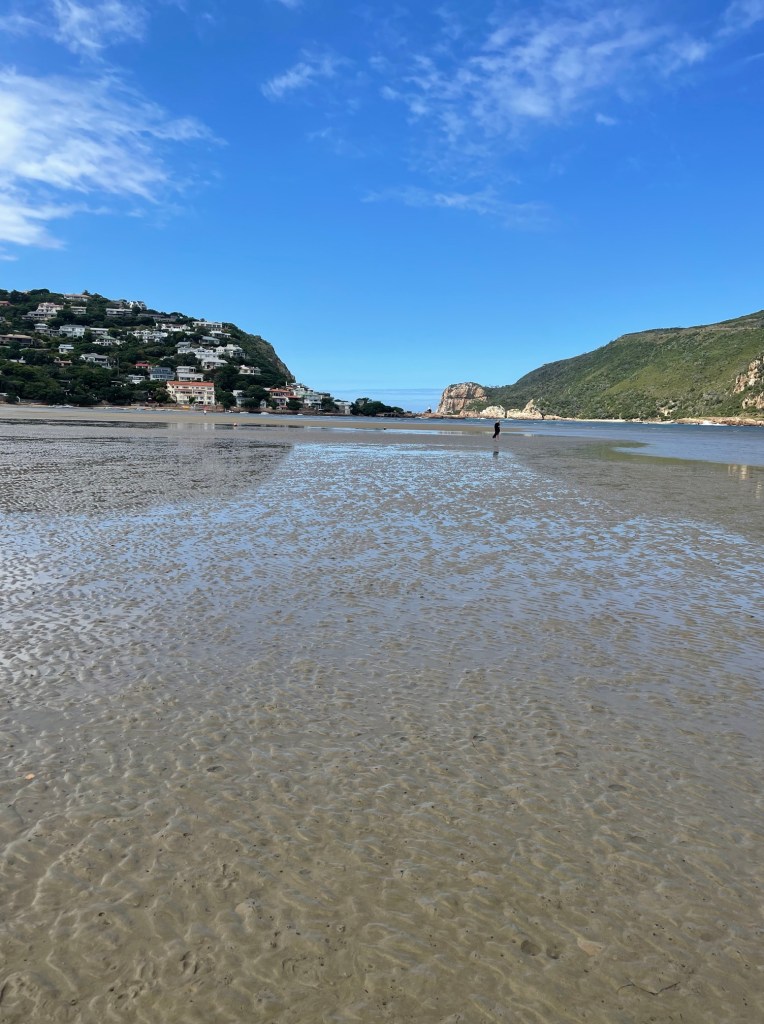
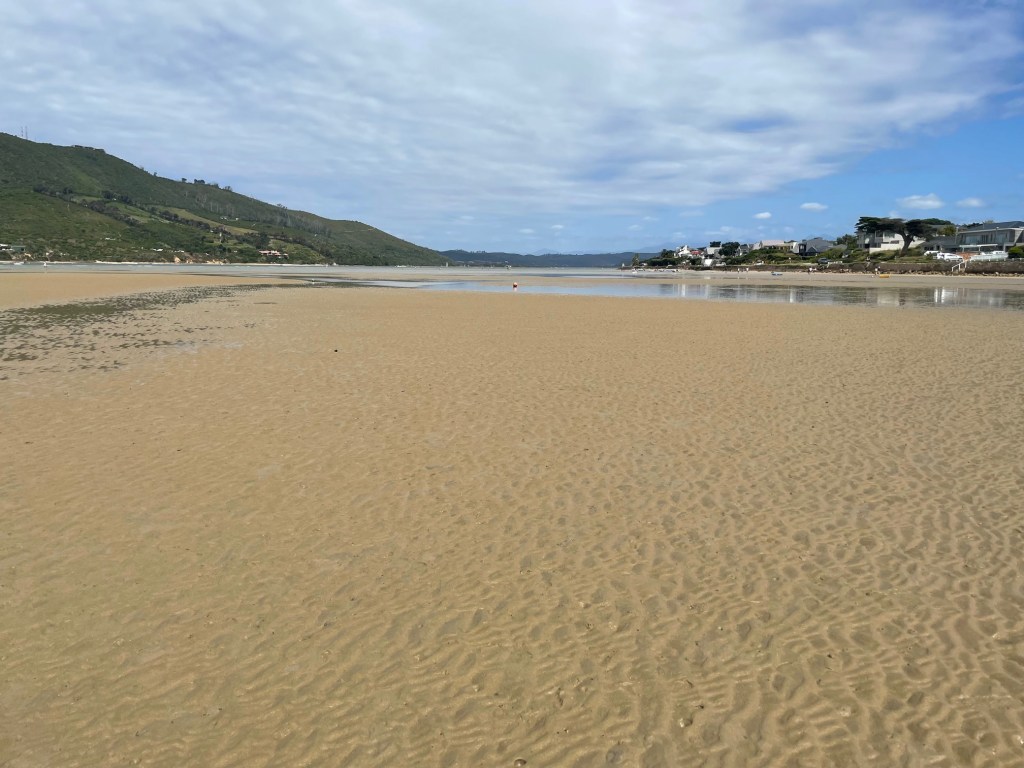
These are my pictures of Knysna Heads that are described in this book.
Themes of Fiela’s Child
Race and identity – the main theme of Fiela’s Child is Benjamin/Lukas’ struggle to determine his true identity. He wonders whether he is Benjamin Komoetie, the hand child of Fiela and Selling Komoetie, or whether his is Lukas van Rooyen, the lost son of Barta and Elias van Rooyen. During this time period institutional racism and white supremacy are prevalent and Benjamin is placed in a conflicting situation having been raised by a worthy and decent woman of colour whose advice and teachings have moulded his character, and being transferred to live among the poorest of white people with a lazy and selfish father figure and an intimidated and down trodden mother.
Parenting – the relationship between parents and their children is a significant them in Fiela’s Child. Fiela Komoetie is a supportive parent who raises her children with love and instills independence in them. She teaches her children the skills they need to survive in the harsh, drought prone climate of the Long Kloof. Fiela strives to empower her children to make good decisions that lead them to become responsible adults. On the other hand, Elias van Rooyen tries to control his children and forces them into obey his commands even as adults. He beats Benjamin until he assumes the role of ‘Lukas’. Elias also taken his daughter, Nina’s, pay for himself. Both Fiela and Elias encounter problems with their children despite their different parenting styles and it is evident that while parents can guide their children in a certain direction, they cannot ultimately control the paths their children chose to take in life.
Justice – the book examines the meaning of justice by presenting a situation where the official justice system is manipulated to result in an unjust result that is detrimental to the child and to Fiela and her family. Benjamin / Lukas is ‘returned’ to his so called white family because the magistrate and his colleagues believe a white child should not be raised by a mother of colour.
Humanity vs. Nature – all of the characters in Fiela’s Child struggle with their natural environment. Fiela and her family take steps to ensure their survival in the hostile and harsh climate of the Long Kloof. Fiela is ambitious to make money from ostriches during the ostrich feather boom in order to make her family less reliant on other methods of making money that are impacted during periods of drought. Fiela tackles ostrich breeding in an honourable and determined way. Elias, on the other hand, is lazy and does not make the most of his opportunities as a plank maker. He tries to get his children to do more of the work instead of working hard himself. Elias tries to dream up a scheme of killing an elephant to sell the tusks for money. He goes about this in a devious and nefarious way and that brings great trouble his way.
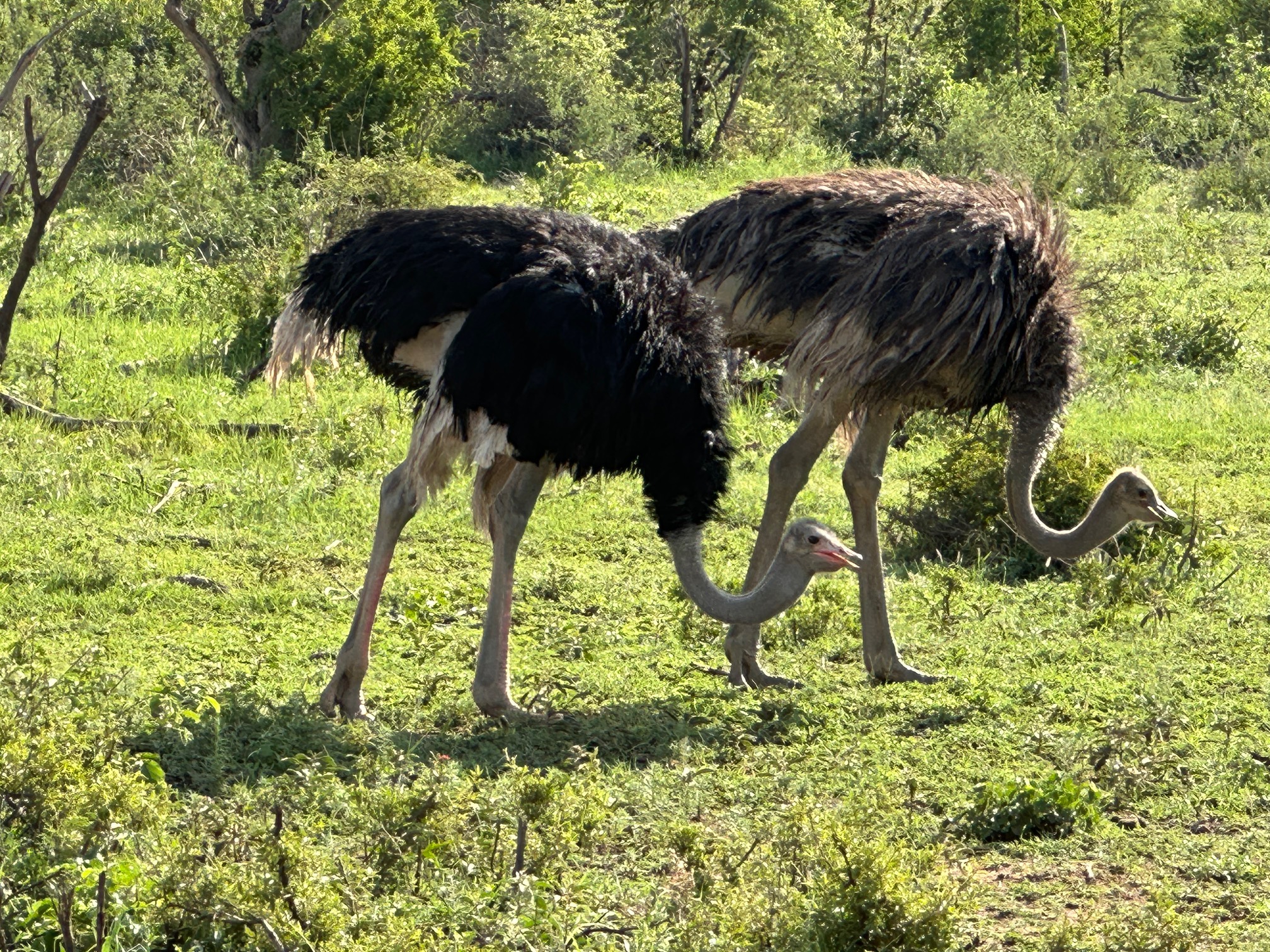
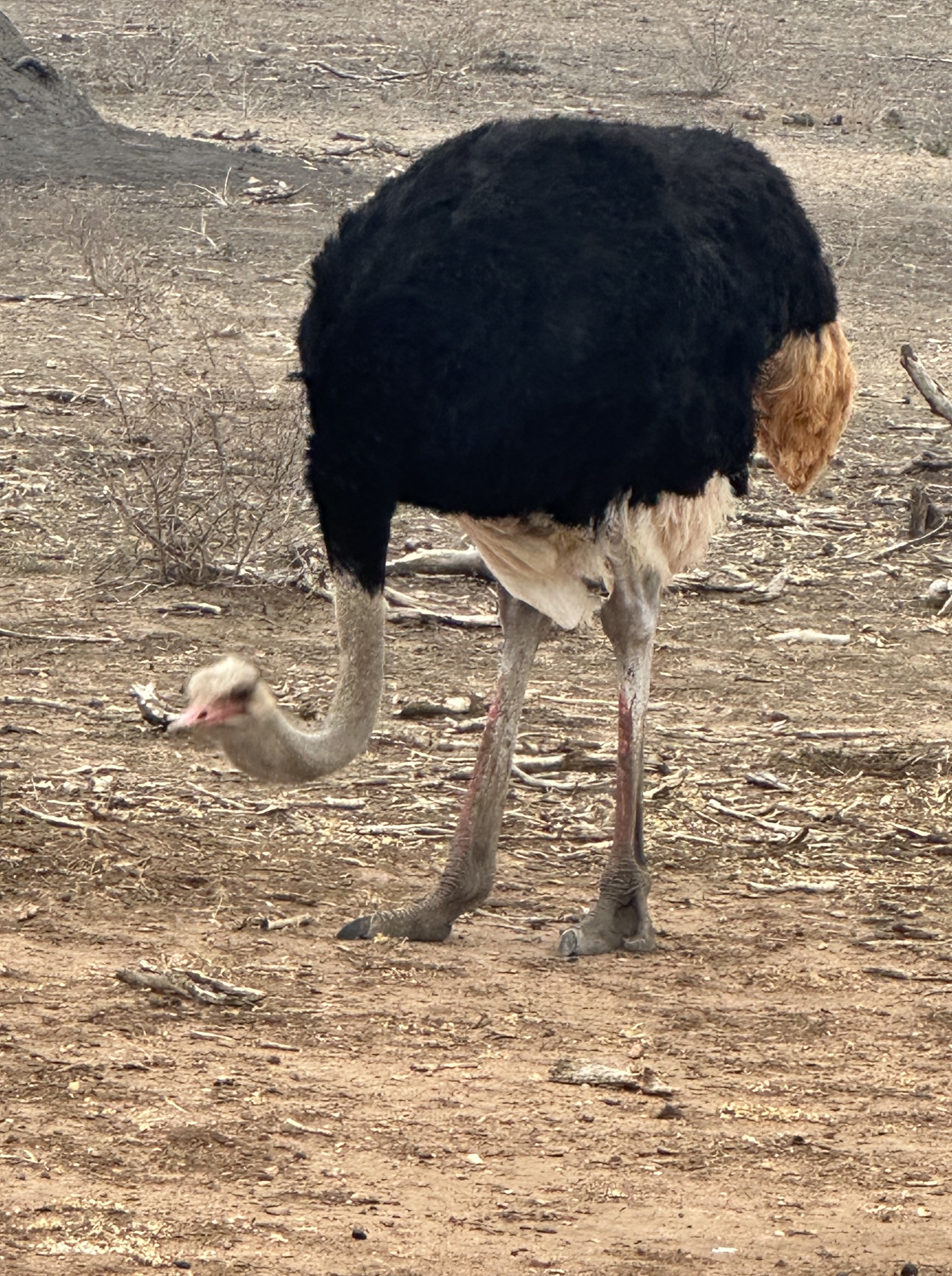
These are my photographs of ostriches taken in Madikwe Game Reserve.
Quotes from Fiela’s Child
“But memories got left behind while you kept walking on; every time you had to retrace your steps further to return to your memories, and sometimes it was better not to turn back at all.”
“…unhappiness was something you got used to or something that passed.”
“If he had to wish, what would he wish for, he asked himself. What was there to wish for… a wish asked for the unattainable. The impossible.”
About Robbie Cheadle
South African author, photographer, and artist, Robbie Cheadle, has written and illustrated seventeen children’s books, illustrated a further three children’s books, written and illustrated four poetry books and written and illustrated one celebration of cake and fondant art book with recipes. Her work has also appeared in poetry and short story anthologies.
Robbie also has two novels and a collection of short stories published under the name of Roberta Eaton Cheadle and has horror, paranormal, and fantasy short stories featured in several anthologies under this name.
You can find Robbie Cheadle’s artwork, fondant and cake artwork, and all her books on her website here: https://www.robbiecheadle.co.za/
Social Media Links
Bluesky: https://bsky.app/profile/robbiecheadle.bsky.social
YouTube: https://www.youtube.com/channel/UCVyFo_OJLPqFa9ZhHnCfHUA
Goodreads: https://www.goodreads.com/author/show/15584446.Robbie_Cheadle
TSL Publications: https://tslbooks.uk/product-tag/robbie-cheadle/
Amazon: https://www.amazon.com/stores/Robbie-Cheadle/author/B01N9J62GQ
Unsplash profile: https://unsplash.com/@r_cheadle
 LatinosUSA
Deja un comentario