Nguyen Thi Minh looked up from her raking. The cool, autumnal breeze was scattering the greenery that she had meant to compost.
Whereas she used both the roots and the feathery leaves of her carrots; the roots, stalks, and young leaves of her celery; and the tough, outer leaves as well as the sweeter, inner ones of her cabbage, there remained vegetal bits to discard. Those leftovers made wonderful contributions to her humus pile, but if left to decompose in her garden, they’d eventually cause her healthy florae to putrefy.
Minh sighed. Her shiso, and cilantro were already bolting. On balance, for several seasons, their buds had attracted necessary pollinators.
Yet, since certain of her herbs, such as lemongrass, rarely flowered, she didn’t rely exclusively on seeds but additionally depended on clonal propagation, i.e., on dividing plants by their roots. Furthermore, notwithstanding that her thyme and perilla generated blossoms that the bees loved, Minh was accustomed to producing new mints by separating their runners. After all, she copied as many of her mother’s gardening achievements as possible.
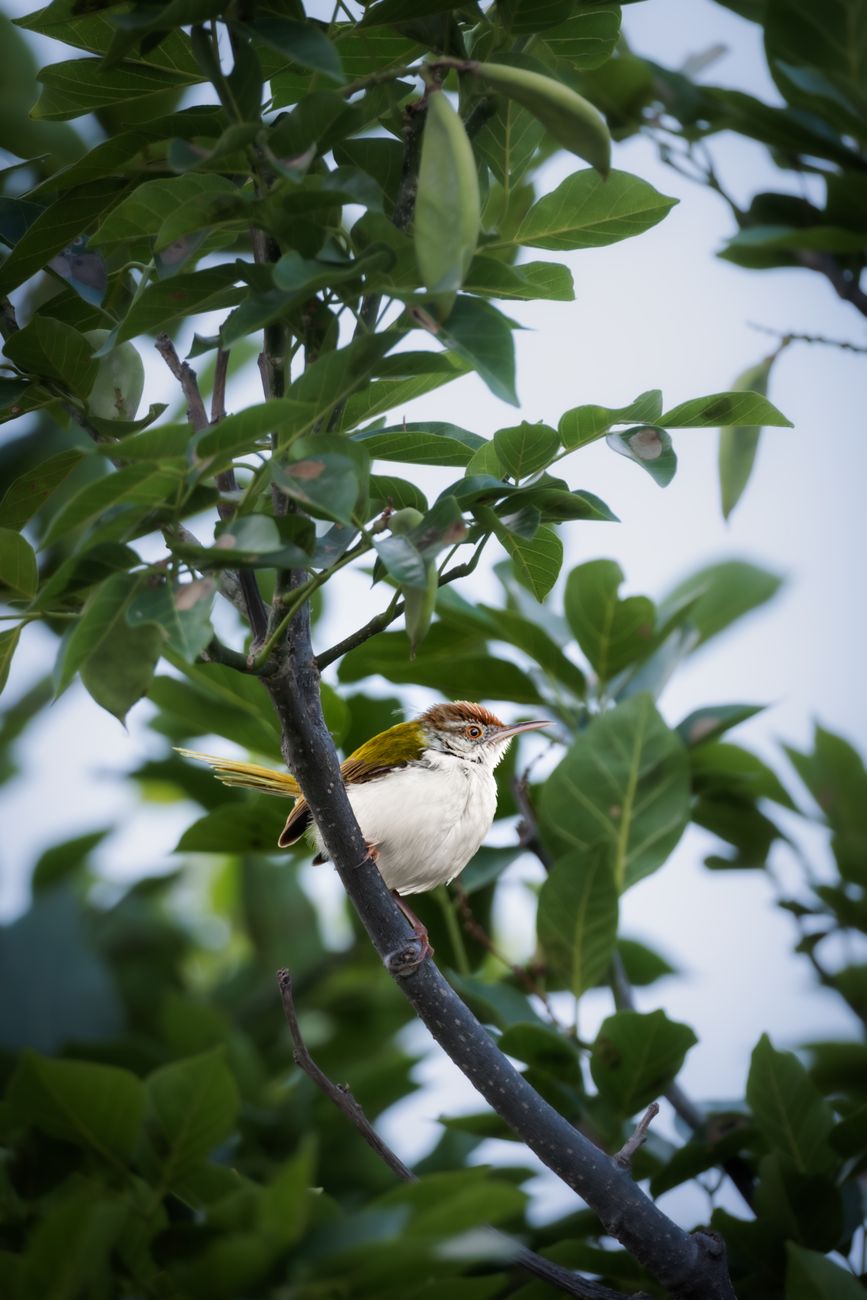
A loud “tuui-tuui” pulled Minh from her musings. In the branches of a kassod tree, a tailor bird was loudly defending its territory.
Minh smiled. That small passerine and its kin were among her garden’s fiercest wardens. They ate beetles, ants, and flies, especially enjoying those insects’ larvae. Despite the fact that Minh regularly thinned her plants and always destroyed unhealthy ones, having winged guardians assist her efforts was a blessing.
She looked up toward her garden’s treetops. High in the branches of two of kaffir lime trees were pockets made from foliage “sewn” together. Holes had been pierced in those leaves by tiny beaks, and spider silk had been threaded through those holes. The result was wondrous nests. It was vital that Mihn use no pesticides for the well-being of her mother’s liver and also for the welfare of future generations of Tipchis.
Minh smiled at the Assamese name for her tiny, feathery friends. It took those lovelies only two months to go from egg to adult. At least, they didn’t migrate.
She bent down once more to roll up discarded bracts and related fragments into a designated cloth. The male songbird in the kassod tree continued to call out the boundaries of its home. Her mother had taught her how to grow a food forest, but the tailorbirds had taught her how straightforward tenacity can fashion a conduit suitable for countless generations.
 LatinosUSA
Deja un comentario