Book Review——The Assault by Harry Mulisch
“Transitional Justice” has been a heatedly debated term in Taiwan, invoked in discussions of past state violence, victimhood, and the necessary measures for remedies. In this context, post-war redress policies in Europe are often referenced.
Unlike Europe, Taiwan never had a legal procedure comparable to the Nuremberg Trials to address the authoritarian atrocities of its White Terror era (1949–1987). That period was marked by draconian martial law and the cruel suppression of political dissidents. Strikingly, some perpetrators remain active in Taiwan’s political arena today, and their pro-China stance is a bitter irony given the brutal extermination of communist connections in the past.
Germany’s Remembrance Culture—which examines how societies confront their historical wrongdoings—has also been adopted in Taiwan to counteract collective forgetfulness. This is particularly relevant when younger generations feel detached from responsibility for the dark past.
While the injustices of the state may not be the direct responsibility of younger generations, they undoubtedly benefit from the freedoms secured by those who resisted oppression and paid huge prices for it. In short, we are indebted to their sacrifices. That debt obliges us to make responsible choices for the future—at the very least, to avoid becoming perpetrators should similar conditions arise again. This is precisely the “banality of evil” that Hannah Arendt warned against.
While historical archives offer only fragmented glimpses of what truly happened, literary fiction draws us into the emotional resonance of the victims. It extends our understanding of trauma beyond the unimaginable, embedding empathy into lasting, unforgettable feelings.
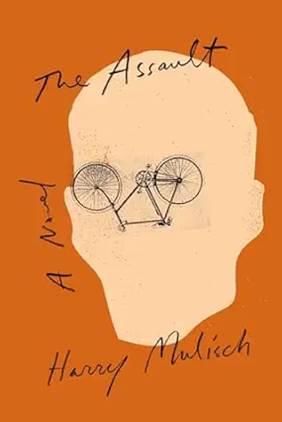
The Assault, a novel by eminent Dutch writer Harry Mulisch (1927–2010), begins with the murder of twelve‑year‑old Anton’s parents and brother in 1945 and follows his accidental discovery decades later, of what truly happened to destroy his family.
Often categorized as a “historical thriller,” The Assault is not based on historical materials, and its thrilling elements pale in comparison to the factual horrors inflicted by the Nazi regime. As the sole survivor of his family and a witness to the cruelty of the Nazi police, Anton resolves to suppress all memories of his past. That fragile silence is broken when, ten years after the tragedy, he is invited to a party in Haarlem—the hometown of his lost family—where remembrance begins to resurface.
Anton’s family, neither Jewish nor responsible for the death of Nazi collaborator Ploeg, was tragically framed when Ploeg’s corpse was left at their doorstep. In the decades that followed, the orphaned Anton made no effort to uncover the truth, nor did he allow himself to dwell on memories of the war or his family’s tragedy. Yet the past inevitably resurfaced. In 1956, during an anti‑communist parade in Amsterdam, Anton unexpectedly encountered Fake, the son of the murdered Nazi collaborator. In their brief exchange, Anton realized that Fake perceived himself as more of a victim than Anton—a chilling inversion of suffering and responsibility.
Another decade went by. At the funeral of a wartime resistance activist, Anton encountered Cor Takes, one of the men involved in Ploeg’s assassination. Although Anton had long avoided confronting the past and the consequences they shared, he once again heard the story—this time retold, perhaps reshaped by the narrator—to lessen the weight of guilt placed on Anton’s family.
In 1981, while striving to maintain as apolitical a life as possible, Anton joined an anti‑nuclear march at the urging of a friend. There, he unexpectedly encountered Karin, the woman who had lived next door to his family in Haarlem. Despite his reluctance to revisit the past, she revealed the final piece of the puzzle: why Ploeg’s corpse had been placed in front of his home.
Even if we do not pursue the past, the past pursues us. Our present, is rooted in our past, which is continually reshaped by memory. And memory itself is constantly altered by the information we choose to accept or reject, depending on our needs for survival. Anton’s avoidance of his family tragedy, Fake’s insistence on his father’s innocence, Cor Takes’ justification for Ploeg’s assassination, and finally Karin’s explanation of why her father moved Ploeg’s body to Anton’s doorstep rather than another household—all reveal the ways individuals filter and reshape memory to preserve peace of mind and conscience.
Harry Mulisch’s treatment of memory is remarkable, and one episode is especially subtle. While attending medical school to train as an anesthesiologist, Anton once shared his theory with a classmate: anesthesia does not make patients insensitive to pain, but rather makes them forget it. His classmate immediately cautioned him, “If you want to stay in this business, keep quiet about your theory.”
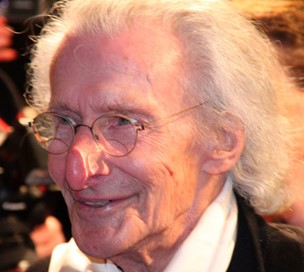
(photo: Mauritsvink)
Our past is inseparable from our present; they continually reshape one another through the ever-changing versions of our memories. It is through this interplay that we are formed and defined by what we remember.


Deja un comentario