
by Juan Camilo Rincón by Latl
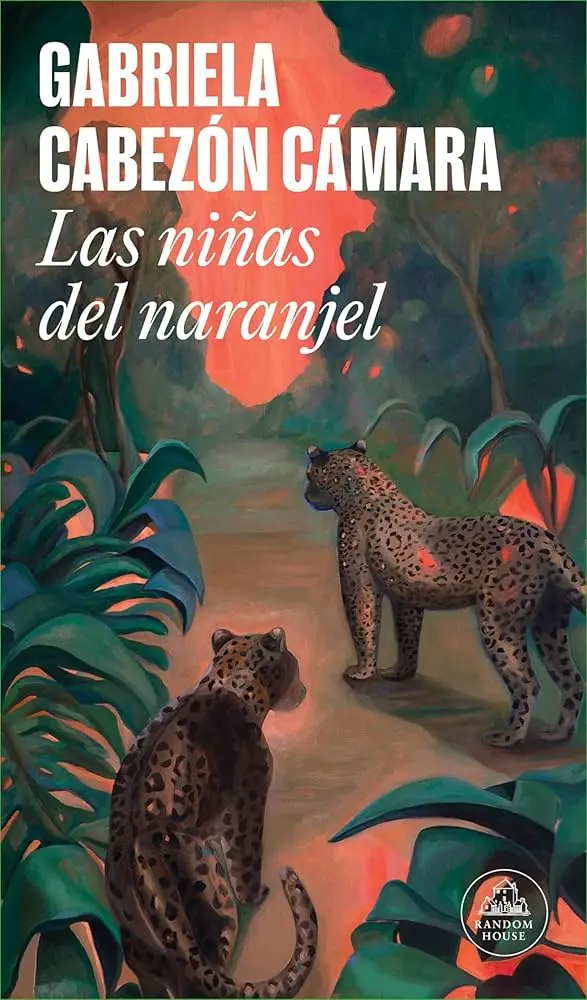
We spoke with the latest winner of the National Book Award for Translated Literature (alongside Robin Myers) and of the Premio Ciutat de Barcelona for Spanish-language literature in 2024, Gabriela Cabezón Cámara, about her book Las niñas del naranjel (Penguin Random House, translated as We Are Green and Trembling), a novel in which queer identity and the jungle, colonialism and violence, tenderness and the picaresque blend together to tell a story of conquests and tyrannies from a new perspective.
Antonio has fought battles, he has brandished a sword, he has fired an arquebus, he has murdered. In Spain, he was Catalina de Erauso, a nun born in 1598 who, at the age of fifteen, fled the convent to live a different life: “I knew I would need to dress as a man wherever I wished to roam.” Now, in America, he is a soldier, making his way through a jungle of potent aromas and home-brewed aguardiente, amid snakes and fungi, along with two young girls, Michī y Mitãkuña, and many animals, leaving annihilation behind and welcoming the comfort of the Indian children’s choruses: “A blind man who began to see. He was being summoned: they were singing to him. It must have been the Holy Virgin, leading him out of the dark.”
In his letters, he tells his new story to a distant aunt, the prioress of the convent, “immersed in the tale, as if everything he’s ever done has been for the specific purpose of telling her about it,” narrating this new life that is and is not his own. Catalina is Antonio, he has transformed more than once, he has claimed his place as a man and has once again softened, he has been a gentleman, a cabin boy, and a shopkeeper; he bathes in the river with the girls and explains to them that burning sinners pacifies God. Thus, the Argentine writer tells—by other means—the story of the Conquest that was a genocide, of battles that swept away what came before, and of tyrannies that never seem to end.
Juan Camilo Rincón: As soon as we start reading the novel, we come up against two different narrators. How did you construct this dialogue, these distinct musicalities?
Gabriela Cabezón Cámara: The first thing that came to me was Antonio’s voice, his letter to his aunt, a first-person narration in the style of baroque music, almost torrential, that tells more and more of the story like a river going down a mountain, abundant, rushing and free-flowing. And, not long after starting on that voice, I realized it wasn’t enough for me to tell the story the novel demanded. So there’s a more traditional narrator, in the third person, written in a non-satirical Spanish—Antonio’s Spanish is satirical—who can come and go and slip inside other characters, seeing things that Antonio doesn’t. That’s how these two voices emerged. The last thing to come to me were the voices of the girls, who, I think, give the novel light, meaning, and life.
 LatinosUSA
Deja un comentario