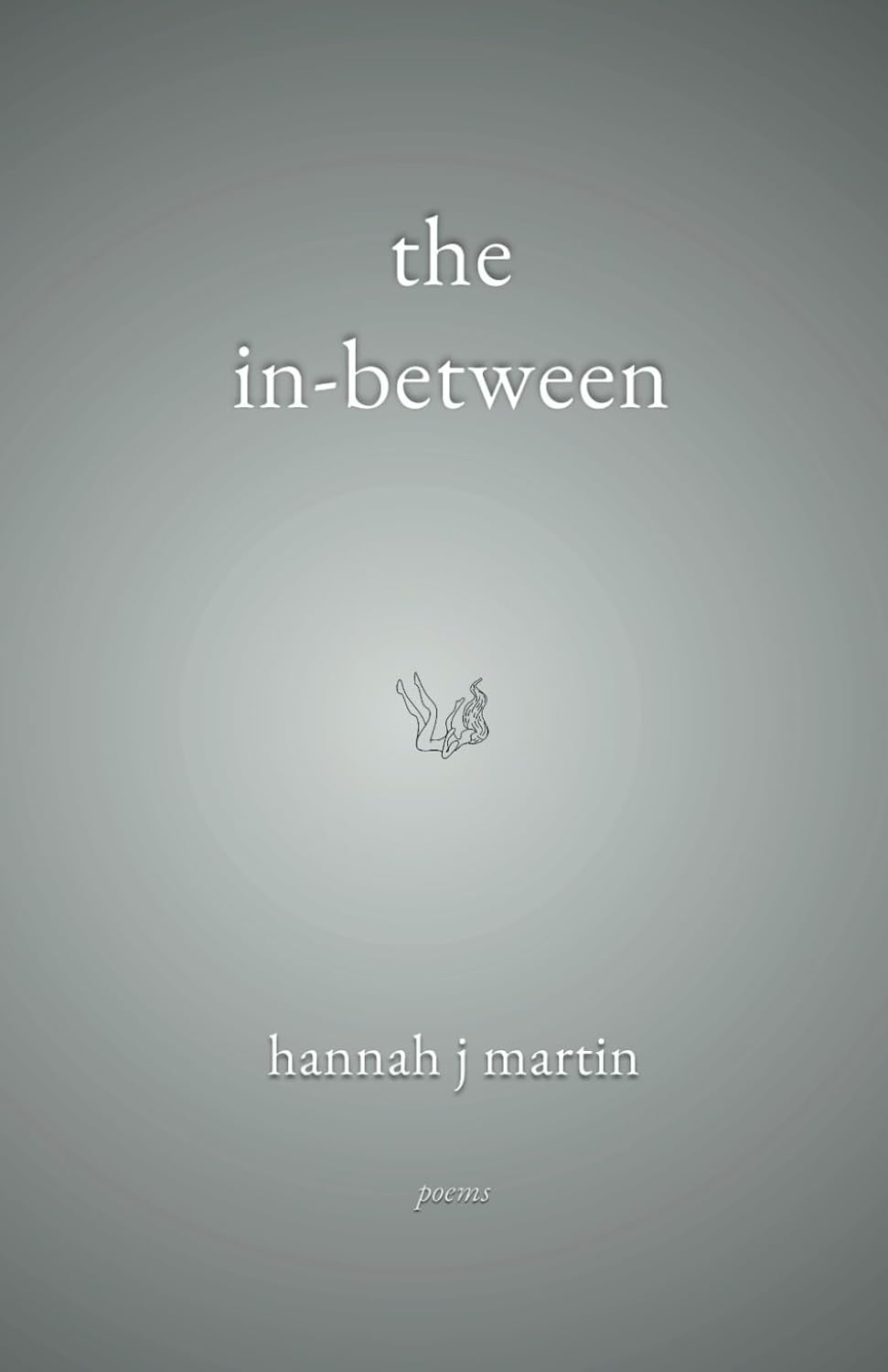
To attend both a wedding and a backpacking trip in one journey, I had to reduce my baggage to the smallest volume possible without bringing any books. Thankfully, I was given a poetry collection upon arrival—it truly saved me. Whenever I felt antisocial, I buried myself in its pages.
The author is in her twenties, yet her voice carries the depth of someone who has written poetry across a lifetime—someone who has weathered joy and sorrow, crisis and redemption. As we grow older, we often feel embarrassed to express our desperate love for someone. But that vulnerability is not a concern for a young woman. Her youth, combined with the uncertainty of what lies ahead, fuels a mind-blowing imagination and creative force.
“and if I had to choose which to bring with me into the darkness
 I would choose you every time”
~vespers (p.22)
Yet this bold declaration of love is tempered by the quiet melancholy in the accompanying note, where vespers is defined as “the evening chasing the setting sun.” The poem continues:
“and by morning, we would be a kaleidoscope
 shattered, reflecting rays
 in the first moment of dawn.”
Don’t we all experience that same blend of fear and hope in the fleeting moments we share with those we love? We either feel too shy to express it, or we simply lack the words. This collection reminds me of that emotional truth.
Another striking feature is the author’s use of notes. I’ve written an essay on whether notes should be considered part of the poetry itself, and I firmly believe they should. Thus, their placement and arrangement contribute meaningfully to the artistic integrity of the entire collection, shaping how the work is read, interpreted, and experienced.
In this collection, the notes at the end pages are inseparable from the poems—they deepen and expand the meaning.
For instance, in the biological predetermination of soulmates (p.8):
“Arbor Vitae reaches roots into my chest, and yours
 and rest there to intertwine our souls”
A beautiful metaphor of a plant binding two souls. But flip to the end, the note reveals: “Arbor vitae (Latin = tree of life) refers to the branched white matter of the cerebellum.” Suddenly, the metaphor gains anatomical and philosophical weight, adding a layer of brilliance to the idea of “predetermination.”
Seven poems in the collection draw vocabulary from Etymologiae by Saint Isidore of Seville, written in the 6th and 7th centuries. One example:
“Still
 and still
 I’m afraid
 I’m going gray
 in my days”
 ~intempest (p.78)

“I get drunk off the night
and high on loneliness
and I can’t stop”
~creperum (p.87)
The layered meanings of these titles are further explored in the notes, and if you speak more than one language, it’s a joy to trace their etymologies across tongues. It makes you want to revisit these poems.
Throughout the collection, the poet references other works—ancient or contemporary—creating a rich intertextual tapestry. You sense there’s a depth you missed the first time, and you’ll want to return again.
The unconventional arrangement of the collection reflects the distinct stance the young poet has chosen. It may not win her popularity in the publishing market, but it affirms her commitment to artistry—an admirable and deliberate departure in shaping her career.
Copyright © 2025 C.J. Anderson-Wu and Hannah J. Martin
All Rights Reserved


 LatinosUSA
Deja un comentario