Steve Clark

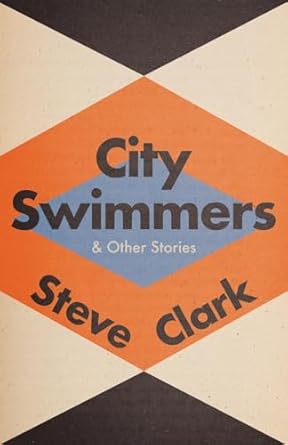
A former Senior Editor for The Paris Review, Steve Clark published fiction in The Paris Review, and poems in various magazines. His first bilingual book of poems, From the Ashes (Desde las cenizas), was published to critical acclaim by Huerga y Fierro in Spain, March 2010. City Swimmers & Other Stories is his first collection of short stories. He lives in New York City.
Masticadores & LatinosUSA offers the 10 chapters of this fascinating book by Steve Clark exclusively every Saturday.— J. Re Crivello —editor
His cell rang. Of course, it was her.
She didn’t wait for him to say anything. As soon as she heard a molecule of breath, she said, “Walker? Walker, are you there?”
“Where would I be? This contraption’s like a—”
“Shut up, Walker.”
“Shut up? You know I hate that—”
“Shut up, shut up, shut up, shut up, won’t you just shut up!” Walker took a breath.
“Mighty had his first panic attack; he’s really scared.”
Yes, Walker’s son was called Mighty, and he was still angry about it. Only someone named Marika would name their son Mighty.
“What happened?”
“We were at The Natural Store, he was eating his lunch and—”
The Natural Store, thought Walker, and said, “What was he
eating?”
“What? That’s not important.” “It is to me. What was it?”
“A sandwich. What does it matter? And he started really—”
“What kind of sandwich?”
She was fuming and got silent. Was probably practicing some ancient breathing technique she’d learned in a wellness class. It was effective though. He got quiet too.
“I don’t know why I’m even calling you.”
“Okay, okay, go ahead.”
She started off again, measured.
“He started to shake and looked as if the earth was crumbling. I asked him what was wrong. He said, ‘I’m having a heart attack.’ Can you believe it, Walker? A heart attack? He’s eleven! I hugged him; his heart was beating like a race car. Minty was freaked out too. Poor Minty! He ran around and hugged his brother, wouldn’t let go. It was terrible, so terrible.”
Yes, the six-year-old, the little artiste, was named Minty. He had nothing to say on this matter.
“We took him home and got in bed. I had him take some
deep breaths with me. Will you talk to him?”
“Of course.”
“I’ll get him.”
“Hold on a sec. What kind of sandwich was it?”
“What does it matter? Jesus Christ!”
“It matters to me. This is a delicate conversation and I’d like
to have all the facts.”
She thought for a moment, took another ancient breath.
“It was a number 3, multi-grain, Brussels sprouts, tofu and
provolone.”
“Tofu?”
“I don’t think this has anything to do—”
“If you fed me tofu, I’d curl up with my mommy too, and
she’s dead! But if she were alive, and my mother was a tofufeeding . . .” He went on for a good ten seconds until he realized he was talking to nobody. He dialed her back.
“Are you finished?”
“Put him on.”
The phone went quiet. Walker sat up in bed, then he sat
farther up and crossed his legs Indian style.
“Hey, Dad.”
The voice was small, smaller than he remembered.
“Mighty. How are you, Boy? What’s happening over there
in patchouli land?”
“I’m good.” Mighty burst into tears. “What’s wrong with
me, Dad? You think I’m dying?”
“Oh no, Son. No, no, no. You just had a visit from the ugly
dog, that’s all. There’s nothing to worry about.” “Really?” he muffled through tears.
“He used to visit me all the time. Scared the crap out of me, thought I was going to die every ten minutes, but now look at me, I’m still here and full of vinegar. No one’s taking me out, especially some chirping Chihuahua.”
The boy grunted a little laugh. “Chihuahua?”
“Yes, that little fucker’s not going to scare us.” Then
immediately, “Don’t tell your mother I used that word.”
The kid now really chuckled. “I won’t, Dad.”
“Good, good.”
“I was really scared, Pop. I thought I was going to die; I couldn’t breathe. I thought I was having a heart attack.” Mighty seemed about to cry again.
“The good news is you’re too young to have a heart attack. You just have to remember it’s not dangerous; nothing bad’s going to happen, it’s just scary as hell. I know it.”
“Is it going to happen again? I really don’t want it to. Please.”
“It could, but you just have to remember when it happens
it’s just a stupid Chihuahua. All bark, no bite.”
“Oh, no, no, I don’t want it to happen again.”
“I know. Sometimes we have to go through this stuff. I
promise it’ll be okay.”
There was a moment of silence; the boy’s voice became grave. “Dr. Coggler said I might have to take some kind of crazy pills.”
“No. Mighty, you don’t need any pills or anything like that. You’re going to be fine. Dr. Coggler doesn’t know shit, okay? Not shit. No way.” Walker took a breath and forced a laugh,
“You don’t need any crazy pills.”
“Charlie’s on anti-depressants.”
“Charlie?”
“Charlie from school. He showed us this yellow pill he’s got to take every day, or he’ll go nuts and jump off a building or something.”
“Jesus, Son. No, you don’t need any stupid pill, you’re fine; you just had a panic attack. It’s normal; hell if you didn’t have one, I’d think there was something wrong with you. I promise, it’s going to be okay.”
“Really?”
“Maybe I should come up there and we can talk in person; this is silly over the phone. I can catch a train, maybe we can rent some surfboards and chat out on the water. Would that be fun?”
“It’s November, Dad.”
“It’s called a wetsuit, Son.”
He felt Mighty smile for a moment, but then there was
silence on the line, a little too much.
“What about Mom?”
“She’ll be fine. Would you like that? We could even bring
Minty, if he’s not painting flowers in a field or something . . .” Mighty chuckled then grew quiet.
“Huh, Son, would you like that?” “Sure, if it’s okay with Mom.” Walker was quiet a moment.
“Well, it’s okay with me. Don’t worry about your mom so
much.”
“I can’t help it,” he said quietly.
Walker had the sense that the kid was looking around, making sure she couldn’t hear him. He heard him call out, “Mom, Mom!” then nestle under a pillow or something.
“What are you doing? Mighty?”
“I hear her crying a lot. At night.”
“Oh.”
“Yeah, like she’s crying all night. I came in once, but she
made me go back to my room.”
“What’s wrong with her?”
“I don’t know.”
“Okay, well listen, I’ll talk to her; you shouldn’t be worrying
about your mother.”
“I can’t help it; I can’t help worrying about her.”
“Look it’s 2 p.m., I’m going to catch a train up there. We’re
going for lobsters tonight. Would that be fun?”
He heard some voices, and Mighty’s changed. “Hey Mom, Dad wants to talk to you. Okay Dad, bye, here she is . . . .” The phone was silent for a while; someone was muffling it.
She said, “Walker?” Then, to the boy, “Okay honey, keep your bother out of the tall grass . . . yes you can go down to the beach, but don’t wander off . . . . Walker? Walker, you there?”
“I’m here.”
“So what do you think?”
“I’m getting a train, I want to spend some time with him.
Talking on the phone isn’t the same.”
“You sure that’s a good idea?”
“Yeah, it’s pretty much the only idea. I’ll get a room at one
of those shit boxes on the beach. I’ll call when I get close.” She was silent.
“See you soon, Marika,” he said and hung up.
* * *
The train was half-full, a train to Montauk on a Saturday in mid-November. All those party kids with their glow stick necklaces would be back in the city. The trees whizzed by, their awesome colors. Two hours of being nowhere. A place between places. He started to nod off, and then the worst thing happened. An old lady, she must’ve been 82 or so, sat next to him. He was leaned up against the window, a gray sweatshirt pushed up around his ears for a pillow. He quickly surveyed the train; sure, it had filled up, but it wasn’t like she couldn’t have picked another seat. There was a person probably in each row, all spread out like civilized people. The lady was dressed up like a Kennedy, in a smart suit, and must’ve just gone to the hairdresser. She smelled like a tea set, probably had a harangue of dogs with initialled collars tucked away in a brownstone on the Upper East Side, knew how to plant a garden, the names of trees. Damn it. He checked his watch; at least another hour, probably an hour and fifteen. He closed his eyes and tried to go back to sleep.
His elbow must’ve slipped, and he opened his eyes. She smiled, nodded politely, and looked back down at the crossword puzzle. He peered over her shoulder; she wasn’t having much trouble. He thought about his eyes and was grateful, but just for a moment, that he’d kept his eyesight. He could read the clues. Her voice came fast and familiar as if they’d ridden through Asia together.
“On Earth We Are Briefly Gorgeous, author.”
He didn’t know if she was talking to him, but it was
certainly out loud.
“Vuong,” she said, “But what’s his first name? Five spaces.”
He was silent. She looked at him, then answered her own question. “Ocean.” She was pleased and filled out the spaces. Over the next few minutes, he watched her petite wrinkled hand go to town on the thing, and he had to admit he was impressed. She then suddenly tapped the paper twice with her eraser, folded it, and stuck it in a tote bag that said SHAKESPEARE & CO. She adjusted the bag between her feet, and two bottles clinked rather loudly.
“Sorry,” she said. He supposed she was referring to the
sound of the bottles.
He shook his head to say it didn’t bother him, and looked
back out the window.
“Natural wines,” she said, and he was forced to say, “Sorry?”
because she was talking to him, who else?
“Oh, I was just saying that I’m bringing natural wines; that
was the ruckus.”
It was amazing that she’d used ruckus in this context.
“Oh.”
“Have you ever tried natural wine?”
“Uhm, no. I don’t know what that is.”
“You’re lucky, it’s like pee in a bottle. Actually, it’s like a
mouse’s, who’s eaten lots of stinky cheese, pee in a bottle.”
“Doesn’t sound great.”
“Oh, it’s not, but Carla, my grandson’s wife, loves it. What
would that be, a granddaughter-in-law? Would you call it that?”
“Uhm. Yes, probably.”
“My granddaughter-in-law—my, that sounds ridiculous; anyway she loves it. John, he hates it. My grandson. But that’s not surprising, he hates everything.”
He nodded and looked out the window. “That happens,”
he muttered mostly to himself.
“Excuse me,” she said sharply, and leaned very close to him
with a hand cupped around her ear. “What’d you say?” “I said that happens,” he said louder.
“That’s what I thought you said; I’m not deaf. These trains
are loud.”
He nodded again. She reached into her bag, took out one of the bottles and nudged him with her elbow. “Look.” There was a naked woman sketched in orange on the label. It said, Come back K, I love you. She looked at him, confused, and said,
“Who is K, and why is this the name of a wine?” He didn’t have an answer.
She shook her head, looking at the bottle. “The fellow at the store said Carla would love it. It’s bubbly, light and red. You serve it chilled, apparently. I’m terrified. Here, look . . .” She handed him the wine, and he had no choice but to hold it. The naked lady on the bottle was entwined with the yearning title.
“I don’t know much about wine.”
“Ha, you remind me of my husband.”
“I do?”
“Yes, he’s dead but you do.”
He wasn’t going anywhere, so he said, “Oh, how’s that?”
“Well, you look like someone just threw you into that seat. All legs and arms.” Walker straightened up a bit as she smirked. “So was Maurice; wherever he sat, he was too big for his seat. You know those big dogs that always sit in their owner’s laps, not knowing they’re way too big? That was Maurice. With that look on his face, like I guess I belong here, but maybe I am a little too big, but well, I’m here already, so . . .” Her tiny shoulders shook for a moment. He looked at her. “That’s probably why I sat here,” she said. “I’m used to big, silly dogs.”
Now he had to exhale a quick laugh; this woman he didn’t
know had just called him silly.
“Silly, huh?”
She gave him a playful jab with her eyes. “Oh yes,
completely.”
She took the bottle, placed it back in her Shakespeare bag, unfolded the crossword puzzle and started attacking it again. There were only a few empty spaces left. He leaned against the glass and watched the tracks speed toward him. When he woke up, she had gotten off, maybe at Southampton or one of those other stops, but she’d left the crossword on the seat. He picked it up and wondered if she’d left it intentionally. Maybe a note or something? Nope. Whether it was intentional or not, it was certainly finished, all in distinct capitals. The train was coming to a halt. He folded the crossword a couple more times, put it in his jacket pocket and walked to the front of the train. He imagined he was arriving in India. He would be greeted by a gaggle of kids with glazy smiles. He’d find a small hotel and lie in bed all night, looking out the window, the millions of people, the stars. What would he think about then? Who?
He got into one of those beaten-up cabs that lurk around train stations and gave the address, but before he got to the little rental just across from the ocean, he asked the driver to stop. He paid and walked the last bit. His little one, Minty, was playing with a fire truck on the small lawn. He stopped and watched him. No one else was around. Minty’s blonde hair shined like a burning cup. His gentle one. He had the urge to swoop him up in his arms and run and run and run. He could save him. How he wanted to save him from everything. He was too gentle. But he just stood there. Minty was guiding the fire truck back and forth over a bump in the grass, a stick he’d placed there, and talking to himself; maybe he was making truck sounds.
He doesn’t know how long he stood there. The blue arc of sky above him. He lost track of his thoughts. Soon a porch door creaked, and his wife—well, soon to be ex-wife if the lawyers were allowed to proceed—stepped out and stood over Minty. He looked up at her defiantly. He was not coming inside, apparently. Soon, Mighty was next to them also. Mighty sat down with his little brother and held the stick steady as Minty rolled the truck back and forth. She stood over both of them now with a look of mild exasperation. After a while, she went back inside. Mighty watched her as she walked off; Minty kept pushing the truck.
His phone started vibrating; she was calling him. He didn’t know why, but he let it ring through. Then, careful to avoid the house, he crossed the street and lay on the ocean-side of a small dune. If he raised his head, he could see the lawn with his kids playing. But he didn’t; he lay on his back looking up at the sky which remained cloudless. In front of him, tightlipped small waves curled toward shore. The fish-colored sea of Montauk. No surfers today, not even a longboard could be carried on this tiny but pristine roller. His phone rang again, and he saw that she was leaving voicemails. * * *
Minty was a champ at dinner, finished his whole plate, including the coleslaw, and was licking the last drips of dressing from his index finger when he looked up brightly and said, “Lobsters are people too.”
Mighty giggled and looked at his father (apparently, these
pronouncements from his younger brother were not unusual).
“They are?”
“Yes, red and yummy like my brother,” Minty said and
leaned over and pretended to chomp Mighty’s arm.
After they finished their sundaes (Minty’s strawberry, the other two chocolate), he walked behind the boys as they rode their bikes home. They cut each other off on the quiet, almost alien-like quiet, road, shrieking from time to time, skidding this way and that. He dropped them about twenty feet from their door, at which Marika appeared only to shake her head and disappear, which may or may not have been due to the late hour on a school night. He walked back to the motel, showered and got in bed. The bed was springy, tight and cold, but he could hear the ocean, which was more predictive than palliative since it was late fall, and almost midnight.
He usually didn’t have trouble falling asleep, but he wanted to be fresh the next morning. He wanted to bring the boys breakfast (bacon-egg-and-cheeses from the deli), a little taste of New York, and take them to school. He hadn’t cleared this with Marika, but if he showed up early enough, what was she going to say? Maybe he’d bring her an egg-and-cheese too (she didn’t eat bacon). He started the nostalgic ritual that sometimes helped him fall asleep of going back through exgirlfriends (or crushes), some more serious than others, starting with the first one, a girl in a red-checkered shirt he’d met on a Canadian island when he was eleven and she twelve. Her name was Mimi Silver, and she had not wanted anything to do with him because of that vast eight-month age gap, but on the last night of her August vacation, their families had gone to a dance together; and on the boat ride back, the battered but maintained Riva, cutting through the pulled silk of Muskoka lake water, she’d put her head on his shoulder. He’d never seen her again, but for a full year after, he dreamed he’d open the door of his New York apartment and she’d be standing there in the same red-checkered shirt, having Greyhounded from Buffalo, New York, to make a go of it with him in the big city.
They weren’t teenagers yet, but so what? Maybe they’d live in the Museum of Natural History. By the time he got to Bettina, his sophomore year at college—Bettina, who shared his rather common last name, was unliked by her sorority sisters for being a weak team player, as she tended to side with the opposite sex on rather large, current issues; and worse: private, personal ones (she was even rumored to have had an affair with her English professor), but was still unapologetically put-together with her throat-thickening, precociously adult, Fracas perfume—he was asleep.
It was 4:26 a.m. when the fire alarm went off. The slow, spinning wail was almost welcoming. He got up, put on his pants, shoes, T-shirt, threw on his jacket, opened the door and stepped into the hallway, which was twice as loud. The alarm was a circle opening and closing around his head. A few sleepy-eyed, robed patrons muddled around outside as a man in his sixties with short white hair (must’ve been the manager) curtly assured everybody they’d be back in their rooms soon. He wasn’t in a rush. The night hadn’t begun to thin, but it would soon. Behind him a few fire trucks and an ambulance pulled up, throwing their lights all over the place. He didn’t turn around; he could tell just by looking at the ocean. The flashing lights and the stars were all a mess.
What a ruckus, he thought and allowed himself a short laugh while he reached into his jacket, pulled out the crossword, unfolded it and stared at the letters in their boxes. He still had some questions though: Did the old lady end up liking the wine? Did she think of Maurice before sleep? Who was K, and why did he want her back?
 LatinosUSA
Deja un comentario