Steve Clark
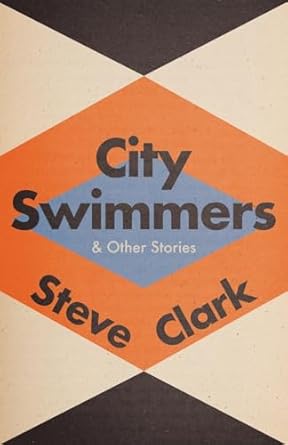
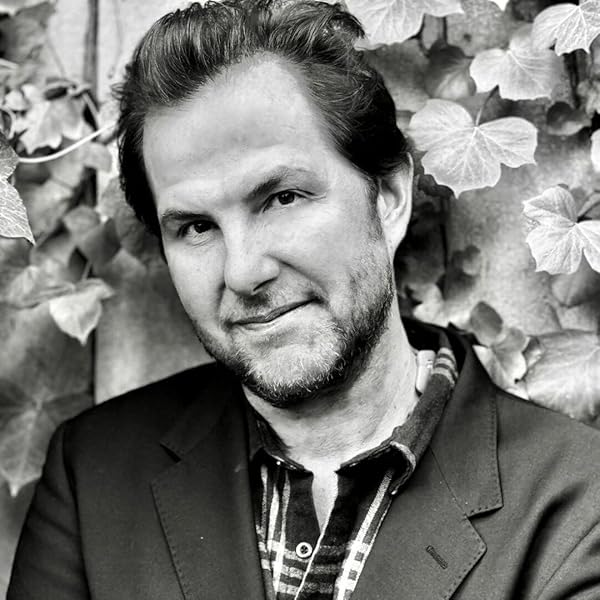
A former Senior Editor for The Paris Review, Steve Clark published fiction in The Paris Review, and poems in various magazines. His first bilingual book of poems, From the Ashes (Desde las cenizas), was published to critical acclaim by Huerga y Fierro in Spain, March 2010. City Swimmers & Other Stories is his first collection of short stories. He lives in New York City.
Masticadores & LatinosUSA offers the 10 chapters of this fascinating book by Steve Clark exclusively every Saturday.— J. Re Crivello —editor
She stepped through the revolving door, took a left into the bar, walked to the round glass table in the corner and sat next to him. He looked, as they used to say in places like this, smart—when your clothes were right, together. He did that semi-stand as she sat, still, even after thirty years of friendship or whatever you call the existing force between two people who’ve been married and divorced twice to each other, and then married again. It seemed, now, their third conjugal hoorah was coming to an end.
It was unclear whether either of them cared. Besides an unfathomable knot of—what was it? (emotion, attraction, taste?)—they didn’t know why they were together, except for a locking sense of humor, a degree of love (whatever that was) and a blood-wise knowing that they were somehow meant to be. Also a look they found of themselves in the other’s eyes, from time to time.
A martini appeared on a tray, which was something for 3 p.m. on a Tuesday. He nodded it over to her and signaled for another.
No matter how popular the place was, how many friends lived in the neighborhood (though they didn’t), you still didn’t run into anyone on a Tuesday early afternoon; so it was unusual that fifteen minutes later, a man came up, one of those clubby types, who speaks loudly, never has an uncombed hair unless he’s dissolving in a steam room (his wisps springing like stringy eels), stopped at their table. She was a quarter through the martini. They were arguing about something.
“Hey, buddy. Don’t want to interrupt, just saying a quick hello.” The man’s hand opened over the table like a bar of soap. Always such manicured hands, these gents, fresh and dainty like rolls of mulberry silk. Before he shook, he knew it’d be cool and firm, accompanied by very direct eye contact that’d been stamped into his irises by god knows how many generations of grandmothers who smelled like salty rocks.
“Ah, there he is,” he said, because he knew him well but didn’t have time to do the half-stand. They must’ve had dozens of friends in common; they’d drunk together hundreds of times, been to the same parties as children; but he, even with all that, wasn’t confident enough to say his name. The wrong one—after what? 35 years of acquaintanceship—would’ve been more than a slap.
She hadn’t stopped talking because she was wrapping up her argument, teetering toward a point. “And I do know about boats—”
“You know my wife,” he interrupted. “She knows everything. Even the things she doesn’t know.” He lifted the glass to her. “In fact, the things she doesn’t know, she knows them more.”
The guest paused, then nodded to her. “Of course.” The man wasn’t sure what to make of them. Were they drunk? (The answer? He, almost).
He stood there and grinned, waiting for a cordiality so he
could politely leave. He did not receive this.
“I know my husband’s an ass. Virginia. Nice to meet you.” They had met maybe forty times.
His smile tightened.
“Likewise.”
They’d been arguing about a moment over the past weekend, their last fight. He’d been idling the dinghy toward a rocky island in Maine, and she was telling him where to drop the anchor. But the lock on the outboard was broken so he couldn’t lift it; he had to stay deeper. She’d said, “It’s sandy over there, go that way.” And he’d said, “It’s too shallow, please jump off and I’ll back it off.” The current was pushing them toward the shore, causing him to reverse from time to time as she stood on the little bow, talking to him. “Please just get off,” he said. “I’ll anchor back a few feet.” He didn’t want to ding the propeller.
“Why not there? You always brush me off.”
“My god, just please. You don’t know what you’re talking
about.”
It was true, she had never driven a boat; she certainly didn’t know the draft of this particular boat (or what a draft was); and as she kept arguing, the chances of damaging the propeller were increasing. But she kept talking, “I’m saying over there is better. It’s sandy.”
“It’s too shallow. Please, let me deal with it.”
She had finally jumped onto the beach; and with the hood of her yellow slicker flapping in the wind, she turned, red-faced, yelled at him for never listening, for belittling her, for waving her away (as he always did!), and stormed down the beach to sit as far away as possible. All the yelling got swept up in the wind, so he could only gauge the anger by her expressions, which (in the last six minutes) had gone from placid, pleasant even, to that of a little, steaming bull. There goes the afternoon, he thought. Another Saturday.
Why had they married three times? Twice—okay, one makes mistakes. But to walk down the aisle with the same person a third time is inconsiderate. Well, walk down the aisle is misrepresentative. They did the third mainly by paperwork, and then sent out a card to fifty friends that said: We screwed up. Cocktails for our third pitch. Highballs and Home Runs. They signed it Mr and Mrs with the date and address. The party had been fun; the past two years less, but not entirely shit.
The problem with going back with an ex is you realize your mistake faster each time. The little things that bothered you don’t go away. The foibles, the habits. They just bother you more and faster. This is compounded by your awareness of the stupidity you’ve displayed in believing that love can change love. The first marriage had been seven years, the second four, and they were just coming up on two with all the familiar dread. Late autumn made it worse. Everything was dying beautifully. Acid notes in the pre-winter air. Like dread. Like death. A deathy anxiety, he’d called it.
That’s probably why they met here; if they were going to end it, it might as well be a soothing place, one that contained not only their plush memories but those of thousands of strangers, perhaps hundreds of thousands. They coated the place with a pallor of forgetfulness. Like morphine but legal. And more decorative. Same bartenders, drinks. Surely, that must count for something. Also, they were too old to nuzzle up to friends for consolation; and anyway, a drink was better than a pal asking if you were okay, which to be clear, they both were.
His eyes followed the man as he walked back to the bar, slapped what appeared to be a junior colleague (birthday? promotion?) on the back a little too hard and reached for what looked like the last watery sip of a scotch.
“That was pretty,” he said.
She sipped her martini and her eyes gathered to a green
point.
“Do you think you ever loved me?”
“I do love you,” he answered. “Even though we’re hell
together.”
“I’m not talking about that love. The love of we’ve known each other forever, I don’t want you to get hit by a truck. Not that familiar love blah—”
“I get it,” he said.
But she didn’t stop.
“ . . .We’re family, I don’t like you but I have to—” He raised two fingers to a passing waiter. She didn’t notice as she inhaled, “Not the love that’s just shared time.” She suddenly realized her purse (did they still call them purses? Maybe it was just a bag) was unbuckled. She buckled it and looked at him.
“I married you three times,” he said.
“Oh c’mon, that doesn’t mean anything.”
“I’ll tell the priest.”
“Fuck the priest,” she said sharply.
They were silent for a moment.
“I just want you to tell me the truth.”
“The truth? My god, what d’you want me to say?” His tone became dreary; he was worried it sounded too dreary. “It’s not that complicated. We fell in love. I asked you to marry me. We married. That’s it. We did it a bunch of times.”
“That’s not it. That’s just the point. Everyone thinks that’s it but that is exactly not it. Just because people do it doesn’t mean that is the thing; the thing is what makes them do it.”
“Aristotle would disagree.”
“Are you kidding? Aristotle?” She was suddenly about to cry. “Fuck you.” She stood up. He stood up with her and took her hand, which she yanked away, but he again reached for it more tenderly. She let it sit. At that moment, he didn’t know if he was trying to calm her or prevent a scene. It was probably 50-50. He said, “I’m sorry.” She was angrily fiddling with her scarf, a brocaded expensive-looking thing. He said, “Okay, let’s talk.” He sat. He was wondering if she’d sit too. 50-50. Reluctantly, she did, but not before saying, “You’re a real shit.”
The waiter took the glassy triangles, now empty, placed down two more. The slender ice chips floating like paradise. He drank the first sip, still able to lift the full glass to his lips without spilling a drop. Not drunk at all.
Might’ve been the third martini or the possibility of looming rupture (breaking up!) that made him feel the world was filling again. He felt he was about to fall—no, jump!—off a cliff into a new adventure, and he wanted to, but didn’t; and not knowing whether he’d actually leap filled him with a removed glee, which, neither pleasant nor unpleasant, was at least a change. It made him feel casi vivo, as they say in Spanish. She, on the other hand, felt they were about to stumble off that same cliff, but she was pissed at the cliff for being a cliff, and him, for being the callous jerk who invented this cliff. It was annoying, tiring. She thought, I’ve fallen off three fucking times. Is there at least something I can learn? She thought, Maybe yes, maybe no as she stared at him.
“I’m just trying to have a regular conversation; I’m not trying to fight.” She said this as she thought, Who is he? I know him exactly as well as that stranger over there or that other one in the stupid hat.
“I don’t want to fight either.” He had to bring it all down; if
it was going to end, it had to end down there, the lower registers.
They both leaned back at the same time. The synchronicity of movement was unintentionally (and for him, unwelcomingly) funny. It wasn’t the right time for the confluence of laughter. As they stared at each other, well-knocked stakes in the dirt, they were both aware of the laughable futility of being here yet again, stubborn, middle-aged idiots. An involuntary smile, like a help line, curled from her lips, but she pulled it back before he could take it. Not because she knew he wouldn’t (he mostly likely wouldn’t) but because she had other things on her mind.
Things that, to her, were, at this moment, more important than relationships. This relationship. Who cared anymore about that? Strident, nebulous forces were driving her. She needed to figure something out, even though it might be intolerable. Like picking the lock of the diary of someone you know never loved you as much as that other one (the one!), the one who left them. And you gave yourself so fully. They were your the one. The urge to pick the scab, knowing you’ll scar. You can’t not pick it, it’s screaming at you. Do it. She had this running through her, like bad water, and needed him to filter. He was clear-eyed, more simple, an American purification system. No toleration for dirt. For not knowing. We can know it all in time, etc,etc. He would sop up all that crappy blood, the doubt, the dumbness of it all; and the truth, or contradictory gold, would pour forth. Back to her. From his eyes, his mouth. She would know something. She would learn.
“Do you want something to eat?” he said.
“No.”
She lightly pinched the skin below her Adam’s apple and steered the bit of flesh down a curved mountain road. He’d noticed this nervous habit (was it nerves?) with others and told himself he’d study it when he got home. (He never did.) Abruptly, as if reading his thoughts, she folded her hands in her lap, wiggled in her seat and became very tall while shaking her head.
“We all want this thing which is a lie, but it’s why we do everything we do. Isn’t that just—” she shuddered. He had never seen her shudder. “Just . . . incomparably sad.”
“What thing?”
“My god why are you so thick!”
She flung her knuckles at him and pulled the air back at
her chest frantically. “This, you idiot. This.”
She stopped and stared at him. He didn’t move, then started out slowly. “This is not everything. Sometimes this . . .”
“God, I know that. I’m not talking about us. Don’t worry.
That’s done. I’m talking about what it means.”
Done. He rotated the word in his mind, trying to feel how
he felt.
“Why does it have to mean anything?” he said.
“Because it does. It does. Everything everyone is doing all the time—working, studying, fucking, joking, breathing, shitting, dieting—we are all doing because we want this thing—”
“What goddamn thing?”
He felt he had to raise his voice to calm her. She said nothing; he looked at her. Involuntarily a line of Shakespeare went through his mind: My mistress’ eyes are nothing like the sun. Maybe because hers now glowed like burnt-out suns, beautiful chunks of black coal. His expression became serious.
“Why do you think loving someone is a lie? It’s not a lie.” She listened to that.
“The urge to love isn’t a lie,” she said. “The rest is.”
“It’s not . . . It’s not.” He didn’t know why he’d repeated
himself.
In the next minute, it became certain to both of them. The conversation was over; it was all over.
He looked at the ceiling, then clambering for a latch, he rested his palms flat on the table. “Listen to me,” he waited for her to look at him but she didn’t, so he went on. “If you believe that, then you have to reach as deep down into yourself as possible and lie your face off, telling yourself it isn’t.” She kept looking down. “Otherwise you have nothing,” he said.
She raised her chin.
“At least it’s a true nothing.”
“A true nothing is still nothing.”
The waiter had approached the table, was asking if they wanted anything else. She looked down.
She doesn’t remember getting up or looking at him as she left. Only walking out, stepping into the revolving door, and pushing until she was encased by the curved glass. She stopped before she was outside. The silence of the rotunda around her for longer than just a moment. Neither inside nor outside. Neither here nor there. As if in a snowy poem. The street milky, a few shuffles away. Behind her, the round small tables, and who could count how many days? How many days. She placed both hands on the brass push-bar and leaned forward, but the door didn’t move. When she turned, in his own pie-slice of the door, he was there. Only the wing of glass between them. Still smart, together, a blue scarf wrapped below that familiar face. It was the game children play when they hold the door so you’re stuck. It had once given her claustrophobia, but now it just was. A sad playfulness danced in his eyes. She wasn’t sure what he saw in hers. Expressions don’t matter all that much. He lifted a finger to his ear, and she leaned forward. Someone had started to play the piano inside. It wasn’t their song or anything like that, or even one they knew, just a line of falling notes, that caught each other, and then carelessly wandered off. Apart, together, together, apart, together apart. Maybe the song was someone else’s. A request.
Over her shoulder, a black sedan pulled up. Most likely, someone coming in for a drink, dinner. It seemed, in their life anyway, a black sedan was always pulling up. As she looked at him, she realized she’d asked the wrong question. Did you ever love me? That wasn’t right, it wasn’t even close. He watched her intently (she seemed she might say something). He felt what had moved in his eyes roll into hers, and maybe that was enough. It was enough. When you fall in love, no matter how old you become, how many years pass, a part of you remains that age for each other forever, no matter what. She had wanted to ask, Do you remember that bar on Canal Street, the one with the four-leaf clover in the window?
Buy at Amazon Swimmers Link
 LatinosUSA
Deja un comentario