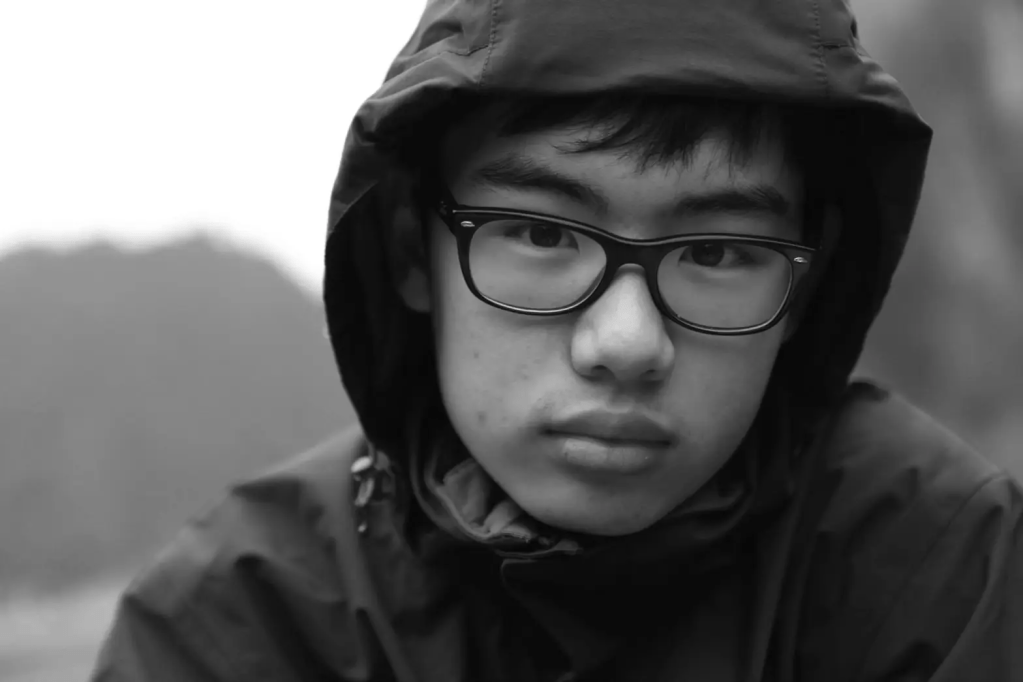
Photography by Nguyễn Thị Phương Trâm
A short story in Vietnamese by Mai Thảo
Translator: Nguyễn Thị Phương Trâm
Barely out of the front door, Tuyến was already running. The look on his mother’s face was propably not a happy one as she watched him run, his father had probably raised his voice trying to tell him off – his parents taught him to take it easy and take his time when he walks from the time he had first learned how to walk, jumping or running anywhere is for the like of floods rushing around destroying everything in its path like the fields and crops – but some kind of force was pushing Tuyến forward from the back. And even his first step, he wanted to be the wind. He had some mean news to tell Hậu. The news was not only bewildering but it was also pretty scary. Now. So Tuyến ran. Tuyến ran, his feet were flying, and his body was an arrow.
The main road, paved with bright red bricks, narrowed as it turned towards Tuyến family’s two stories home grew smaller and smaller, welcoming and always cool surrounded by thousands and thousands of thin bamboo leaves shaped like human’s fingers. The dark brown soil, draws a line that was framed by two grassy banks. That brown thread ran after Tuyến. It ran backward at a dizzying pace beneath Tuyến as his feet flew across it.
The morning just waking up. His parents just got out of bed. The ox left its den. Each blade of grass was capped by a shimmering drop of dew. The horizon on the otherside of the embankment was already burning red. But on this side of the embankment, on this dirty blue grass mat, where the neighborhood were only starting to wake up it was a peaceful and quiet place that had embraced the fleeting shadow of a child forever running. Tuyến heard the bird call above his head. And the rustling of the hem of his pants brushing against the undergrowth and the sound of them flapping in the wind. A huge creek was in his way. Pursed lipped and determined he increased his speed and jumped over it. A mount of dirt came out of nowhere. Tuyến fell forward, head first. The damm mound made Tuyến fall flat on his face. But Tuyến was oblivious to the pain. He pulled himself straight up, his clothes muddy, sweating profusely, Tuyến took a big breath, before like the wind he took off again.
*
Beyond the rustling bamboo bushes, at the end of the small path, Tuyến stopped abruptly in front of the wooden bridge. The shiny black bridge was two planks of carved ebony, plopped on top of a small river. The genteel water was clear, without a speck to blemish it. On the other side of the bridge was the village’s primary school. It was already September. In the middle of a brilliant summer. But school had not started. And the school with its fading terracotta roof, with its empty hall ways and all those windows tightly shut, they were just there, quiet, fast asleep in an extended period of ceased animation. Moved on from all the anxiety and anticipation of tests and exams. The nights when the letters were dancing in the dark. When there was not enough time to cram what we could into two mornings and two afternoons in front of the black board, the black boards were every where, at every turn. Tuyến is ten now. The tears brimming as Tuyến stood there staring at the building that will soon become his old school.
Smoothing out the stray hair on his head, a serious look on his face, overwhelmed by emotion, Tuyến let out a long sigh, stepped onto the bridge. On a different day, one might find his studious figure leaning over the bridge to greet the water like a friend. Used it like a mirror. The reflections of the clouds, the reflection of an entire childhood. It was different this morning. Sombre and full of anxiety. Tuyến was more careful as he gingerly stepped onto the bridge, entered into a motionless realm of dead silence. The dirt yard was full of dead leaves. The ground was covered with squares and circles, chalk drawings for strategic games of marbles. The marbles had stopped. Tuyến’s head was small it couldn’t fit all the memories the size of a mountain. Tuyến’s memory was poor, a small piece of history in class and he couldn’t remember it, how could he possibly remember all the fond images of an age of self discovery. Visiting the old school for the last time now. Tomorrow morning, on the raised embankment, a bus will be waiting for Tuyến. Four scary angry giant tires will roll along in place of those genteel tracks of rolling marbles. The bus will roll and roll, take Tuyến away from his school. The bus rolling and rolling further and further away. From the village to the province. And Tuyến wanted to cry. Cry loud and hard. With Hậu.
*
Tuyến grabbed a hold of Hậu’s hand and pulled his friend down to sit right by his side. Around them, the grass grew higher than the top of their heads. Where they sat, it was behind the old man Eight’s grass hut, the school care taker is Hậu’s father, the most hidden spot on the school ground running from the river to the village chief’s cactus fence. Tuyến discovered it before Hậu, one morning at the end of one school year, when the pair of friends were foraging in the garden for worms to catch black perch squirming and splashing around in the water at the foot of the bridge. The tiny clearing protected by tall grass from that point on belonged to Tuyến. This discovery Tuyến shared with Hậu, their common ground, the precious things we shared in our childhood are the things we only share with our best friend. Tuyến’s best friend was Hậu. The small ages are different to adults. Tuyến and Hậu’s wonderful world of self discovery was without the despicable rule of class in an adult world. Like the connecting red thread of the son of the richest land owner in the village and the daughter of a lowly old school care taker. Seeing Tuyến’s father, the old man Eight lowers his head almost to the ground. Move out of the way. Fear and respect. Tuyến couldn’t see how he could be anyway better than Hậu. We are equal. We are the same height. Like how we’re the same age. Like how we’re in the same class. Like how we hold each other’s hand. Right Hậu? Hậu nodded. Like that, the pair went every where together from kindergarten to year five, side by side until they both turned ten. Now the terrible news he had just received. As though he was hit by a lighting strike. And Tuyến’s first reaction was to share it first with his friend.
They were both quiet. The sunlight brighter, warmer, slowly heating up each blade of cold grass. A host of sparrow came out of nowhere, perched on the roof of the school. The sparrows brown feathers blending with the brown of the old terracotta roofing. The school yard was empty, not a soul passed by.
“What’s with all that mud on you” – Hậu said.
Tuyến looked down, it was the first time since he had left the house that he had a chance to finally look down and see for himself the muddy streaks running down his white shirt:
“I fell”.
“I can’t see how you could”
“I ran”
“Where did you fall?”
“Over a mount of dirt near Duyệt’s house”.
“Yeah, when it rain, it’s pretty slippery! I fell there once too”.
Inside their quiet clearing, the exchange between the two small friends sounded irrelevant, without a beginning or end. Tuyến and Hậu did not know how to talk to each other. The way adults talk to each other. Then again, when they were together from the beginning, they never had to talk. You, me, we love each other. Held hands, friends. Saved an orange for the other, shared bread, beyond siblings, a thousand time beyond flesh and blood. The words were just there in place of a sacred and natural union. A love bigger than any mature adult could ever understand. A childhood love that needed no explanation or act of love. That was Tuyến and Hậu. Everything, including the clearing in the grass, they had shared it. Together they held their breath as they crawled toward the birdnests, together they shared the excitement each time they saw the float of their fishing rod jiggled, both of them with red faces chasing after the dragonflies on the piles of straws drying in the sun, both rolling up their pants to climb the tree for ripe fruit, their five senses were connected as though they were bamboo shoots connected from the roots. But this time, the news that was like a thunder bolt had to be put to words. The words that came out of Tuyến’s mouth were shocking, abrupt, short:
“I leave for the province tomorrow”.
The news that Tuyến had graduated from primary school, and once summer was done his parents will send him to the province, Hậu knew all about that. The last time she saw him, he had already told her. The two friend felt a little confused about each other. But it was in the middle of the summer holidays and they were not back to school. There was still half a month left for them to do whatever they want. Catch butterflies in the garden. Pick flowers outside. Then there were a few birdnests on the roof that they have not explored. They have just trimmed and carved out two new fishing rods. Fun and becomingly sunny was the summer holiday. It was going to be sunny for a while. So why tomorrow? Hậu’s round dark eyes were in disbelief.
But it looked like Tuyến was leaving tomorrow morning. Tuyến will be staying with his uncle, he arrived yesterday afternoon from town. He suggested that Tuyến should go a week early before his class starts, so he can get used to the city. Tuyến’s parents agreed. So it was decided that Tuyến was leaving tomorrow. And today is the day they had to say their goodbyes.
The two friends left the clearing with the tall grass that grew over their heads. The sun was higher and the host of sparrows had already crossed the river to the surrounding neighborhood. There was not a soul in the dirt yard. The youngsters didn’t know what to say to each other. How to give advice. The world is a big place. The embankment was the foot of the horizon. The bridge was the frontier. Beyond the village is the world. The city was thousands of miles away. Going back to school meant that they will take Tuyến away from Hậu. It will be hard to see Hậu again. That was all he could see. He didn’t know what to do besides holding onto Hậu’s hand tightly and not let it go. Each step they took was an uncertain step The two shadows fell longer and longer across the brown dirt yart. There’s the square marking of the crate they used as a table. Left behind as a gift for Hậu. There’s the straight line for the marble, there’s the indented patch of the ground where they used to skip and jump rope, there’s the tree they used to propped their school bags, Tuyến wanted to leave it behind as a gift for the closest person in the world to him. There were so much more he wanted to give her. Everything they had shared he wanted to give them all to her, not for keep sakes, but give them all to Hậu. Give and never to ask for them back. The world of a ten year old like Tuyến, from this point on, he wanted to give it all to Hậu. The congenial Hậu, Hậu, the daughter of the school care taker, Hậu that likes to cry all the time, Hậu with the dimples when she smiles and gleaming dark round eyes, keep them, please keep this paradise of our childhood. Where the perch squirm and dance at the foot of the bridge, school eaves where birds like to build their nests, the abandoned site at the back of the brick mill where the bermuda grass grew, sweet starfruit from the village chief’s garden, primary school black boards, infant white chalk, the classrooms echoing the sound of the falling rain, the rumbling of the drums announcing it was time to start our classes, elementary excercise books full of scribbles and drawings, butterfly wings between pages, toys hidden in our leather school bags, and our private hide away amongst the grass, they were all for Hậu.
A rich kid can go to the city. The kid who is a child of a school care taker, once she graduated from primary school she can continue to study at home, in the morning she can clean the classrooms, sweep the schoolyard instead of her father. Tuyến and Hậu were still too small. But they both felt their hearts were simultaneously breaking, together felt a great loss. Tomorrow meant Tuyến was leaving for the province. The village school will be left behind. Blades of grass and a small girl, his friend. And Tuyến had the urge to cry, badly and loud.
*
The next morning the small nine year old girl ran as though she was flying over the same path her friend had taken the day before when he ran like the wind the morning he turned ten. A genteal morning in the country side like any other morning. Over head were the same bamboo leaves like human fingers. The same dirt beneath her feet, dark brown under the cool shade. But the small girl stopped half way. From the raised embankment, where the sun was rising, came the sound of the bus horn that startled a small girl to a stop. The sound of the bus horn was shrilling before it faded away into the distance, disappeared in the direction of a ferocious and mean city.
Mai Thảo [1927-1998] real name is Nguyen Dang Quy, another pen name: Nguyen Dang, he was born on June 8, 1927 in Con market, Quan Phuong Ha commune, Hai Hau district, Nam Dinh province (originally from Tho Khoi village, Gia Lam district, Bac Ninh province, the same hometown and related to the painter Le Thi Luu), his father was a merchant and wealthy landowner. Mai Thao absorbed his mother’s love of literature from Bac Ninh. As a child, he studied at a village school, went to Nam Dinh high school and then Hanoi (studied at Do Huu Vi school, later Chu Van An). In 1945, he followed the school to Hung Yen. When the war broke out in 1946, the family evacuated from Hanoi to Con market, in the “House of the Salt Water Region”, from then on Mai Thao left home to Thanh Hoa to join the resistance, wrote for newspapers, participated in art troupes traveling everywhere from Lien Khu Ba, Lien Khu Tu to the Viet Bac resistance zone. This period left a deep mark on his literature. In 1951, Mai Thao abandoned the resistance and went into the city to do business. In 1954, he migrated to the South. He wrote short stories for the newspapers Dan Chu, Lua Viet, and Nguoi Viet. He was the editor-in-chief of the newspapers Sang Tao (1956), Nghe Thuat (1965), and from 1974, he oversaw the Van newspaper. He participated in the literature and art programs of radio stations in Saigon from 1960 to 1975. On December 4, 1977, Mai Thao crossed the sea. After 7 days and nights at sea, the boat arrived at Pulau Besar, Malaysia. In early 1978, he was sponsored by his brother to go to the United States. Shortly after, he collaborated with Thanh Nam’s Dat Moi newspaper and several other overseas newspapers. In July 1982, he republished the Van magazine, and was editor-in-chief until 1996, when due to health problems, he handed it over to Nguyen Xuan Hoang; Two years later he died in Santa Ana, California on January 10, 1998.
Nguyễn Thị Phương Trâm, the blogger, poet, and translator, was born in 1971 in Phu Nhuan, Saigon, Vietnam. The pharmacist currently lives and works in Western Sydney, Australia.


 LatinosUSA
Deja un comentario